
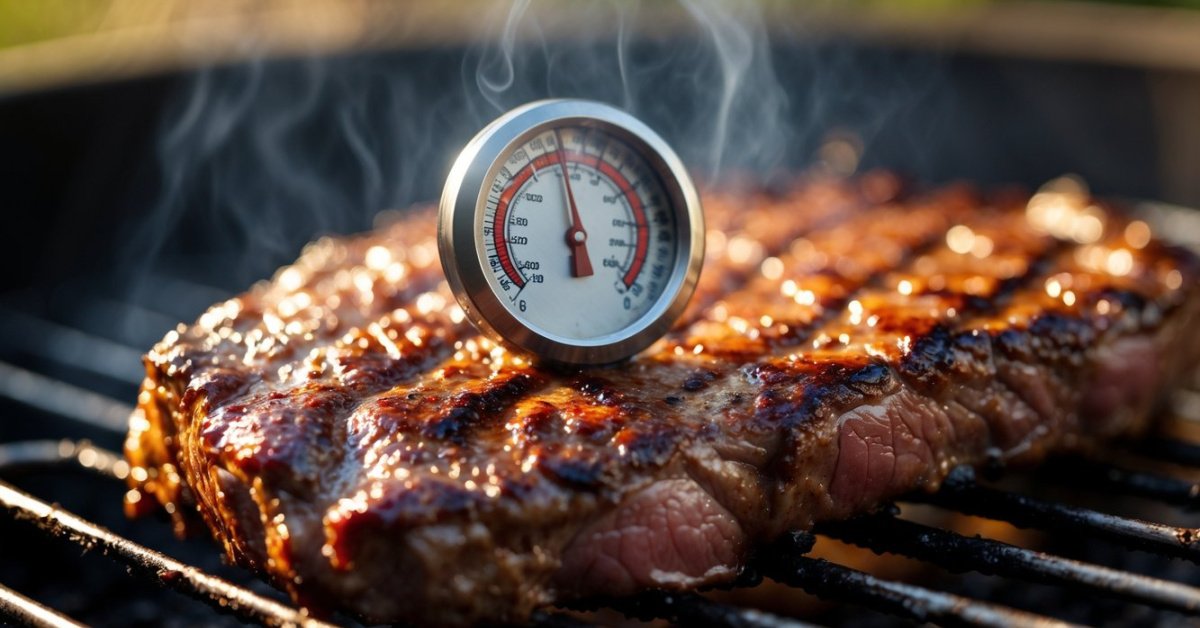
Grilling game birds always feels like a special treat but nailing that perfect doneness can be tricky. I’ve learned that even the most flavorful marinade or expert seasoning can’t save a bird that’s overcooked or underdone. That’s where a trusty thermometer comes in—it’s my secret weapon for juicy and safe results every time.
I used to rely on guesswork or the old “poke test” but nothing beats the confidence of knowing the exact temperature inside the bird. Whether it’s quail duck or pheasant I want every bite to be just right. If you’re ready to take your grilling game to the next level let me show you how a thermometer can make all the difference.
Understanding the Importance of Temperature When Grilling Game Birds
Reliable temperature control makes the biggest difference when grilling game birds like quail, duck, or pheasant. Accurate internal temps preserve tenderness and prevent the meat drying out. I learned early on grilling over live fire that game birds cook fast, and margins for error run tight.
Different birds carry unique risks and flavors. Ducks, for example, stay juicy just past 135°F, while quail or pheasant can become stringy if temps rise over 150°F. Undercooked birds pose food safety issues, with the USDA recommending 165°F as the baseline for poultry[^1].
Game bird sizes fluctuate, so using grill time or color alone misleads more often than not. Grilling thermometers eliminate guesswork. Precise readings remove uncertainty, whether I’m grilling speckle-breasted teal or a plump wild turkey.
Quality control drives flavor and safety. Each degree impacts the final texture and moisture, so temperature checks with a good thermometer always play a role in my bbq sessions.
Types of Thermometers Suitable for Grilling
I’ve tested almost every thermometer style in pursuit of juicy, perfectly cooked game birds. Choosing the right thermometer means getting faster, more accurate results to avoid overcooking or undercooking quail, duck, or pheasant over the fire.
Instant-Read Thermometers
Instant-read thermometers deliver quick, spot checks on doneness. I use these to check each game bird individually since smaller birds like quail can go from perfect to dry in under a minute. Most models give a reading in 2–5 seconds, making them ideal when grilling over high heat or working in batches. Digital instant-reads provide better accuracy and speed than classic dial types; ThermoWorks Thermapen and Lavatools Javelin are two digital examples I rely on.
Probe Thermometers
Probe thermometers track temperature during the whole cook. I insert the probe into the thickest part of the meat, then monitor internal temperature in real-time while grilling. This works especially well when indirect heat and larger birds like duck or pheasant are on the grill for longer periods. Wired probes stay connected to a small display outside the grill, while wireless Bluetooth options send updates straight to my phone. Examples include the ThermoPro TP20 and the MEATER Plus for remote temperature monitoring.
Step-By-Step Guide on How to Use a Thermometer for Grilling Game Birds
Getting accurate temperatures with a thermometer makes grilling game birds consistent and safe. I follow a precise method for prepping, inserting, and monitoring to lock in juiciness every time.
Preparing the Game Birds
Patting game birds dry with paper towels creates a better sear and ensures thermometer readings don’t get thrown off by moisture. I trim off extra fat or pin feathers that can cause flare-ups, especially on quail wings or duck skin. Rubbing oil on the skin keeps seasonings on and helps prevent sticking. Marinades only reach the surface, so I let birds rest at room temperature 20-30 minutes before grilling for more even cooking and more reliable temperature readings.
Inserting the Thermometer Properly
Finding the thickest part of the bird’s breast on pheasant or duck gives the most accurate picture of doneness. I insert the probe horizontally into the side of the breast, taking care the tip stays away from bone, cartilage, or the grill to avoid false readings. For smaller birds like quail, I use an instant-read thermometer and test both breasts if there’s a size difference. Digital probes reach the center faster, and I always wipe the probe with a clean cloth between readings to keep flavors true.
Monitoring Temperature Throughout Grilling
Watching the thermometer avoids overcooking game birds, which dry out quickly. I leave a probe thermometer in larger birds and keep the display nearby for instant checks, never letting the lid stay open long. For duck, I pull at 135-140°F and let it rest, since carryover heat brings it up. With pheasant or quail, I check the temp at 145°F, knowing it’ll finish around 150°F with a good rest. If I’m cooking several birds, I spot check the smallest and largest since temperatures vary across grill zones. This process guarantees every game bird hits the mark for safety and succulence.
Recommended Internal Temperatures for Common Game Birds
Accurate internal temperatures let me grill game birds with confidence and maximize tenderness. I check these temps right at the thickest part of the breast with my instant-read thermometer, aiming for a quick reading without piercing too many times.
| Game Bird | Safe Minimum Temp | Preferred Temp Range | Texture Result at Range |
|---|---|---|---|
| Quail | 165°F | 145–150°F | Juicy, not stringy |
| Pheasant | 165°F | 150–155°F | Moist, avoids dryness |
| Duck (breast) | 165°F | 135–140°F | Tender, rosy interior |
| Wild Turkey | 165°F | 160–165°F | Moist but fully cooked |
| Goose | 165°F | 150–155°F | Succulent, not chewy |
Quail hits peak juiciness when I pull it off at 145–150°F, since lean, small birds dry out fast past 150°F. Pheasant stays tender at 150–155°F, giving me a reliable margin above rare without risking stringy, overdone meat. Duck’s best flavor emerges at 135–140°F; at this temp, the breast stays blush-pink and moist, exactly what I want from wild duck. For wild turkey, 160–165°F delivers safe doneness and keeps the meat juicy—resting afterward raises it a couple degrees, so I pull just shy of 165°F. Goose breast benefits from stopping at 150–155°F for maximum tenderness and to avoid the gray, dry texture that comes above 160°F.
USDA poultry minimums remain 165°F for safety. I take extra steps with wild birds by using clean thermometers and letting the meat rest, which evens out juices and can bump up the final temp by 1–3°F. These internal temperatures keep my grilled game birds juicy, flavorful, and always perfectly cooked.
Tips for Achieving Perfect Doneness and Flavor
Always start with room-temperature birds for better, more even results. Game birds like quail, duck, or pheasant retain more moisture when I let them sit out for 20–30 minutes before grilling.
Insert the thermometer at the thickest part of the breast without touching bone or joints for the most reliable reading. Bone contact can show higher temps than the meat, risking undercooked sections.
Check temps early and in multiple spots on larger birds for even doneness. Duck or wild turkey breasts often have hot and cool zones, so I test each breast separately.
Pull the birds 3–5°F below my final target since carryover cooking raises the temperature while resting. For example, I pull duck breast at 132°F for a perfect medium-rare finish.
Rest the birds loosely tented with foil for 5–10 minutes to let juices redistribute. Resting keeps meat juicy and achieves the target internal temperature.
Season birds generously but avoid high-sugar rubs that can scorch at grilling temps. Herbs and citrus zest retain freshness and enhance game flavor.
Clean the thermometer between uses to prevent cross-contamination and preserve flavor integrity. I keep antiseptic wipes or a damp cloth grilling-side for this purpose.
Test thermometers regularly against boiling water (212°F) or ice water (32°F) to confirm they’re accurate. A few degrees off can mean the difference between juicy duck and dry stringy quail.
Experiment with smoke woods like apple, cherry, or pecan for subtle flavor without overpowering delicate game birds. I use small chunks instead of chips for a gradual, mellow infusion.
Monitor ambient grill temperature as closely as internal meat temperature. Game birds benefit from moderate, steady heat—typically 350–400°F—to avoid flare-ups and uneven cooking.
Common Mistakes to Avoid When Using a Thermometer
Missing the Thickest Spot
I always aim the thermometer probe for the thickest part of the breast, since readings from thinner wing or leg sections give misleadingly high numbers. Grilling game birds like quail or pheasant, it’s easy for the probe tip to end up too shallow or deep, which throws the temperature off by 5–10°F.
Inserting the Probe Too Early
I wait until I’m close to the target cook time before checking internal temperatures, because inserting the probe too often causes juices to escape and can dry the bird out. Small birds like quail, with their delicate juiciness, especially show this mistake.
Relying on Only One Check
I check the internal temperature in at least two spots, particularly on larger birds like duck or wild turkey. I’ve found that measuring in just one area, such as the breast center, sometimes misses cooler spots near the bone.
Leaving the Thermometer in While Grilling
I don’t leave instant-read thermometers in the bird while grilling, as they aren’t built for direct heat exposure. Melting plastic, inaccurate readings, and even broken probes have all happened to me when I ignored this basic detail.
Not Calibrating Thermometers
I check calibration on every new thermometer by dipping it in ice water and boiling water. If the numbers are off by more than 2°F from 32°F or 212°F, I recalibrate or replace the thermometer, since accuracy means juicier, safer birds.
Ignoring Resting and Carryover Cooking
I always remember that carryover cooking bumps the internal temperature 1–3°F after pulling the bird from the grill. If the thermometer reads the safe range on the grill, overcooking happens during the rest if I forget this.
Failing to Clean the Probe
I wipe the probe between birds, especially when grilling multiple species at once. Residual juices transfer raw bacteria if I skip this, and it affects both taste and food safety.
Conclusion
Grilling game birds with confidence really comes down to trusting your thermometer and letting it guide you. I’ve found that a little attention to detail goes a long way when it comes to juicy, flavorful results on the grill.
Once you get comfortable using your thermometer and paying attention to each bird’s unique needs, you’ll notice a big difference in both taste and texture. With a bit of practice, you’ll be serving up perfectly cooked game birds every time—and enjoying the process a whole lot more.


