
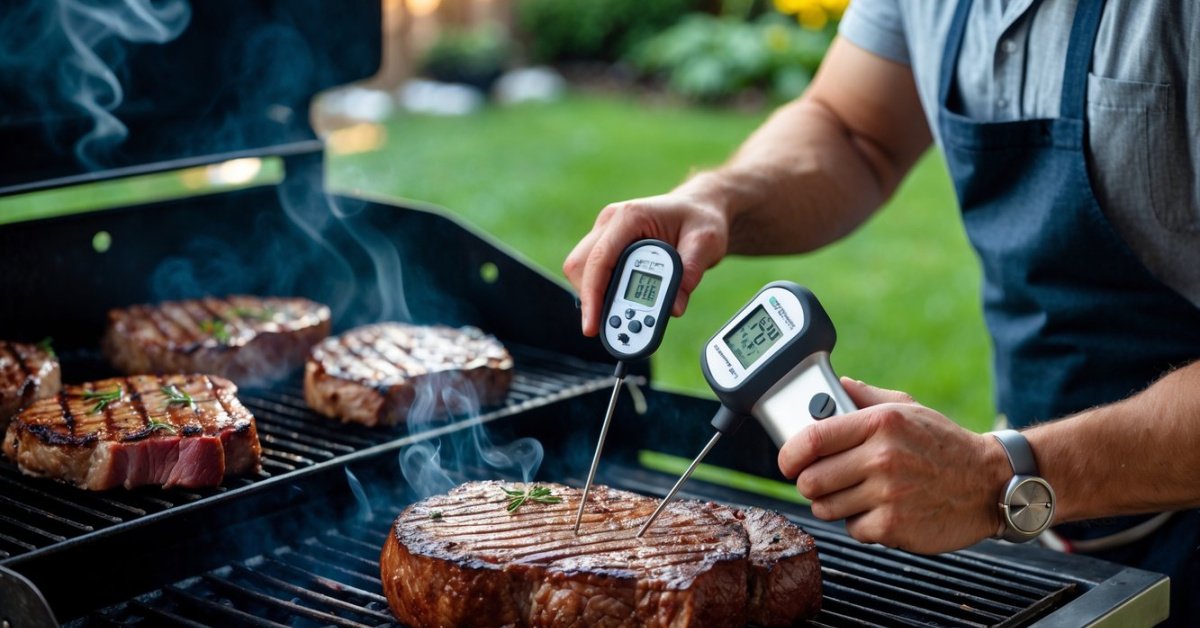
Nothing beats the mouthwatering aroma of a whole chicken sizzling on the grill. I’ve learned that nailing that perfect juicy bite comes down to one thing—knowing exactly when your chicken’s done. Guesswork just won’t cut it when you want crispy skin and tender meat every single time.
That’s where a reliable thermometer steps in. With the right tool I can stop worrying about undercooked spots or dry overdone bites. Let me share how the best thermometers make grilling whole chickens easier tastier and way more fun.
Why Accurate Temperature Matters When Grilling Whole Chickens
Accurate temperature makes grilling whole chickens safer and tastier. Undercooked chicken may contain Salmonella or Campylobacter, according to the CDC, which means hitting at least 165°F in the thickest part keeps each bite safe for everyone. Overcooked chicken dries out and loses juiciness—I’ve bitten into plenty of rubbery birds back in my food cart days when I guessed instead of reading a thermometer.
Consistent results depend on accuracy. Whole chickens grill unevenly because breasts and thighs finish at different times. Reliable thermometers help me hit the sweet spot—from tender breast to juicy thigh—by letting me check multiple spots instead of guessing or poking at the skin.
BBQ flavor improves with precision. Smoking or slow-roasting on the grill lets seasonings and smoke infuse the meat, but only if the chicken isn’t stuck on the fire too long or pulled too soon. An accurate thermometer lets me nail my signature smoky, crispy results—every time, every recipe.
Key Features to Look for in a Grilling Thermometer
When grilling whole chickens, picking a thermometer with the right features makes all the difference. Over many BBQ sessions, I’ve learned which details matter for juicy, perfectly cooked chicken.
Accuracy and Response Time
Accurate and fast readings help me avoid dried-out chicken or undercooked spots. I always check that a thermometer reads within ±1°F of true temperature, as top-rated digital models like the ThermoWorks Thermapen ONE or ThermoPro TP19 consistently provide. Fast response times under 3 seconds let me close the grill lid quickly, keeping heat in and cooking even.
Probe Length and Durability
Long and strong probes reach the thickest part of a whole chicken, even when it’s spatchcocked or trussed. I look for probes at least 4 inches long, since shorter ones often don’t reach the center (examples: Lavatools Javelin, ThermoPro TP20). Durable stainless-steel probes resist bending and corrosion—an essential for backyard or competition BBQ.
Display and Readability
Easy-to-read displays allow me to check temps without fumbling or squinting over the fire. I stick with thermometers that have backlit LCDs for low-light grilling. Large digits and rotating screens, found on models like the Thermapen ONE, save me from second-guessing readings after dark or during busy cookouts.
Wireless and Smart Features
Wireless and smart features give me flexibility to move around while the chicken cooks. Bluetooth or Wi-Fi thermometers like the MEATER Plus and Weber iGrill 2 send alerts to my phone if the chicken’s ready or the grill temp drops. Some smart models track multiple temps at once, perfect for checking different chicken sections simultaneously.
- grilling thermometer accuracy, probe length for whole chickens, display readability outdoors, wireless meat temp alerts, Texas BBQ experience
The Best Thermometers for Grilling Whole Chickens
Finding the right thermometer can make or break grilling whole chickens. I’ve tested dozens of options at my old Texas BBQ cart and in my backyard, looking for tools that deliver juicy, safe, flavor-packed chicken every time.
Top Digital Instant-Read Thermometers
Digital instant-read thermometers give near-instant feedback with high accuracy, making them a top pick when I’m checking the thickest part of a whole chicken. Models like the ThermoWorks Thermapen ONE and Lavatools Javelin PRO Duo read within ±0.5°F in just 2 to 3 seconds. Their long, stainless steel probes are sturdy and reach deep into the breast or thigh. Backlit LCD screens keep readings visible at night or on cloudy days. These thermometers help me confirm doneness fast, minimizing heat loss when I open the grill.
Best Wireless and Bluetooth Thermometers
Wireless and Bluetooth thermometers let me monitor chicken temps from a distance, which helps when I’m busy prepping sauces or sides. The MEATER Plus uses a probe that tracks internal and ambient temps and connects to my phone via Bluetooth. The ThermoPro TP25 offers four probes and sends real-time alerts to my device, so I never miss the perfect pull moment. With these, I can step away from the smoker, trusting I’ll get accurate temperature alerts up to 165 feet away.
Recommended Leave-In Probe Thermometers
Leave-in probe thermometers work great for whole chickens cooked low and slow. The ThermoWorks Smoke X4 handles up to four probes and features large, backlit displays ideal for long cooks—even during late BBQ sessions. The Maverick ET-733 pairs rugged probes with a wireless receiver so I see both meat and pit temps at a glance. These thermometers help me track gradual temperature changes and nail juicy results without constantly opening the grill.
Tips for Using Your Thermometer Effectively
Insert the probe into the thickest part of the chicken breast, under the constraint that you avoid touching bone, cartilage, or the cavity. Measure the thigh’s temperature as well for whole chickens, since thighs often cook slower than breasts.
Clean the probe before and after each use, especially if you’re grilling for multiple people. Use hot, soapy water or disinfectant wipes designed for kitchen tools, since food-safe hygiene keeps bacteria at bay.
Calibrate your thermometer regularly if you want the most accurate results. I place the probe in an ice bath or boiling water to check calibration, with the constraint that I compare readings to the standard 32°F for ice and 212°F for boiling water.
Monitor the display while grilling but avoid keeping the grill open longer than necessary. Opening the lid releases heat, which can slow cooking and skew temperature readings.
Use a wireless or Bluetooth thermometer to watch progress from a distance if you’re juggling other grill tasks. My wireless models have saved countless batches from drying out.
Rest the chicken for 10-15 minutes after reaching 165°F if you want the juices to settle and the meat to finish perfectly. Carryover heat may increase the internal temperature a few more degrees.
Store your thermometer in a dry place and remove batteries during long periods of non-use. I’ve extended the life of my favorite models this way, especially after switching between outdoor and indoor storage during the Texas summers.
Check batteries and display brightness before each grilling session, with the constraint that low batteries or faded screens can trip you up at the grill.
Conclusion
Grilling whole chickens doesn’t have to be a guessing game. With the right thermometer in hand I feel confident every time I fire up the grill. It’s amazing how much easier and more enjoyable grilling becomes when I can trust my tools and focus on flavor.
A little attention to detail goes a long way. When I use a reliable thermometer and follow a few simple tips I know I’ll end up with delicious juicy chicken that’s safe to eat and packed with smoky goodness. Happy grilling!


