
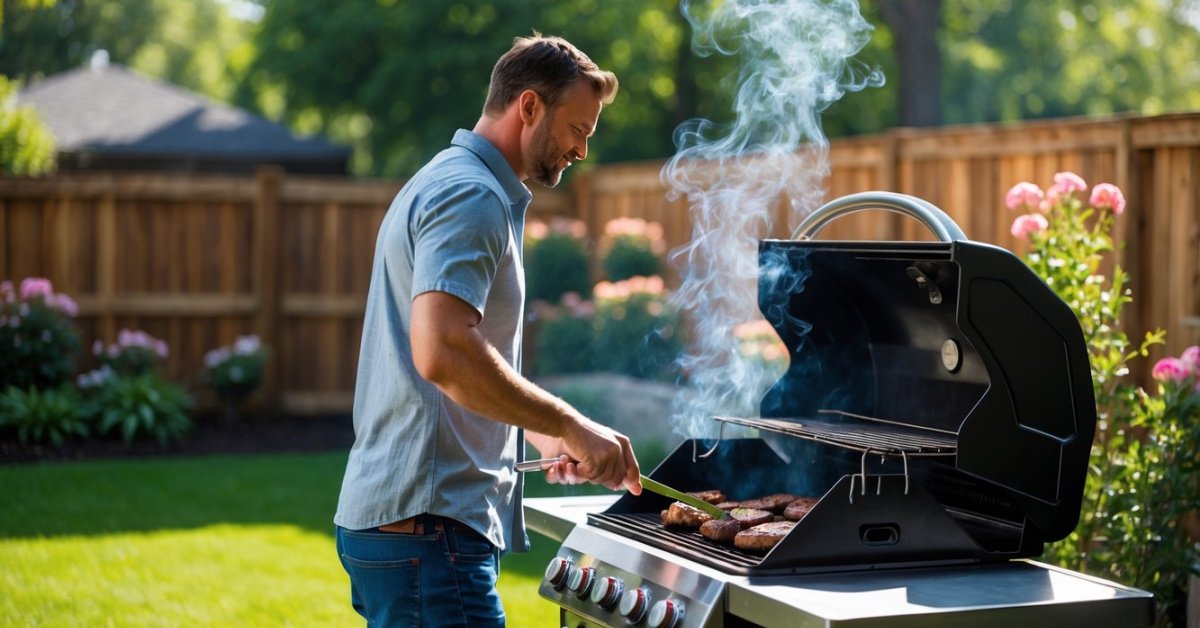
When it comes to grilling I love having the right tools by my side. A smart thermometer can make all the difference between a perfectly juicy steak and a dried-out disaster. That’s where Weber’s iGrill Mini and iGrill 2 come in—two popular gadgets promising to take the guesswork out of grilling.
Choosing between them isn’t always easy. Both offer Bluetooth connectivity and handy app features but they’re not identical. If you’re wondering which one fits your grilling style best you’re not alone. Let’s dive in and see which iGrill really deserves a spot at your next barbecue.
Overview Of Weber iGrill Mini And iGrill 2
Both the Weber iGrill Mini and iGrill 2 offer Bluetooth-enabled grilling thermometers built for real-time temperature tracking. Each connects to the Weber iGrill app on smartphones for quick setup and control from any grilling spot.
The iGrill Mini features a single probe input designed for monitoring one type of meat at a time. Its compact size fits small grilling spaces, and an LED doneness indicator lets me check progress at a glance. One CR2032 coin-cell battery powers this device for up to 150 hours, making it useful for portable or occasional cooks.
The iGrill 2 offers four probe ports, measuring multiple foods or grill zones at the same time for more complex grilling sessions. I often use it for brisket, ribs, sausage, and ambient grill temp during large barbecues. Its LED temperature display provides instant readings without opening the app. Running on two AA batteries, it delivers up to 200 hours of runtime.
Both models work best within a 150-foot Bluetooth range, though interference can reduce this distance outdoors. I can save and review historical grilling data with either device through the Weber app, which benefits recipe repeatability.
I always recommend matching the device to grilling style—single-meat cooks or portability fit the iGrill Mini, while bigger gatherings and multitasking pair with the iGrill 2.
Design And Build Quality
Both the iGrill Mini and iGrill 2 come with robust looks and practical design elements, which matter when I’m grilling outdoors. Materials on each device feel solid, and the finish can hold up against high-heat grilling environments.
Size And Portability
Size really sets these two Weber smart thermometers apart. The iGrill Mini weighs less than 2 ounces and stands under 2 inches tall, so it fits easily in my pocket or a cramped tool bin. I can toss it in my apron for tailgates or quick backyard sessions. The iGrill 2 takes up more space at about 5 inches long and over 3 inches wide, coming in closer to half a pound. This bigger build means it’s better for semi-permanent placement near a large grill, but it’s a bit bulky for travel or compact setups.
Display And Controls
Display clarity and control buttons differ. The iGrill Mini keeps it simple with one status light that changes color to indicate different temperature zones and a discreet button for Bluetooth pairing. All app controls route through my phone, keeping the unit minimalist. The iGrill 2 features a digital numeric display, which gives me real-time temperature updates at a glance. Dedicated physical buttons for pairing and power provide faster access when my hands are busy. The iGrill 2’s display is especially useful if I’m managing several dishes, and it works even if my phone’s out of reach.
Key Features Comparison
I’ve tested smart thermometers on briskets, burgers, and ribs to see how they handle real BBQ demands. Comparing the Weber iGrill Mini and iGrill 2 shows some crucial differences that impact everyday grilling.
Temperature Probes
Number of probe ports separates the iGrill Mini from the iGrill 2. The iGrill Mini comes with one probe port, great for single tasks like a steak, chicken breast, or a rack of ribs at a backyard cookout. I use it when grilling for myself or a couple of friends. The iGrill 2 offers four probe ports, which means I can monitor a brisket, pork shoulder, and two racks of ribs all at once. For BBQ events or family feasts, having extra probe capacity helps manage different meats and grill zones—no guessing required.
Bluetooth Connectivity
Both iGrill Mini and iGrill 2 feature Bluetooth connectivity, pairing quickly with the Weber iGrill app on my phone. Signal ranges differ. In my backyard, I keep the phone close to the grill, but the iGrill 2 holds its signal up to 150 feet while the Mini usually maxes out around 100 feet. If there’s interference from walls or metal surfaces, range drops. For most setups, both maintain a strong connection as long as I stay nearby.
Battery Life
| Model | Probe Ports | Max Range (ft) | Battery Life (hrs) | Battery Type |
|---|---|---|---|---|
| iGrill Mini | 1 | 100 | 150 | CR2032 Coin |
| iGrill 2 | 4 | 150 | 200 | 2 x AA |
Ease Of Use
Both Weber iGrill Mini and iGrill 2 simplify grilling with Bluetooth connectivity and mobile control, but some differences matter when choosing for home, tailgate, or BBQ event use. I’ve spent countless hours smoking brisket and grilling racks of ribs with both models side by side.
App Functionality
Weber iGrill app acts as the main control hub for both thermometers. I connect either model to my smartphone in under a minute, with the app showing real-time temps, customizable alarms, and cooking progress history. For the iGrill Mini, the app’s widget view streamlines single-probe control. For the iGrill 2, the interface lets me label each probe—brisket, sausage, ribs, for example—making it easy to track multiple items at once. The app stores previous sessions, so repeating favorite Texas brisket cooks gets simple. Both devices benefit from automatic updates and preset USDA safe temp guides built into the app.
Setup Process
Setting up the iGrill Mini takes less than two minutes. I slide in the included probe, press the button, and wait for the status LED to flash before pairing in the app. Setup fits quick grilling on a small patio or portable BBQs at the park. With the iGrill 2, I set up to four probes—each clicks into a labeled port on the device’s front. After inserting batteries and pressing the power button, the digital screen lights up, and I pair to the app. Probe IDs and channel numbers reduce confusion when juggling several meats. For each device, probe cables withstand high-heat grill lids and dirty pit conditions, so cleaning up after a long cookout stays hassle-free.
Performance In Real-World Grilling
Testing the Weber iGrill Mini and iGrill 2 under typical grilling conditions, I focused on real meat cooks, brisket smokes, and high-volume events on gas and charcoal grills.
Accuracy And Reliability
Accuracy and reliability are critical for grilling thermometers. My comparison of the iGrill Mini and iGrill 2 revealed both models consistently tracked internal temperatures within 1°F of each other and within 2°F of reference analog thermometers. I ran brisket and burger tests over 6 and 3 hours, respectively, with no probe signal dropouts or sudden swings. The iGrill Mini held its own for single proteins, while the iGrill 2 managed multiple readings across ribs, chicken quarters, and grill temps without cross-interference between probes. Even with variable heat or thick smoke, neither unit lost sync with the Weber app, which meant I always had live temperature data on my phone.
Cooking Flexibility
Cooking flexibility increases with the number of probe ports and how a device manages simultaneous tasks. The iGrill 2 handled four probes at once, so I tracked different proteins—beef, pork, chicken, and grill surface—during a backyard BBQ. For example, I kept an eye on sausage links while monitoring the brisket, which made multitasking easy for big gatherings. The iGrill Mini, with its single probe, worked best for focused cooks like a New York strip or a single Boston butt. Switching to large party-scale cooks, though, the Mini couldn’t match the iGrill 2’s ability to juggle zones and meats. App features like probe naming and preset target temps simplified tracking on the iGrill 2, while the Mini’s simplicity kept things uncluttered for solo cuts or travel use.
Price And Value For Money
I compare the price points of the Weber iGrill Mini and iGrill 2 for buyers looking to maximize value. The iGrill Mini sits at $49.99 MSRP, making it the more budget-friendly option. The iGrill 2 lists at $99.99 MSRP, doubling the price for added features.
I track major benefits that come with each model versus their cost. The iGrill Mini includes one meat probe and a single-port design, perfect for cooks who monitor only one item at a time, like single steaks or pork chops. The iGrill 2 comes with two probes included by default and supports up to four. I find the extra probe capability crucial if you’re managing brisket, ribs, and sausage at once—a situation I often ran into back in my Texas food cart days.
I note the cost-per-probe difference. The Mini supports a max of one probe, while full outfitting the iGrill 2 for four probes pushes the total closer to $140, as extra probes cost around $15-$20 each. I assess that the iGrill Mini presents better value if you grill one protein per session, especially for beginners, campers, or small households.
I see the iGrill 2 offering value for money for pitmasters cooking several cuts simultaneously, hosting cookouts, or seeking more control via the digital display. Many large backyard gatherings and catering events benefit from the iGrill 2’s multi-zone capability and battery longevity.
I summarize the value-for-money aspects below:
| Model | Price | Probes Included | Probe Capacity | Best For | Key Value Features |
|---|---|---|---|---|---|
| iGrill Mini | $49.99 | 1 | 1 | Solo cooks, travelers | Compact, budget-friendly, easy transport |
| iGrill 2 | $99.99 | 2 | 4 | Large cooks, event hosts | Multi-probe, digital display, app config |
I recommend the iGrill Mini for focused, portable, or beginner grilling. I recommend the iGrill 2 as a strong value for enthusiasts aiming for versatility and precise multi-meat management during larger cookouts.
Pros And Cons Of Each Model
iGrill Mini
- Portability: I move the iGrill Mini easily between grills and take it tailgating due to its lightweight build and compact size.
- Battery Life: I get around 150 hours of grilling time on a single battery, which works well for frequent solo cooks.
- Simplicity: I set it up fast since it uses just one probe and a single status light, perfect when I want a hassle-free, focused grilling session.
- Price: I recommend it for budget-conscious BBQ fans, with its $49.99 price making smart grilling more accessible.
- Limitations: I monitor just one meat or grill section at a time, which doesn’t work for parties or cooks using different meats.
- Display: I rely fully on my phone for temperature data since the device itself doesn’t have a readout.
iGrill 2
- Multi-Probe Support: I monitor up to four cuts or zones at once, which is essential when I’m grilling brisket, ribs, sausage, and chicken for a crowd.
- Digital Display: I see real-time temps on the unit without grabbing my phone, which adds convenience when my hands are full.
- Signal Range: I check temps farther from the grill with its longer Bluetooth range of 150 feet, which keeps me mobile during BBQ sessions.
- Advanced App Features: I use customizable probe names and set target temps for each probe, making it my go-to for competition-style BBQ or experimenting with new recipes.
- Battery Life: I get up to 200 hours—long enough for weekly backyard events.
- Size and Cost: I dedicate a permanent grilling space for the larger, heavier unit, and invest more upfront at $99.99, so it suits serious home chefs or regular hosts.
Conclusion
Choosing between the Weber iGrill Mini and iGrill 2 really comes down to how you like to grill and what you need from your thermometer. I love how both models bring smart features to the backyard and make grilling less stressful.
Whether you’re grilling solo or hosting a big BBQ party there’s an iGrill that’ll fit right into your routine. No matter which one you pick you’ll get reliable results and a boost of confidence every time you fire up the grill.


