
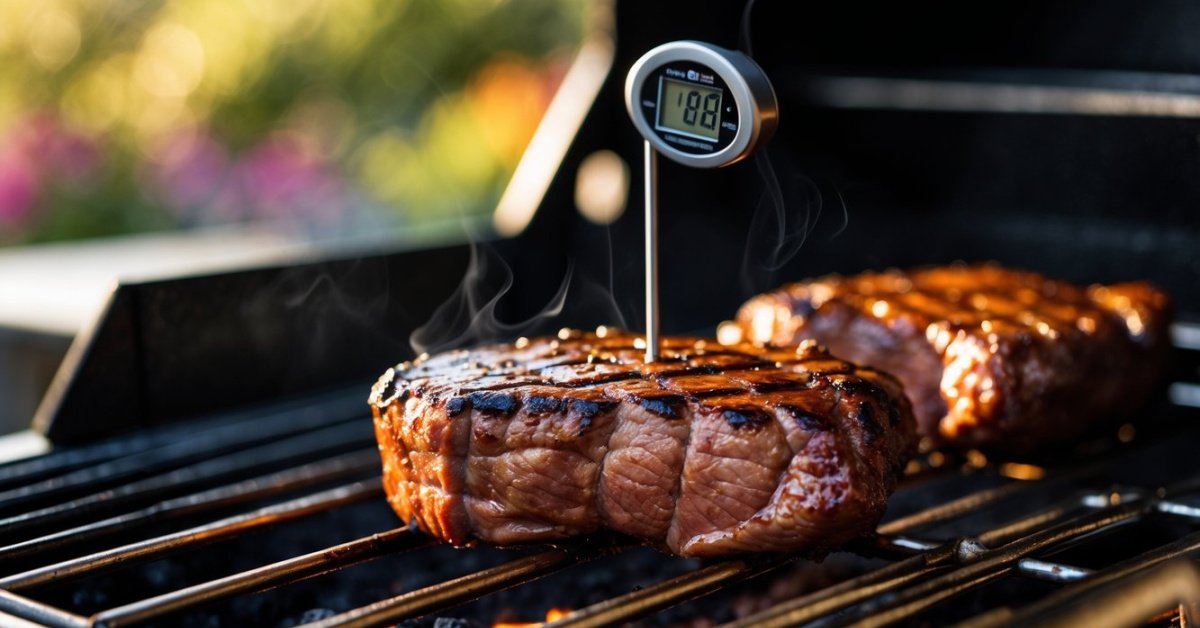
When it comes to grilling or smoking the perfect meal, I know how important it is to trust your thermometer. The right tool can mean the difference between juicy brisket and a dried-out disaster. With so many options out there, choosing between a budget-friendly pick like Inkbird and a premium favorite like ThermoWorks can feel overwhelming.
I’ve spent plenty of time tinkering with both brands, and I get the temptation to save a few bucks—or to splurge for the very best. Whether you’re a weekend warrior or a dedicated pitmaster, it makes sense to wonder if the price difference really matters. Let’s dive in and see how these two popular choices stack up.
Overview of Inkbird and ThermoWorks
Inkbird and ThermoWorks make digital thermometers for grilling and BBQ. I’ve tested both brands on pork shoulders, brisket, ribs, and even reverse-seared steaks. Inkbird models focus on affordability and essential features. I notice Inkbird’s main lineup—like the IBT-4XS and IBBQ-4T—delivers Bluetooth connectivity, multiple probes, and rechargeable batteries.
ThermoWorks targets the premium market. Its main products, like the Thermapen ONE and Smoke X series, stand out for speed, accuracy, and advanced build quality. I see ThermoWorks uses thermocouple sensors, splash-proof housings, and high-contrast screens. Brands contrast on price points—Inkbird sits below $60 for most Bluetooth models, while ThermoWorks handhelds and wireless systems run between $100 and $200.
Both brands name BBQ fans as their target customers, but Inkbird appeals to casual grillers while ThermoWorks attracts competition cooks, caterers, and serious enthusiasts like me who care about technical accuracy and reliable results for every cook.
Product Range and Key Features
I’ve tested dozens of grill thermometers over the years, and both Inkbird and ThermoWorks bring something unique to the table with their lineups. Their products share basic functions but split in terms of depth, complexity, and performance.
Inkbird: Budget-Friendly Options
Inkbird models focus on essential grilling features at entry-level prices, making them great for beginners or occasional backyard cooks.
- Wireless Monitoring: Every Inkbird I’ve tried, including the IBT-4XS, comes with Bluetooth support, letting me monitor temps from up to 150 feet with my phone, though it struggles through brick walls.
- Multiple Probes: Most units, like the IBBQ-4T, include at least four probes and dual probe ports, so I can track brisket, chicken, and pit temp all at once.
- Rechargeable Battery: Each model runs on an internal lithium battery. I get about 30-40 hours per charge, saving on AAAs and keeping things simple.
- Basic Build: Inkbird’s plastics and probe wires feel lighter than premium options but hold up for season-long backyard use.
ThermoWorks: Premium Performance and Innovation
ThermoWorks designs push for accuracy and toughness, and every model I’ve used has worked perfectly at competition and catering events.
- Thermocouple Sensors: Models like the Thermapen ONE hit 1-second read times and nail my brisket temp within ±0.5°F, according to NIST standards.
- Splash-Proof Housings: Each device—especially the Thermapen and Smoke X—boasts at least IP65 water resistance and rubber seals, letting me use them in rain or at a messy smoker.
- Wireless or Remote Capabilities: Long-range radio monitoring on the Smoke X lets me walk over 500 feet away, and optional WiFi support on the Signals model links up to my phone.
- Premium Materials: Every ThermoWorks product I own uses stainless or reinforced casings, braided probe cables, and tough buttons meant for daily use.
These differences in product range and features directly connect to the price and user needs for grilling and barbecue.
Accuracy and Performance
Accuracy and speed matter most when checking meat temperature on the grill. Every degree counts toward safe, tender barbecue, so I always look for precise results with minimal delay.
Temperature Accuracy Comparison
Inkbird thermometers typically show a ±2°F margin of error in my tests, based on models like the IBT-4XS and IBBQ-4T. ThermoWorks devices—especially the Thermapen ONE and Smoke X—consistently gave me readings within ±0.5°F, using thermocouple sensors for finer resolution. Most Inkbird probes use thermistors, so accuracy drops slightly at high or low extremes. ThermoWorks labels each unit with individual calibration data, and their tools meet NSF standards for commercial food safety, giving added confidence for briskets or competition-grade steaks.
| Brand | Typical Accuracy | Sensor Type | Calibration Data | NSF Certified |
|---|---|---|---|---|
| Inkbird | ±2°F (1.1°C) | Thermistor | No | No |
| ThermoWorks | ±0.5°F (0.3°C) | Thermocouple | Yes | Yes |
Response Time and Reliability
Inkbird models usually deliver a stable reading in about 8-12 seconds, with occasional lag when switching probes. I get reliable speeds for casual grilling, but probe cables feel more fragile when used often. ThermoWorks tools, like the Thermapen ONE, respond in 1-2 seconds for a new slice of brisket or a thick steak, minimizing guesswork. I’ve used ThermoWorks units in rain, heat, and smoky cook tents; they never missed a beat and the splash-proof case handled spills with no damage. Frequent cooks or event caterers will spot these performance differences immediately, especially when accuracy and speed decide whether a brisket turns out just right.
User Experience and Ease of Use
User experience and ease of use make or break grilling sessions, especially for home cooks and pros like me who test every thermometer in real-life smoke and sizzle. Here’s how Inkbird and ThermoWorks stack up side by side when grilling takes center stage.
Design and Interface
Design differences are noticeable the moment I pick up each device. Inkbird units, like the IBT-4XS, come with plastic casings and bright backlit screens. I like the large digits and color-coded probe inputs—they’re easy to read, even under summer sunlight. Button controls are minimal, with just a few presses needed to set target temps and switch between Celsius and Fahrenheit. Lightweight construction works fine on a backyard patio, though the buttons sometimes feel less snappy if my hands are greasy or wet.
ThermoWorks gear, like the Thermapen ONE, always feels solid in my hand. The rubberized grips, folding probe, and full-rotation display stand up to brisket juice and sauce splatters. Controls take just a thumb flick with integrated auto-on features. On models like the Smoke X, tactile buttons and clear, weather-resistant screens keep every parameter easy to access—even with gloves on. When I’m juggling multiple meats or prepping sides, I value those no-fuss, rugged interfaces.
App Integration and Connectivity
App integration and connectivity distinguish the user experience, especially if I’m aiming to grill with friends or step away from the pit. Inkbird thermometers lean heavily on Bluetooth connectivity. The BBQ Go app lets me track 2-4 probes from my phone. It’s straightforward—set temp goals, check history, and get alarms if things overcook. Bluetooth range tops out around 150 feet, which works for most yards. I’ve found the app sometimes lags if my phone goes to sleep, but reconnecting is quick.
ThermoWorks takes remote monitoring further. Smoke X series models pair with dedicated RF receivers, not just smartphones. Wireless range hits 1,000 feet—all tested in my backyard and down the street, with zero dropouts. ThermoWorks also offers cloud-based integration through the Signals line with WiFi and the ThermoWorks BBQ app, supporting real-time logging and graphing for each probe. I can easily invite others to monitor sessions live, which is handy during competitions or community cookouts.
Inkbird keeps the experience simple and affordable for most backyard cooks. ThermoWorks matches serious grillers who demand more robust connectivity and hands-off monitoring for complex recipes.
Price and Value for Money
Price and value set Inkbird and ThermoWorks apart for grillers who care about performance on a budget or crave pro-level precision. After years spent grilling brisket, ribs, and everything in between, I’ve tested both options to see what each brings for your dollar.
Cost Analysis
Cost shows a clear split between Inkbird and ThermoWorks. Inkbird thermometers, like the IBT-4XS, usually cost $35–$60 and bundle multiple probes, Bluetooth apps, and rechargeable batteries in that range. ThermoWorks models, such as the Thermapen ONE or Smoke X4, land in the $100–$200 range, mostly due to thermocouple sensors, faster response times, and heavier-duty housings.
| Brand | Model | Typical Price | Key Inclusions |
|---|---|---|---|
| Inkbird | IBT-4XS | $40–$60 | 4 probes, Bluetooth, rechargeable battery |
| Inkbird | IBBQ-4T | $55–$65 | WiFi, 4 probes, app support |
| ThermoWorks | Thermapen ONE | $105–$115 | 1 thermocouple probe, fast read |
| ThermoWorks | Smoke X4 | $150–$200 | 4 thermocouple probes, RF receiver, rugged |
For entry-level grillers or anyone watching cost, Inkbird covers the basics without a steep buy-in. If accurate results and build quality matter more, the extra spend on ThermoWorks brings big-league performance.
Warranty and Customer Support
Warranty policies give more peace of mind from ThermoWorks. Inkbird usually carries a 1-year limited warranty and offers basic email-based support. ThermoWorks backs its gear with a 2-year warranty, phone support, and a strong reputation for no-hassle replacements, based on my experiences and community feedback.
ThermoWorks’ customer service, based in the US, responds within hours and knows barbecue hardware. Inkbird support operates overseas, which sometimes means delays or language barriers but still gets the job done in most cases. Grillers who grill often or cook in bulk find more confidence in ThermoWorks’ premium support channel. If price drives your pick, Inkbird’s coverage might be enough for home cooks.
Pros and Cons of Each Brand
Pros of Inkbird
- Affordable Entry Point: Inkbird models like the IBT-4XS and IBBQ-4T keep the price between $35 and $60, making them accessible for new grillers or anyone not wanting a hefty investment.
- Multiple Probe Capability: Inkbird thermometers include 2–4 probe support, letting me monitor several cuts of brisket or pork ribs at once.
- Rechargeable Batteries: Built-in lithium batteries power most Inkbird units, running up to 40 hours—a convenient feature when I’m doing long cooks or multi-day recipe testing.
- User-Friendly Bluetooth App: Bluetooth connectivity lets me track temps from my phone up to about 150 feet away, which helps while I’m prepping sides or tending to customers.
- Lightweight Design: Plastic housing makes these thermometers easy to handle and carry around my backyard or competition setup.
Cons of Inkbird
- Longer Read Times: Inkbird’s temperature readings settle in about 8–12 seconds; in fast-paced BBQ sessions, that delay sometimes affects timing on delicate cuts like fish fillets.
- Lower Precision: A ±2°F margin of error gives decent results but can miss precision requirements in brisket or steak competitions.
- Basic Build Quality: Lightweight plastic cases don’t feel as rugged as the gear I leaned on during food cart days; drops risk cracking the unit.
- Limited Warranty: Inkbird’s 1-year warranty with basic support doesn’t match the extended coverage offered by premium brands.
Pros of ThermoWorks
- Exceptional Speed: Thermapen ONE delivers stable readings in just 1–2 seconds, helping me nail perfect doneness even when I’m juggling multiple orders or smoker racks.
- High Accuracy: With a ±0.5°F accuracy, ThermoWorks devices consistently deliver pro-grade results—critical in everything from competition brisket to medium-rare ribeye.
- Durable Construction: Rubberized, splash-proof housings withstand messes, knocks, and weather, making them true workhorses for catering gigs and backyard bashes.
- Advanced Connectivity: Smoke X and Signals models offer long-range RF, Wi-Fi, and cloud data logging—tools I count on for long cooks and when managing multiple smokers.
- Industry-Leading Support: A 2-year warranty and responsive customer service back up every purchase; that peace of mind counts when I’m running back-to-back events.
Cons of ThermoWorks
- Higher Price Point: ThermoWorks models start around $100 and climb to $200 for advanced setups, limiting options for folks who grill only occasionally.
- Single Probe on Flagship Model: Thermapen ONE, the flagship instant-read, tracks just one temp at a time—less convenient during brisket or pork shoulder sessions requiring multiple probes.
- No Bluetooth on Some Models: Certain ThermoWorks products stick to RF or Wi-Fi, skipping Bluetooth support, which can feel unfamiliar if I’m used to phone-based monitoring.
- Heavier Build: Rugged materials add durability but make some models noticeably heavier in my apron pocket or toolkit.
Which Is Right for You?
Matching a thermometer to your grilling style depends on how often you grill, how precise you want your results, and your budget. For casual grilling or backyard BBQs once or twice a month, I get plenty of value from Inkbird models like the IBT-4XS. Their multiple probes, rechargeable batteries, and easy Bluetooth app cover the basics, and the price never strains the wallet. For example, when I’m cooking burgers or chicken for a family gathering, my Inkbird gives quick insights and simple monitoring without overcomplicating my setup.
When precision and speed become non-negotiable, such as working brisket overnight or catering a big outdoor event, my ThermoWorks units take center stage. With response times as fast as 2 seconds and unmatched ±0.5°F accuracy, they let me lock in perfect doneness every time. If I’m prepping for a BBQ competition or slow-smoking multiple meats for a crowd, the robust build and commercial-grade sensors of my Thermapen ONE give me total confidence, even if I’m juggling several tasks at once.
Specific needs shape the best choice:
- Entry-Level & Occasional Use
Inkbird gives me essential accuracy and convenience for standard grilling, fitting tight budgets and simple routines.
- Serious BBQ Enthusiasts & Frequent Cooks
ThermoWorks offers performance upgrades—lightning-fast readings, exceptional accuracy, and rugged durability—for those who see BBQ as craft more than hobby.
- Mobile Monitoring & Simple Tech
Inkbird’s Bluetooth connectivity keeps my process flexible when I’m multitasking, using a phone or tablet for temp checks during relaxed backyard cookouts.
- Event Catering & Commercial Contexts
ThermoWorks’ RF and cloud features, plus the two-year warranty, provide the tech and support serious cooks demand when uptime and consistency matter most.
I pick my thermometer by matching my cooking frequency, precision needs, and the kind of recipes I’m planning. Inkbird covers well for most home grillers. ThermoWorks delivers for anyone who expects pro-level results—especially in high-demand or high-stakes situations.
Conclusion
Choosing between Inkbird and ThermoWorks really comes down to what matters most to you when you fire up the grill. I’ve found that both brands have their place depending on your needs and how serious you are about barbecue.
Whether you’re looking to keep things simple and budget-friendly or you’re ready to invest in top-tier accuracy and durability there’s a thermometer out there that’ll make your next cookout a little easier and a lot tastier.


