
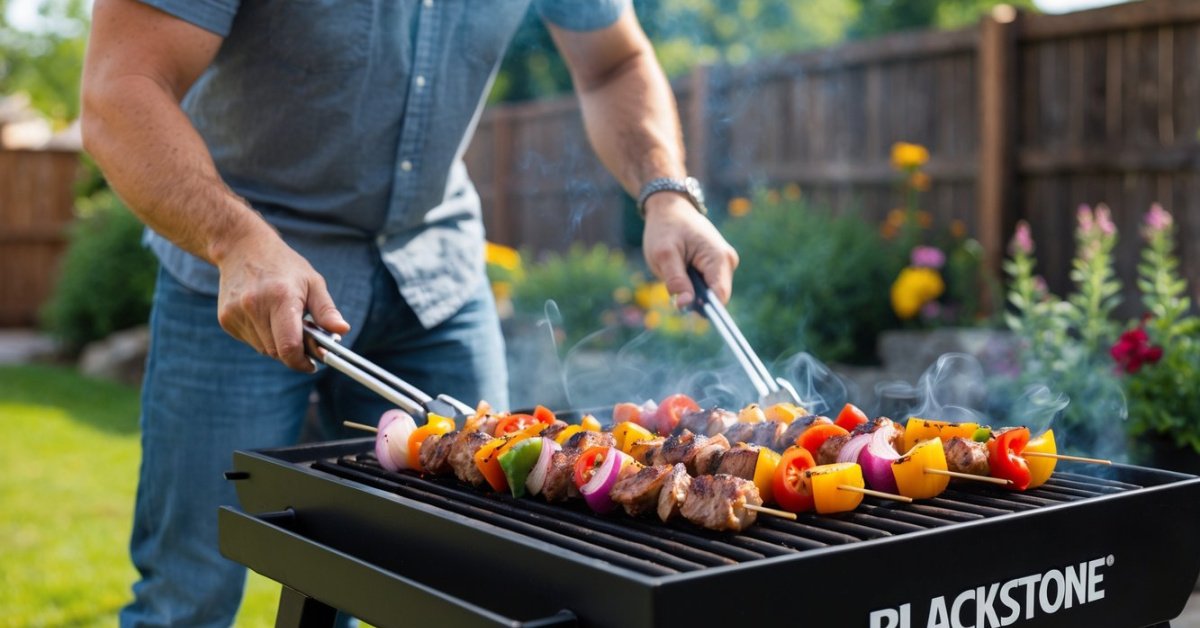
Whenever I fire up the grill for a big backyard BBQ I want everything to come out just right. There’s nothing worse than serving chicken that’s still pink inside or brisket that’s dried out from overcooking. That’s why I rely on the right tools to keep things running smoothly.
One gadget I never skip is my dual-probe thermometer. It lets me keep an eye on both the grill temperature and the meat at the same time. With so much going on during a large cookout I need that extra peace of mind so I can focus on enjoying the day with friends and family.
The Importance of Accurate Temperature Control in Large BBQs
Accurate temperature control keeps BBQ results consistent across large batches. When grilling multiple cuts of brisket, racks of ribs, or chicken halves, I track internal meat temps and ambient grill heat at the same time. Uneven heating zones on big smokers or grills often cause one area to run hotter than another, leading to dry or undercooked servings if I guess by feel alone.
Accurate readings help me maintain food safety standards at every stage of the cook. According to the USDA, pork and beef reach safe consumption at 145°F, while poultry needs 165°F. A dual-probe thermometer gives real-time feedback, so I know exactly when to pull each piece.
Precise control prevents wasted meat and loss of flavor. I used to eyeball doneness, but uneven smoke and heat once cost me three whole briskets at a festival event. Now, I rely on temp data so each brisket, pork butt, or sausage stays juicy with a perfect bark.
Skillful temperature management saves time and boosts efficiency in large BBQs. When juggling dozens of orders, I can spot and correct hot spots, shorten recovery times after checking meats, and hold cooked items at the perfect serving temp with less stress.
What Are Dual-Probe Thermometers?
Dual-probe thermometers let me monitor both the internal temperature of the meat and the ambient grill heat at the same time. With large BBQs, I rely on these for real-time accuracy and more predictable results.
Key Features of Dual-Probe Thermometers
Most dual-probe thermometers include two heat-resistant probes—one for meat, one for grill temperature. Many models give digital readouts, quick response times, and programmable alarms. For example, brands like ThermoWorks and Weber offer wireless connectivity, long probe cables, and customizable temperature alerts. Some let me set profiles for different meats, so I can focus on brisket, pork shoulder, or chicken without babysitting the grill.
How They Differ from Single-Probe Models
Dual-probe thermometers track two zones at once, while single-probe models only read one point—meat or grill. Using only a single probe, I’d have to swap probes between the grill and the food, risking heat loss and less accuracy. Dual-probe designs save time and reduce errors, especially when I’m managing several racks of ribs or mixed meats across indirect and direct heat. Dual-probe models give me more control and information, which means juicier, safer results for big BBQs.
Benefits of Using Dual-Probe Thermometers for Large BBQs
Dual-probe thermometers make managing large BBQs a smoother, more accurate process. I rely on this tool to check more than one key temperature at a time without breaking stride.
Monitoring Multiple Meats Simultaneously
Dual-probe thermometers let me monitor two roasts or racks at once. When I’m grilling brisket and pork shoulder together, I stick each probe into a different cut. That way, I catch variations in thickness and fat content, eliminating guesswork. For example, tracking a 12-lb brisket and a 10-lb pork butt in one cookout keeps every serving juicy and safe, even though their cooking times aren’t the same.
Tracking Grill and Food Temperature at Once
Dual-probe models show me both grill temperature and meat temperature in real time. I stick one probe near the grill grate for ambient heat, then plant the second in the thickest part of the meat. A stable grill temp delivers even cooking—vital when I’m working over a big smoker full of ribs, chicken, and sausage links. Seeing both readings at a glance means I don’t lose heat by constantly lifting the lid.
Enhancing Cooking Precision and Safety
Using both probes sharpens my temperature control and food safety. Precise, real-time monitoring ensures each cut of meat hits its USDA-recommended safe temperature (like 165°F for chicken or 145°F for pork). Built-in alarms let me set target temps for both probes—for example, 225°F for the smoker and 203°F for the brisket—so I avoid dry results or unsafe food. This precision lets me serve dozens without stress and with total confidence in every bite.
Real-World Scenarios: Dual-Probe Thermometers in Action
I’ve relied on dual-probe thermometers for everything from backyard feasts to catering events in my Texas food cart days. Monitoring both the grill temp and internal meat temp keeps every BBQ stress-free and on track.
Catering for Large Gatherings
Managing dozens of orders at once, I used dual-probe thermometers to keep brisket, ribs, and chicken—each with different doneness temps—in check. For example, at one family reunion I tracked the internal temp of a 16-lb brisket with one probe while the other kept tabs on a smoky offset fire burning at 250°F. Guests got perfectly tender, safe slices—no second-guessing needed. Dual-probe models from ThermoWorks and Weber sent instant alerts when any zone crossed my set thresholds. These features let me focus on slicing, serving, and talking BBQ, not babysitting the pit.
Smoking and Slow Cooking Success Stories
Smoking pork shoulders and slow-cooking whole turkeys need steady heat and careful attention. Using a dual-probe thermometer, I kept the chamber locked at 225°F while tracking meat temps—delivering juicy, pull-apart pork without constant lid checks. At a fall festival cookout, my dual probes let me switch between beef ribs and a giant turkey with zero interruptions—programmable alarms signaled when each protein hit its target. This confidence means I can expand menu options, experiment with tougher cuts, and guarantee results under pressure.
Tips for Choosing the Right Dual-Probe Thermometer
Finding a solid dual-probe thermometer makes a big difference during large BBQs. I’ve grilled everything from brisket to burgers and tested dozens of thermometers to narrow down what matters most.
Important Features to Consider
- Probe Accuracy and Range
Accurate temperature readings make a difference for both grill and meat. I look for probes rated within ±1.8°F, like those on ThermoWorks and FireBoard models. Long cables and probes that can handle temps up to 700°F keep things flexible for smokers or direct heat.
- Response Time
Quick readings save time when juggling multiple meats. Probes delivering readings in about 2–3 seconds, such as those in the Thermapen ONE, help catch issues before they ruin a cut.
- Durability and Weather Resistance
Heavy-duty construction matters, especially at big outdoor BBQs. I go for thermometers with a water-resistant IP rating, reinforced cables, and probes that withstand heavy use. Stainless steel probes and silicone-coated cables help prevent splits or shorts.
- Display and Readability
Bright, backlit screens show temps at a glance, even after dark. Large digital displays or mobile connectivity (Bluetooth or WiFi) let me move around the party and keep tabs on my cook from anywhere.
- Alarm and Timer Functions
Real-time alerts stop overcooks before they happen. Units with customizable high/low temp alarms allow me to set safe ranges for each meat and relax until the buzzer sounds.
Recommended Brands and Models
- ThermoWorks Smoke X2
ThermoWorks offers pro-grade accuracy, rugged build, and a massive wireless range (up to 6,500 ft). I trust this one for big cuts like brisket at overnight smokes.
- Weber iGrill 2
Weber’s iGrill lineup delivers accurate readings and handy app support. I like this model when hosting events where I want mobile notifications without hovering near the pit.
- Inkbird IBT-4XS
Inkbird’s IBT-4XS covers four probes and features a rechargeable battery with Bluetooth connectivity, making it budget-friendly for cooks who want value plus versatility.
- MEATER Plus
MEATER Plus gives full wireless freedom with a single probe splitting internal and ambient readings. It’s handy for roasts and when I need a completely cable-free option.
| Brand | Model | Key Features | Connectivity | Max Probes |
|---|---|---|---|---|
| ThermoWorks | Smoke X2 | Extreme range, pro accuracy, backlit display | RF Wireless | 2 |
| Weber | iGrill 2 | Smart app, temp graphs, strong build | Bluetooth | 4 |
| Inkbird | IBT-4XS | 4 probes, rechargeable, versatile | Bluetooth | 4 |
| MEATER | MEATER Plus | Wireless, guided cook, ambient+meat in one | Bluetooth/WiFi | 1 |
Choosing dependable brands and models cuts back on stress and gives me consistency for any grilling challenge.
Conclusion
When I’m planning a big BBQ there’s nothing I trust more than my dual-probe thermometer. It’s turned what used to be a stressful guessing game into a relaxed and enjoyable experience where I can focus on good company and great food.
With the right dual-probe thermometer by my side I know every brisket rib and burger will come out just the way I want. If you love hosting large cookouts as much as I do investing in one of these gadgets is a game changer you’ll never regret.


