
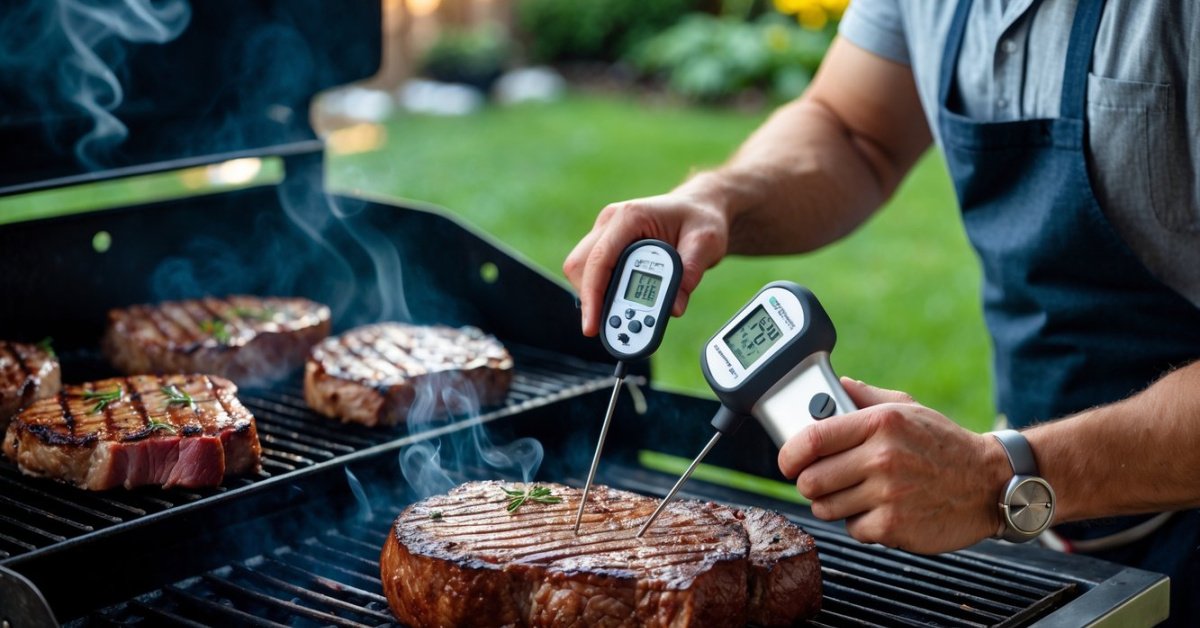
When it comes to cooking the perfect steak or pulling juicy chicken from the oven at just the right moment I know how much a reliable thermometer matters. ThermoWorks offers some of the best tools out there and two of their most popular models—the Dot and the ChefAlarm—often leave home cooks like me wondering which one to choose.
I’ve spent plenty of time in the kitchen relying on both gadgets and I get why the decision isn’t easy. Each has its own strengths and quirks that can make a real difference depending on how and what you love to cook. If you’re torn between the ThermoWorks Dot and ChefAlarm you’re definitely not alone.
Overview of ThermoWorks Dot and ChefAlarm
ThermoWorks Dot and ChefAlarm both offer dependable temperature readings for grilling, smoking, and bbq sessions. I’ve relied on each model when smoking brisket or grilling steak to get spot-on doneness for customers back in my Texas food cart days.
Dot features straightforward single-probe monitoring with a large digital display. I use this model when I want a no-fuss, accurate read on meat temps—like for spatchcock chicken or thick pork chops. The Dot’s strong magnetic back lets me slap it on my grill’s shelf or smoker lid for quick checks.
ChefAlarm adds advanced functions like a timer, high-low alarms, and a backlit screen. I reach for the ChefAlarm when I do multi-step cooks or overnight low-and-slow bbq. Its fold-out stand holds steady on any surface, and the included Pro-Series high-temp probe handles brisket and turkey without flinching.
Both models ship with a 47-inch cable, which I’ve found gives me enough slack for offset smokers and bigger grills. ThermoWorks’ probes consistently deliver accuracy within ±1.8°F, and that reliability matters when I’m serving up ribs or monitoring a pork butt for hours.
| Model | Main Use | Display | Alarms | Timer | Probe Type | Max Temp Rating |
|---|---|---|---|---|---|---|
| ThermoWorks Dot | Simple, direct temp checks | Large digital | High-temp only | No | Pro-Series | 572°F |
| ThermoWorks ChefAlarm | Multi-step, complex cooks | Backlit, large | High/Low | Yes | Pro-Series | 572°F |
Key Features Comparison
Comparing the ThermoWorks Dot and ChefAlarm highlights the core differences grillers like me look for in BBQ thermometers. Both deliver accurate temperature monitoring, but features set them apart when I’m working the pit.
Display and Interface
Display and interface design shape the user experience with the Dot and ChefAlarm. Dot comes with a large, simple digital display—readings stay clear, even if smoke clouds the air around my grill. Controls stick to the basics, which lets me glance at the temperature, then get back to grilling. ChefAlarm takes things further with a bigger screen, full backlight for night cooks, and extra buttons for more detailed settings. The timer and alarm status display right up front, so complex recipes stay organized.
Temperature Range and Accuracy
Temperature range and accuracy ensure meats turn out exactly right. Both thermometers read from -58°F to 572°F, which covers low-and-slow brisket as well as high-heat steak searing. Each model maintains accuracy within ±1.8°F, matching pro-grade requirements for even the toughest BBQ cuts. I notice fast and reliable updates in either unit, based on years of grilling in Texas’s unpredictable seasons.
| Model | Temp Range (°F) | Accuracy |
|---|---|---|
| ThermoWorks Dot | -58 to 572 | ±1.8°F |
| ThermoWorks ChefAlarm | -58 to 572 | ±1.8°F |
Alarm Functions
Alarm functions help multitaskers like me tend to ribs and sides without missing a beat. Dot features a simple high-temperature alarm—audio kicks in sharply at set points, making it easy to catch at just the right time. ChefAlarm, in contrast, offers both high and low alarms, a count-down/up timer, and volume control. If I’m juggling a turkey and three racks of pork belly, the timer and alarm memory on the ChefAlarm eliminate any guesswork.
Probe Quality and Durability
Probe quality and durability sink or save a thermometer’s long-term value. Both Dot and ChefAlarm include commercial-grade probes with a 47-inch cable—enough slack to keep the readout safe from grill-side heat. I’ve tested them under heavy use, with ChefAlarm’s probe rated for higher heat tolerance and replacement options available directly from ThermoWorks. In my cart days, this durability meant the difference between calm in the kitchen and sudden replacements during a rush.
Ease of Use and Setup
Handling grilling thermometers for BBQ sessions means setup speed matters. I find the ThermoWorks Dot shines for simplicity—just plug in the probe, press the single button to set your target temp, and you’re ready. There’s no navigation through menus or extra steps, so monitoring a brisket or steak takes seconds.
Using the ChefAlarm requires a bit more attention. I set the probe, then use the arrow buttons to dial in high and low alarms. The timer takes a few more presses. The interface feels intuitive after a couple of uses, but first-timers might look twice at the extra buttons. Backlight activation comes in handy during evening cooks.
Cleaning and storing both units goes the same way—unplug the probe, wipe down the exterior, and coil up the cable. The Dot’s compact body slips right into a drawer, which works great for my travel BBQ kit. The ChefAlarm, with its splash-proof case and included storage pouch, gives extra protection in a busier or messier smokehouse setup.
Resetting both thermometers is fast—just hold down the main button on the Dot, or use a combination of buttons on the ChefAlarm. When I’m toggling between different cuts or going from chicken to ribs, quick resets keep my workflow smooth.
When showing new cooks how to use a thermometer, the Dot takes under a minute. ChefAlarm needs a slightly longer walkthrough because of its added alarms and timer, though the labeled buttons help minimize confusion. Both models offer straightforward instructions if you ever need a refresher before a big BBQ session.
Price and Value for Money
When I compare the ThermoWorks Dot and ChefAlarm, price stands out as a deciding factor for many grillers. The Dot typically lists for about $45 while the ChefAlarm sits around $65, based on ThermoWorks’ official site and recent sales as of June 2024. Pricing sometimes varies with seasonal discounts and color options, but this range holds steady.
| Model | Average Price (USD) | Warranty | Notable Inclusions |
|---|---|---|---|
| ThermoWorks Dot | $45 | 2 years | Probe, battery, basic stand |
| ChefAlarm | $65 | 2 years | Probe, zip case, battery, stand, calibration clip |
The Dot brings strong value for straightforward BBQ sessions. I find it hard to beat for quick weeknight cooks or when setting up several thermometers for a big brisket or chicken smoke. No extra bells, just dependable readings and a sturdy probe.
The ChefAlarm delivers more—for a higher price. Timer, min-max temp tracking, adjustable alarm volume, and a protective zip case show up as clear advantages. When I’m juggling a 12-hour smoke or managing different meats, these features earn their cost. The included zip case keeps everything organized during travel or storage, which matters to me when cooking away from home.
Both models come with a 2-year warranty, which I’ve used before with fast results from ThermoWorks support. I’ve noticed the Dot sometimes requires a new probe sooner, especially with frequent high-temp grilling, so that can add cost over time. ChefAlarm’s replacement probes cost extra but are rated for heavier use.
For everyday grillers sticking to chicken, burgers, or steaks, I see the Dot as the best budget-friendly pick. For those who want backup features for overnight BBQs or competitions, the ChefAlarm justifies the higher investment.
Pros and Cons of Each Model
ThermoWorks Dot Pros:
- Simple Operation: I set the Dot’s target temperature with a single button press, which cuts down setup time for steak, chicken, or ribs.
- Large Display: Its big digits help me check temps from across the pit or smoker, even in bright Texas sun.
- Compact Size: I slip the Dot into my apron pocket or glovebox—perfect when I’m grilling at tailgates or cookouts.
- Affordable Price: Dot’s $45 price (as of 2024) gives me reliable temp checks without extra spending if I’m not looking for advanced features.
- Quick Reset: Switching meats is fast since I power down and reset target temps in seconds.
ThermoWorks Dot Cons:
- Limited Features: I don’t get a built-in timer or min-max temp tracking on the Dot—sometimes that limits my control with larger brisket or pork butt cooks.
- Single Alarm: Dot only lets me set one high-temp alarm, so I can’t track a cooling-off point for resting meat.
- Probe Durability: In my experience, I’ve needed to replace Dot probes more often after repeated high-heat sessions.
- No Backlight: Reading the display after dark gets tricky during late-night smokes.
ThermoWorks ChefAlarm Pros:
- Expanded Functionality: ChefAlarm gives me both high and low alarms, a countdown/up timer, and max-min temp tracking—all useful for competition-style or overnight smokes.
- Backlit Display: Even on pitch-dark patios, I read ChefAlarm’s screen with its full backlight.
- Durable Probe: Its included probe tolerates higher heat, handling open-flame grilling better during my hot-and-fast cooks.
- Splash-Proof Case: Dropping sauces or rain doesn’t bother the ChefAlarm thanks to its sturdy case.
- Volume Control: I crank up the alarm for noisy backyard parties, making sure I never miss a notification, even when the band’s playing.
- Higher Price: ChefAlarm’s $65+ cost is steeper, which impacts my budget when I just need something basic.
- Bulkier Size: Its larger design and zip case take up more space, so it’s less pocket-friendly for quick cooks.
- Steeper Learning Curve: Navigating timers, dual alarms, and extra buttons takes longer to teach my new BBQ helpers.
- Extra Setup Time: Setting multiple alarms and timers on the ChefAlarm adds steps if I only want to check a single temp for burgers or sausage.
| Model | Pros | Cons |
|---|---|---|
| Dot | Simple single-button operation, Large easy-to-read display, Portable and compact, Lower price, Fast reset | Minimal features, Single alarm only, Less durable probe, No backlight |
| ChefAlarm | Dual alarms and timers, Backlit screen, High-heat durable probe, Splash-proof case, Adjustable alarm volume | Higher price, Bulky design, More complex to use, Longer setup time |
Which Is Better for Different Users?
Selecting between the ThermoWorks Dot and ChefAlarm depends on how you handle grilling or BBQ sessions.
- Casual Grillers: The Dot matches users who want fast, accurate results (like weeknight chicken or steaks). I grab mine for smaller gatherings, burgers, or sausages when I want simple temperature checks without distractions.
- BBQ Enthusiasts: ChefAlarm suits cooks who enjoy experimenting with large cuts (brisket, pork shoulder) or multiple-step recipes. The min-max tracking, timer, and dual alarms give me more control over long, slow cooks, such as overnight brisket smokes or weekend rib fests.
- New Cooks: The Dot’s straight-to-the-point interface works even for my friends who’ve never grilled before. I walk them through their first BBQ in seconds, thanks to its one-button setup.
- Advanced Users: ChefAlarm features fit users running multiple tasks simultaneously (like prepping sides and sauces), or competing where deadlines and precision matter. I rely on its splash-proof body and volume control when I’m multitasking outdoors, especially under unpredictable weather.
- Budget Seekers: Dot’s lower price favors buyers looking for dependable basics without extra costs. I recommend it often to those who grill monthly and want quality for their money.
- Heavy-Duty Grilling: ChefAlarm offers better durability, making it my go-to when testing gear at length or running long cookouts. Competition cooks or anyone cooking with kids nearby benefit from its extra build quality and visual alarms.
Matching a thermometer to daily cooking habits boosts results. Picking the right tool depends on how you approach grilling and what features line up with your style.
Conclusion
Choosing between the ThermoWorks Dot and ChefAlarm really comes down to how you like to cook and what features matter most to you. I’ve found both to be solid choices for anyone who wants reliable results at the grill or in the kitchen.
If you’re after something quick and easy the Dot is tough to beat. For those who love having extra control and don’t mind a little setup the ChefAlarm shines. Either way you’ll end up with a trustworthy thermometer that helps you cook with confidence every time.


