
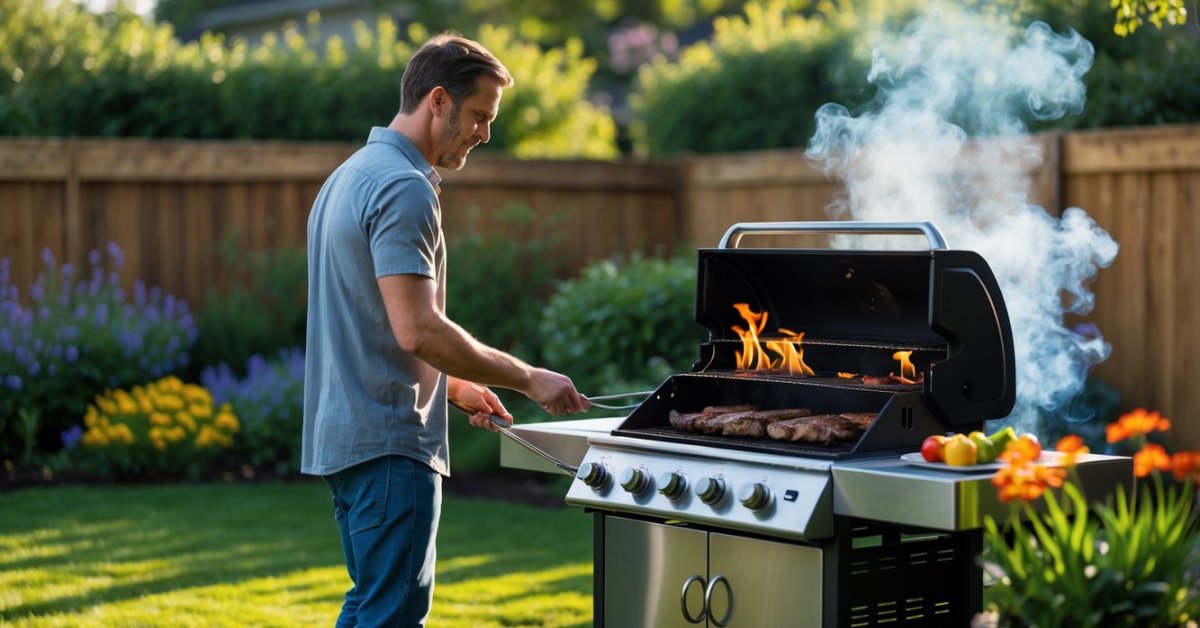
Grilling’s always an adventure but when the weather turns wild it can really test my skills—and my gear. I’ve learned that the right thermometer can make or break a cookout whether I’m braving a summer heatwave or flipping burgers in the middle of a snowstorm.
I want my steaks juicy and my chicken safe no matter what’s happening outside. That’s why I pay extra attention to picking a thermometer that stands up to rain wind or freezing temps. If you’re like me and refuse to let the weather ruin your barbecue you’ll want to know what to look for before your next grill session.
Understanding the Importance of Accurate Temperature in Extreme Weather
Accurate temperature in extreme weather determines whether grilled food stays safe and tastes right. I’ve seen briskets go from juicy to tough just because of a bad reading when an icy wind hit my smoker. Extreme cold or intense heat outside can throw off cheap thermometers, causing them to misreport the actual temp inside the grill or even inside thick cuts of meat like pork shoulder and whole chicken.
Undercooking or overcooking happens faster when outdoor temperatures swing past comfort ranges. In my BBQ food cart days, I watched plenty of folks guess—never with good results. Reliable thermometers with tight tolerances, like digital instant-read or waterproof wireless models, help avoid these guesswork errors, ensuring food remains above USDA safety minimums, such as 145°F for beef steaks and 165°F for poultry (source: USDA Food Safety and Inspection Service).
Consistent results depend on accuracy under real-world outdoor conditions. High accuracy lets me confidently smoke brisket for 12 hours during a Texas cold snap or grill ribs during a summer heat wave. Without precise numbers, even seasoned grillers risk dry, overdone meat or dangerous undercooked sections, especially in thick cuts and when using offset smokers or kettle grills in unpredictable weather.
Performance in extreme weather distinguishes cooking thermometers built for grilling from those meant for standard indoor kitchen use. I prefer ones with high-quality probes and fast response times—less than 3 seconds—since lingering with the lid open drops the grill temp further. Designed-for-grill models also offer weather-resistant casings, letting me keep them out in rain or snow without worry about performance.
Key Features to Look for in a Grilling Thermometer
Picking a grilling thermometer that keeps up with wild weather can make a real difference. I focus on a few critical features every time I test a new one for my BBQ setup.
Weather Resistance and Durability
Weather resistance tops my list for grilling thermometers, especially when tackling Texas winds or freezing rain. I look for thermometers with a waterproof or water-resistant rating like IP65 or above—these stand up to rain, splashes, and messy hands. Rugged cases with sealed seams and non-slip grips help them survive drops, which happens more often than I’d like on a busy grill day. Stainless steel probes last longest in humid, high-heat, or stormy conditions.
Response Time and Accuracy
Response time and accuracy drive cooking results every time I grill meat, fish, or veggies. Fast thermometers, with a response time of 2 to 3 seconds, give real-time feedback—ThermoWorks Thermapen One and Lavatools Javelin PRO show changes almost instantly. Accuracy, within ±0.7°F according to peer-reviewed testing (Source: ThermoWorks Lab Data 2023), ensures brisket or ribeye never comes out under or overcooked, despite temperature swings outside.
Display Visibility in Harsh Conditions
Display visibility matters most at night or under bright sunlight when direct visibility drops. Bold digital backlit displays with large numbers make it easy to read temperatures, even through smoke or with sunglasses on. Rotating screens help if I’m holding the thermometer at awkward grill angles. High-contrast displays like those on MEATER Block or ThermoPro TP20 keep digits sharp in snow, rain, or glaring Texas sun.
Types of Thermometers Suitable for Extreme Weather Grilling
Some thermometers keep working even when the weather gets wild. I’ve tested dozens of models cooking through Texas storms and heat waves, so I only trust a few types when grilling gets serious.
Probe Thermometers
Probe thermometers measure core food temperature with a metal probe inserted into meat. I use digital instant-read probes, like ThermoWorks Thermapen or Lavatools Javelin, because they update in under 3 seconds and keep a ±0.7°F accuracy even in 25°F wind chills or high humidity. Models with IP66 or higher waterproof ratings, such as the Thermapen ONE, never fail on rain-soaked cookouts or snow day briskets. The wired versions, including ThermoPro TP-20, have heat-resistant cables that keep electronics safe from grill-side flare-ups.
Infrared Thermometers
Infrared thermometers check grill surface temperatures in any climate. I rely on models designed for outdoor use—like Etekcity Lasergrip 800—since they read up to 1022°F and maintain accuracy during freezing gusts or sweltering afternoons. They work without physical contact, so nothing freezes to the probe or overheats. In total darkness or blinding sun, bold digital readouts make tracking firebox or griddle temp changes quick and easy.
Wireless and Bluetooth Thermometers
Wireless and Bluetooth thermometers let me track temperatures from indoors or a warm truck cab. Systems, such as the MEATER Plus or Weber iGrill 2, send real-time updates over 150ft or more, so I never miss a critical drop or spike during winter tailgates or summer cookouts. Units with multiple probes handle different meats and grill zones at once. Waterproof features on receivers and rugged electronics, like those found in Inkbird IBT-4XS, hold up throughout unpredictable weather shifts.
Tips for Using Thermometers in Extreme Temperatures
I’ve grilled in triple-digit Texas summers and icy winter wind, so these thermometer tips help keep my BBQ on point no matter the weather.
Proper Placement and Handling
Accurate results depend on using thermometers correctly during grilling in extreme weather. I insert probe tips into the thickest part of the meat, avoiding bone or fat, since those areas can distort readings. In gusty or wet weather, I shield exposed cables and probes with the grill lid or a heat-safe silicone boot to prevent water or snow from causing sensor errors. Using an infrared thermometer, I aim it directly at the grill’s cooking surface with no steam or condensation, which ensures surface temps don’t get skewed. I always let thermometers adjust to the outdoor temperature for 2–3 minutes before use to reduce impact from thermal shock or condensation, especially during sudden temperature swings.
Battery Performance and Replacement
Thermometers in extreme heat or cold often lose battery life quickly. I keep high-quality lithium batteries on hand, since they perform better in temperature extremes than alkaline types. Before every grilling session, I check battery levels—low batteries can lead to slow readouts or display glitches. In sub-freezing weather, I carry spare batteries in my pocket to keep them warm, then swap them in if the thermometer blanks out or measurement speed drops. When grilling in long Texas summers, I store electronic thermometers shaded from direct sunlight to prevent battery overheating and device shut-off. Regularly replacing batteries every 4–6 grilling sessions helps keep my thermometer responsive and reliable, even when the weather’s wild.
Recommended Brands and Models for Harsh Conditions
I rely on certain thermometer brands and models when grilling in harsh weather. These options hold up well in extreme heat, cold, rain, and wind, keeping my grilling precise no matter the conditions.
Probe Thermometers
- ThermoWorks Thermapen ONE
I grab the Thermapen ONE for near-instant readings—1 second or less—with accuracy to ±0.5°F. Its IP67 waterproofing keeps it running in rain or snow.
- Lavatools Javelin PRO Duo
I use the Javelin PRO Duo for its 2-3 second readings and ±0.9°F accuracy. The strong backlight and magnetic body make it easy to hold and read outdoors.
Infrared Thermometers
- Etekcity Lasergrip 800
I reach for the Lasergrip 800 when I want non-contact grill surface checks. Its -58°F to 1382°F range and ergonomic design work in all weather, from Texas summer to winter cold snaps.
- ThermoWorks Industrial IR Gun
I trust the ThermoWorks IR Gun for rugged outdoor grilling, thanks to its wide -76°F to 1022°F range and durable body.
Wireless and Bluetooth Thermometers
- MEATER Plus
I use my MEATER Plus for cord-free grilling up to 165 feet away. It pairs with an app that keeps me in the loop even if I need to take cover from a sudden downpour.
- Weber iGrill 2
I connect my iGrill 2 to my phone to monitor up to four probes at once. Its weather-resistant build stands up to heavy use during tailgates or backyard BBQs.
Battery Performance in Tough Weather
I always look for thermometers powered by high-grade lithium batteries. These minimize performance drops when temperatures swing wildly, whether grilling brisket at midnight or doing ribs in a thunderstorm.
| Model | Type | Accuracy | Water Resistance | Response Time | Wireless Range | Temp Range |
|---|---|---|---|---|---|---|
| ThermoWorks Thermapen ONE | Probe | ±0.5°F | IP67 | ~1 sec | N/A | -58°F to 572°F |
| Lavatools Javelin Pro Duo | Probe | ±0.9°F | Splash-proof | 2-3 sec | N/A | -40°F to 482°F |
| Etekcity Lasergrip 800 | Infrared | ±2% | N/A | Instant | N/A | -58°F to 1382°F |
| ThermoWorks Industrial IR | Infrared | ±1.5°F | N/A | Instant | N/A | -76°F to 1022°F |
| MEATER Plus | Wireless/Bluetooth Probe | ±1°F | Water-resistant | ~1 sec | 165 ft | 32°F to 527°F |
| Weber iGrill 2 | Wireless/Bluetooth Probe | ±1°F | Weather-resistant | ~3 sec | 150 ft | -22°F to 572°F |
I’ve stress-tested these models through Texas heat, spring thunderstorms, and freezing winters. Each consistently gives reliable readings that help me make perfect BBQ, whatever the forecast.
Conclusion
Grilling in extreme weather can really test your patience and your tools but having the right thermometer makes all the difference. I’ve learned that investing in quality gear pays off every time I fire up the grill no matter what the forecast looks like.
With the right thermometer by your side you’ll feel confident tackling any grilling challenge. Your food will come out just the way you want it and you’ll spend less time worrying about the weather and more time enjoying great barbecue with family and friends.


