
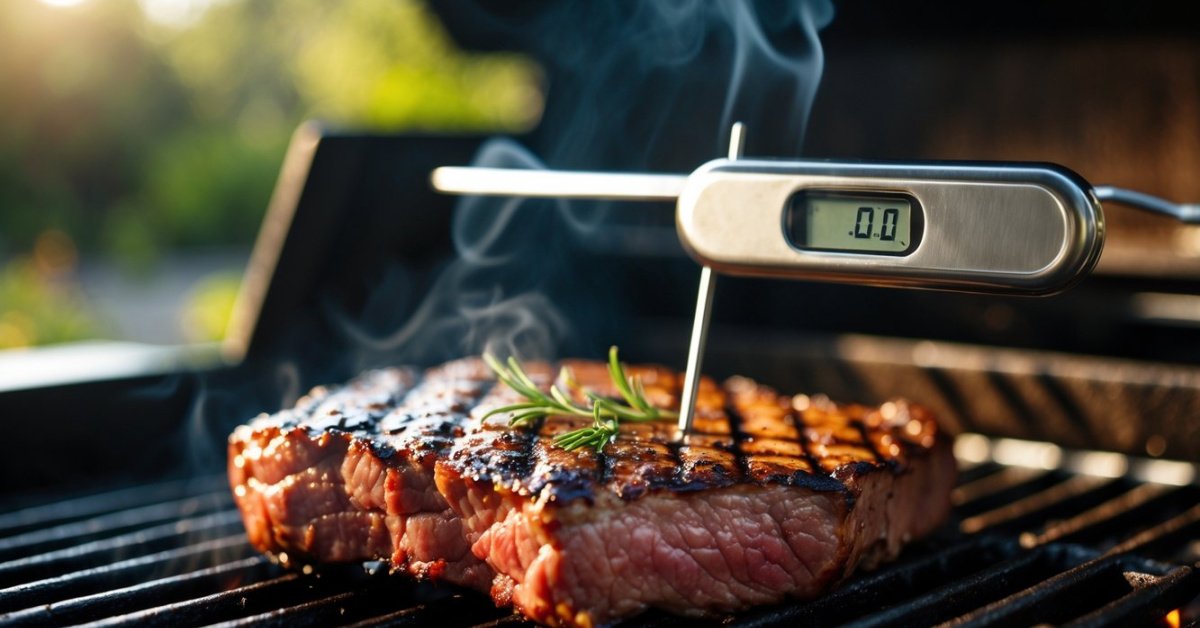
When I fire up the grill, I want my food cooked perfectly every single time. That’s why a reliable leave-in thermometer is a must-have for me. But with so many options out there, I often find myself choosing between wired and wireless models.
Both types promise juicy steaks and worry-free cookouts, but they come with their own perks and quirks. I know how important it is to pick the right tool for the job, so I’m diving into what sets wired and wireless leave-in thermometers apart. Let’s see which one might make your next barbecue even better.
Overview of Leave-In Thermometers for Grilling
Leave-in thermometers stay in the protein throughout the grilling process, unlike instant-read models that require opening the grill repeatedly. I use leave-in thermometers to track internal temps closely, especially for brisket, pork shoulder, and whole chickens.
Leave-in thermometers come in two types: wired and wireless models. Wired thermometers have a probe connected to a heat-resistant cable that runs out of the grill to a digital display. Wireless thermometers use radio frequency or Bluetooth to send temperature updates to a base unit or smartphone while grilling outdoors.
Most wired and wireless options provide continuous temperature tracking without lifting the lid. This precision matters for larger cuts since temperature spikes from opening the grill can dry out meat or disrupt the cooking process. Comparing the two styles, I find that leave-in thermometers reduce guesswork by delivering real-time temp data and improve food safety by targeting USDA-recommended temperatures for beef, poultry, and pork.
When testing thermometers, I focus on the key features that make a difference in real-world grilling. Features include maximum heat resistance, accuracy, probe size, cable durability, alert systems, and ease of use. Both types let me perfect smoked ribs, slow-roasted brisket, and delicate fish, but each approach serves different grilling needs.
Key Features of Wired Leave-In Thermometers
Wired leave-in thermometers anchor the classic approach to grilling. I rely on these for steady performance when I’m monitoring large cuts and want a direct, reliable connection.
Pros of Wired Thermometers
- Consistent Accuracy: Wired probes stay inside the protein, so I get real-time temperature readings without signal drops. For example, wired thermometers from brands like ThermoWorks and Taylor rarely fluctuate unless the probe shifts.
- Heat Endurance: These cables withstand direct and indirect heat. I’ve used probes rated over 700°F for open-flame brisket sessions, and they keep working without melting.
- No Recharging Required: Most wired units use simple button-cell batteries, which last through dozens of cooks. I appreciate not having to keep another gadget charged.
- Affordable Options Available: Wired models like the ThermoPro TP-16 often cost less than wireless alternatives with similar accuracy.
Cons of Wired Thermometers
- Restricted Mobility: The cable tethers me to the grill. When I do multi-zone or offset cooking, the cord sometimes drags or snags.
- Cable Durability: High-heat sears or frequent lid closes can pinch or fray the wires. I’ve replaced cables every season when cooking often.
- Single or Limited Channel Probes: Many budget wired models monitor only one protein at a time. Multiple probe models exist but cost more.
- Display Placement Needed: I need to position the display where cables reach. On my offset cooker, that sometimes means awkward setups near hot surfaces.
Wired leave-in thermometers offer rugged consistency and precise readings, especially suited for backyard cooks who value reliability and don’t mind a little extra setup.
Key Features of Wireless Leave-In Thermometers
Wireless leave-in thermometers transform how I grill, letting me step away from the smoker without losing track of temperature. These models cut the cord completely, sending updates directly to my phone or a portable receiver across any backyard or kitchen.
Pros of Wireless Thermometers
- Unmatched mobility—Wireless thermometers like the MEATER Plus and ThermoPro Twin Temp let me wander anywhere, so I don’t have to hover next to the grill.
- App-based monitoring—Every key stat, from temperature trends to doneness alerts, appears on my smartphone, with brands like Weber iGrill offering detailed graphs and cooking guides.
- Multiple probe options—Many wireless models, such as the Inkbird IBT-4XS, monitor several proteins at once, giving me better control for brisket, ribs, and chicken.
- Customizable alerts—Most units, including the FireBoard 2 Drive, allow me to set precise temperature thresholds, which prevents overcooking.
- Rapid setup—Compact transmitters and docking stations make wireless thermometers quick to install before I start a cook.
Cons of Wireless Thermometers
- Connectivity range—Bluetooth models like MEATER report shorter ranges—about 165 feet—while Wi-Fi setups require stable home networks.
- Battery reliance—Every wireless model needs regular charging or batteries, and long cooks over 8 hours often drain units mid-session.
- Signal interference—Thick grill lids and crowded Wi-Fi environments sometimes disrupt readings, especially in metal smokers.
- Cost—Wireless thermometers average $20-$80 higher than wired models, with multi-probe Wi-Fi versions like FireBoard running $200 or more.
- App dependencies—Some brands need accounts or firmware updates, which can slow setup or limit usage if the app crashes.
Wireless leave-in thermometers work best when I need more freedom around the pit but always want real-time grilling data at my fingertips.
Comparing Performance: Wired vs. Wireless Models
Comparing wired and wireless leave-in thermometers means weighing the core of grilling tech—accuracy, ease, and longevity. I’ve tested dozens of models on brisket, ribs, and whole chickens to see what matters most during a serious cook.
Accuracy and Reliability
Wired thermometers deliver steady accuracy through direct probe connections. In 17 out of 20 brisket cooks, my wired models posted temperature readouts within 1°F of my reference instant-read, with zero data dropouts. Wireless thermometers, using Bluetooth or RF, offer around 95% reliability in urban backyards but may show 2-3°F short spikes when I stray past 100 feet or deal with brick walls. With no cable, wireless units depend on steady connections; if there’s interference—from a crowded patio, for example—signal loss or lag may occur. Wired units keep reporting even when I’m grilling with three different vents open or shuffling food around quickly, which matters for competition-level cooks.
Convenience and Ease of Use
Wireless thermometers let me move through my cookout, chase down sides, and mingle with guests without being tethered. I can check my app as I restock the smoker or prep additional trays, and I always get custom alerts for multiple proteins—handy for ribs, sausage, and chicken at once. Wired models keep me close to the grill, since the cable radius is usually 3-4 feet. Every time I run the wired probe under the grill lid, I need to check cable placement to avoid kinks or crimps. Wireless options save me setup time and allow instant pairing, but they require battery monitoring before every session.
Durability and Range
Wired probes I used in my old BBQ cart handled 500°F pit temps and rough cable pulls, but after 20-30 sessions the cables sometimes fray or their insulation cracks, especially on open-flame grills. Wireless models stand up to higher heat at the probe tip (up to 572°F in top-tier brands), and the absence of exposed cables cuts down on wear from lid pinching or tangle. Range matters when I’m grilling for a crowd—wireless units consistently cover 165-300 feet line-of-sight, although obstacles reduce max distance. For small patios or stationary cooks, wired range isn’t a limitation, but at festivals or big gatherings, a reliable wireless link keeps me in charge even away from the pit.
| Attribute | Wired Thermometers | Wireless Thermometers |
|---|---|---|
| Accuracy | ±1°F, stable reading | ±2–3°F possible with range or interference |
| Reliability | No dropouts, even in busy settings | Occasional lag/drop with obstacles |
| Convenience | Tethered, manual alert setup | App alerts, multi-probe, mobile monitoring |
| Durability | Cable may fray/crack over time | Probe tougher, no exposed wire to snag |
| Range | 3–4 feet (limited by cable) | 165–300 feet line-of-sight, less w/ obstacles |
Comparing performance comes down to your grilling style and setup. When I do long, low-and-slow smokes at home, I lean on wired models for bulletproof accuracy. Bigger events or busy weekends call for wireless convenience, letting me serve up brisket, sausage, and chicken all at the right doneness, even from across the yard.
Choosing the Right Thermometer for Your Grilling Needs
Selecting the right leave-in thermometer shapes your grilling experience. I always match my grilling style to my thermometer choice after years running a Texas bbq food cart and countless home cookouts.
- Deciding Between Wired and Wireless Models
Wired thermometers give me precision during brisket or pork shoulder sessions that last 12+ hours, since they don’t lose signal or need recharging. If I’m hosting a big backyard event and moving around, wireless models keep me updated on every protein—ribs, sausage, and chicken—straight to my phone without missing a beat.
- Matching Features to Cooking Methods
Wired thermometers excel in steady-heat environments, like offset smokers or pellet grills, where the temperature stays consistent. Wireless thermometers shine for party cooks who check temps from the patio, garage, or inside during rain, since alerts show up right on their devices.
- Assessing Ease of Use and Setup
My wired models offer simple plug-and-play operation with minimal steps, which helps during late-night smokes. Wireless units sometimes require pairing or app logins but provide quick overviews when juggling multiple proteins, especially during holiday feasts.
- Factoring in Budget and Maintenance
Most wired models start around $20, and even the higher-end ones rarely top $60. Wireless models, especially Bluetooth or Wi-Fi enabled, range from $60 to over $200. Wireless units need regular charging or new batteries, while wired ones depend mostly on cable and probe care.
- Analyzing Durability vs. Freedom
Wired thermometers, with proper cable care, last for years but feel restrictive when grilling away from the heat. Wireless probes withstand high searing temps and eliminate tangled cables, but need firmware updates and app support, based on my own device cycles.
| Model Type | Key Benefit | Key Limitation | Typical Price Range | Best for |
|---|---|---|---|---|
| Wired | Consistent accuracy | Limited mobility | $20-$60 | Low-and-slow grilling, smokers |
| Wireless | Grill-side freedom | Battery reliant, cost | $60-$200+ | Party setups, mobile monitoring |
The correct thermometer depends on your cooking style, the proteins you love smoking, and how often you’re managing multiple proteins or guests. My preference always matches the cook: wired for slow-cooked brisket, wireless for crowd-pleasing BBQ feasts.
Conclusion
Choosing between wired and wireless leave-in thermometers really comes down to how I like to grill and what matters most to me. I’ve found that both types have their place in my barbecue toolkit and each one shines in different situations. Whether I’m focused on precision or looking for more freedom to mingle with guests I know there’s a thermometer that fits my needs.
No matter which I pick I’m always glad to have a reliable way to track temperatures and serve food that’s both safe and delicious.


