
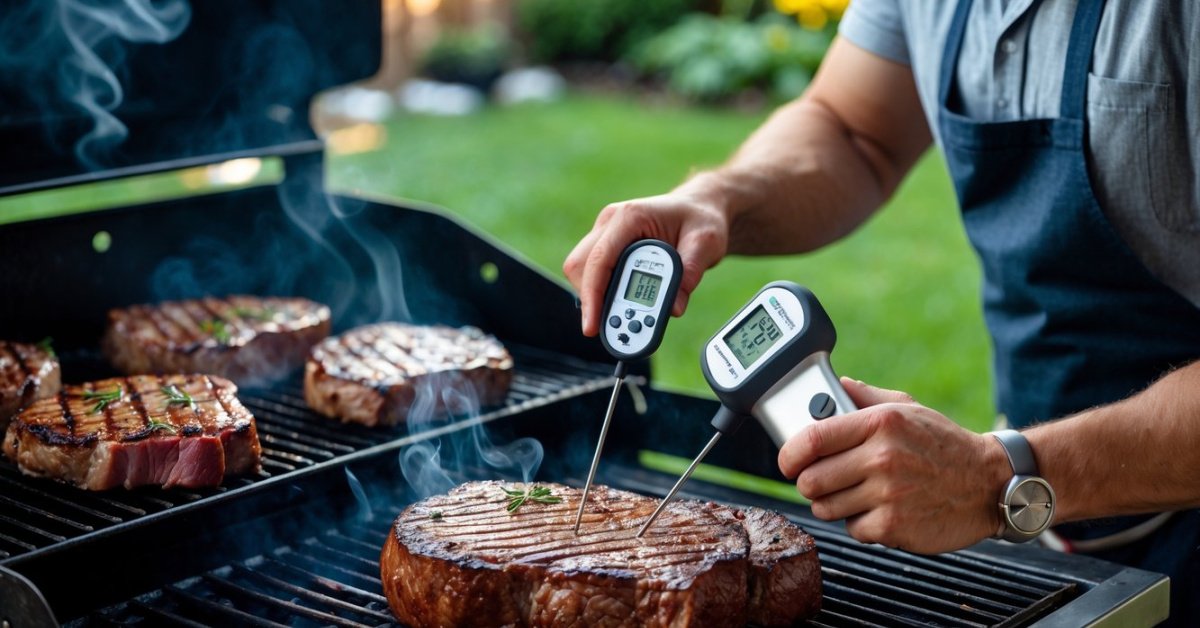
Whenever I fire up my gas grill I want every burger and steak to come out just right. But guessing the temperature can turn a cookout into a guessing game. That’s where a good thermometer steps in and saves the day.
With so many options out there picking the right thermometer can feel overwhelming. I’ve learned that having the right tool not only makes grilling easier but also brings out the best flavors in every meal. Let’s explore what makes a thermometer perfect for gas grill cooking and how to find one that fits your style.
Importance of Accurate Temperature in Gas Grill Cooking
Cooking meat on a gas grill demands accurate temperature, since doneness and safety rely on targeted heat levels. Overcooked brisket turns dry at just a few degrees over the target. Undercooked chicken remains unsafe to eat unless it hits 165°F internally, according to USDA guidelines. I always reach for my instant-read thermometer right before serving steaks, ribs, and sausages, since color alone misleads even seasoned pros.
Maintaining a consistent grill surface temperature factors into creating the perfect crust or bark on burgers and pork butts. In my experience, grill lid thermometers rarely report the true grate temp—some run as much as 50°F off target. Using a reliable thermometer ensures the correct sear and avoids burning the outside while leaving the inside raw.
Temperature accuracy also matters for delicate foods. Monterey jack-stuffed peppers and salmon filets break apart or turn rubbery if the grill’s running hotter than I think. With a responsive, precise thermometer, I nail those ideal texture points and keep my results consistent across recipes.
Flavor hinges on reaching the right temps for meat, seafood, and even veggies. Using inaccurate or slow thermometers risks uneven cooking and poor texture. When temperature is dialed in, every bite matches the quality I aim for, whether I’m cooking at home or when I used to serve brisket sandwiches from my Texas food cart.
Types of Thermometers for Gas Grills
Grilling on gas grills calls for accurate temperature checks at different stages of cooking. I’ve used nearly every thermometer style out there, and each one brings unique benefits to bbq sessions.
Instant-Read Thermometers
Instant-read thermometers deliver a quick temperature reading when you insert the probe into chicken thighs, steak, or pork chops. I use these most when I want fast spot checks near the end of the cook, and when high-heat grilling makes it risky to keep my hand close to the flame for long. Digital models—like the ThermoWorks Thermapen—give precise readings in 2–3 seconds, making them ideal for flipping multiple steaks or burgers in quick succession.
Probe Thermometers
Probe thermometers monitor the internal temperature of brisket, ribs, or whole chickens during the entire cook. These include wired and wireless versions that let me track temps remotely, so I don’t have to constantly open the lid and lose heat. Models like the MEATER or ThermoPro feature dual probes, allowing me to check both meat and ambient grill air temperature at the same time. Long cooks—think pork shoulder or turkey—benefit most from these, since they give consistent feedback throughout hours of smoking or roasting.
Infrared Thermometers
Infrared thermometers measure surface temperatures without any contact. I use them to quickly check preheat temps across grill grates, or to find hot and cool spots for perfect searing on steaks or charring on vegetables. These tools excel at reporting instant readings—usually in under a second—which helps when I want to ensure every square inch of the grill is up to my target temp before adding delicate foods like salmon fillets.
In my experience, bringing the right thermometer to the grill station means more control, tastier bbq, and less second-guessing every time I fire up the burners.
Key Features to Consider When Choosing a Thermometer
I always zero in on key features when picking a thermometer for gas grill cooking. Grilling great brisket or burgers comes down to consistency, so the right thermometer makes a huge difference.
Temperature Range and Accuracy
I look for thermometers with a wide temperature range that covers everything from low-and-slow smoking at 225°F to searing steaks at over 600°F. Accuracy is critical—models boasting a margin of error of ±1–2°F, like the ThermoWorks Thermapen, deliver reliable doneness for cuts like pork chops or chicken breasts. Trusted digital thermometers clearly specify their accuracy ratings, helping me confidently pull tender ribs at just the right moment.
Response Time
Fast response times mean fewer precious grilling seconds lost. Instant-read models such as the Lavatools Javelin or ThermoPro TP19X typically give accurate readings within 2–3 seconds. Quick results let me check multiple steaks or burgers without sacrificing the grill’s heat or overcooking any food—a must for maintaining juicy results.
Durability and Build Quality
Sturdy thermometers stand up to repeated use. I stick with models featuring waterproof or water-resistant casings, reinforced probes, and impact-resistant exteriors. Stainless steel construction, as seen on higher-end probes like those from MEATER, helps the thermometer last for years despite frequent temperature shocks and outdoor use.
Display and Readability
Easy-to-read displays are essential when smoke or low lighting makes things tricky. I prefer backlit screens and large digital digits for fast checks during dusk cookouts or cloudy days. Rotating screens and anti-glare displays, featured on the Thermapen ONE, make the thermometer easy to use from any angle.
Wireless and Smart Features
Modern grilling often means multitasking, so wireless thermometers let me move around while still monitoring food. Bluetooth or Wi-Fi models like the Inkbird IBT-4XS send live updates to my phone, triggering alerts when steaks or brisket hit the right temp. Some smart thermometers sync with recipe apps, providing step-by-step guidance and tracking temperature history—a huge plus during long cooks or while entertaining guests.
Top Picks: Recommended Thermometers for Gas Grill Cooking
I’ve tested dozens of thermometers on briskets, burgers, and everything in between. These are the models I recommend for anyone serious about gas grill cooking:
- ThermoWorks Thermapen ONE
Delivers lightning-fast and precise readings, averaging 1-second response time and ±0.5°F accuracy. The large, rotating backlit display makes evening grilling easy. Water resistance and a rugged build handle outdoor conditions. I reach for this one every grilling session.
- Lavatools Javelin PRO Duo
Balances speed and value, showing temperatures in under 3 seconds within a ±0.9°F margin. The magnetic back lets me stick it to the grill for quick access. Splash-proof design and auto-rotating display add convenience when flipping steaks.
- MEATER Plus Wireless Smart Meat Thermometer
Provides wireless tracking up to 165 ft, transmitting both internal meat and ambient grill temps via Bluetooth. The mobile app sends custom alerts, perfect for multitasking during slow cooks or gatherings. Dual-sensor probe handles steaks and roasts equally well.
- ThermoPro TP20 Wireless Remote
Offers dual probe monitoring up to 300 ft range with no app needed. The receiver beeps when the set temp is reached, letting me move around the yard without hovering by the grill. The preset USDA temperatures cover poultry, pork, and beef.
- Etekcity Infrared Thermometer 774
Measures grill grate and surface temps instantly, ranging from -58°F to 716°F with a ±2°F accuracy. Point-and-shoot operation checks for hot spots before dropping the meat. I use this before searing chops or getting cast iron pans ready.
| Thermometer Model | Response Time | Accuracy | Unique Feature | Ideal Use |
|---|---|---|---|---|
| ThermoWorks Thermapen ONE | 1 second | ±0.5°F | Rotating, backlit display | Steak, poultry, evening grilling |
| Lavatools Javelin PRO Duo | <3 seconds | ±0.9°F | Magnetic back, quick-read | Fast checks, burgers |
| MEATER Plus Wireless | variable | ±1–2°F | Wireless, app integration | Roasts, multitasking |
| ThermoPro TP20 Wireless Remote | instant | ±1.8°F | Dual probes, remote alerts | Ribs, poultry, low-and-slow cooks |
| Etekcity Infrared Thermometer 774 | instant | ±2°F | Surface temp, easy grip | Grill grates, cast iron pans |
I constantly explore new models, but these five remain reliable staples for gas grill cooking based on speed, accuracy, and sheer grilling practicality.
Tips for Using and Maintaining Your Grill Thermometer
Calibrate regularly for accuracy
I check each new thermometer’s calibration against ice water (32°F) and boiling water (212°F at sea level) as soon as I unbox it. I recalibrate monthly or if I drop my thermometer since minor knocks can throw off readings. Consistent results rely on spot-on calibration.
Clean after each use to avoid buildup
I quickly wipe metal probes with a damp cloth and mild soap. For grills that see a lot of brisket or chicken, I use alcohol wipes to kill bacteria on the probe tip. I never immerse digital units, as moisture inside can wreck electronics.
Store carefully to prevent damage
I keep my instant-reads in a protective sleeve or the original box. For probe thermometers, I wind the cable neatly and store it in a drawer away from sharp utensils. I avoid leaving any thermometer in direct sunlight or near intense heat when not in use since this causes plastic and wires to degrade.
Replace batteries as needed for consistent performance
I always keep extra AAA or coin batteries on hand. Low batteries cause laggy temperatures and display glitches. I swap out batteries before busy cookouts or long smoking sessions to avoid downtime.
Check for moisture after use in humid or rainy conditions
I inspect my thermometer for any trapped moisture, especially near the battery compartment and display. In damp climates, I leave the probe extended to air dry before storing. I address foggy screens or condensation immediately to prevent faults.
Avoid exposure to extreme temperatures outside safe range
I use probe thermometers within their rated limits, usually capped at 572°F for most models. Instant-reads melt or crack above 500°F, so I never leave these in a closed grill or over direct flame. Keeping within safe ranges preserves accuracy and extends thermometer life.
Test before big events to ensure proper function
I run a quick test—just a glass of ice water and boiling water—on every thermometer before cookouts with friends. Nothing ruins a brisket faster than a dead probe or inaccurate reading during a busy BBQ.
These practices maintain thermometer accuracy and performance, whether I’m grilling steaks for dinner or prepping ribs for a Texas-style feast.
Conclusion
Choosing the right thermometer for gas grill cooking has made all the difference in my grilling adventures. With so many options out there it’s easy to feel overwhelmed but finding one that fits my needs has helped me grill with confidence and enjoy tastier meals.
A reliable thermometer isn’t just a tool—it’s my secret weapon for perfect steaks and juicy burgers every time. Investing a little time in picking the right one has truly elevated my grilling game and made every cookout more enjoyable.


