
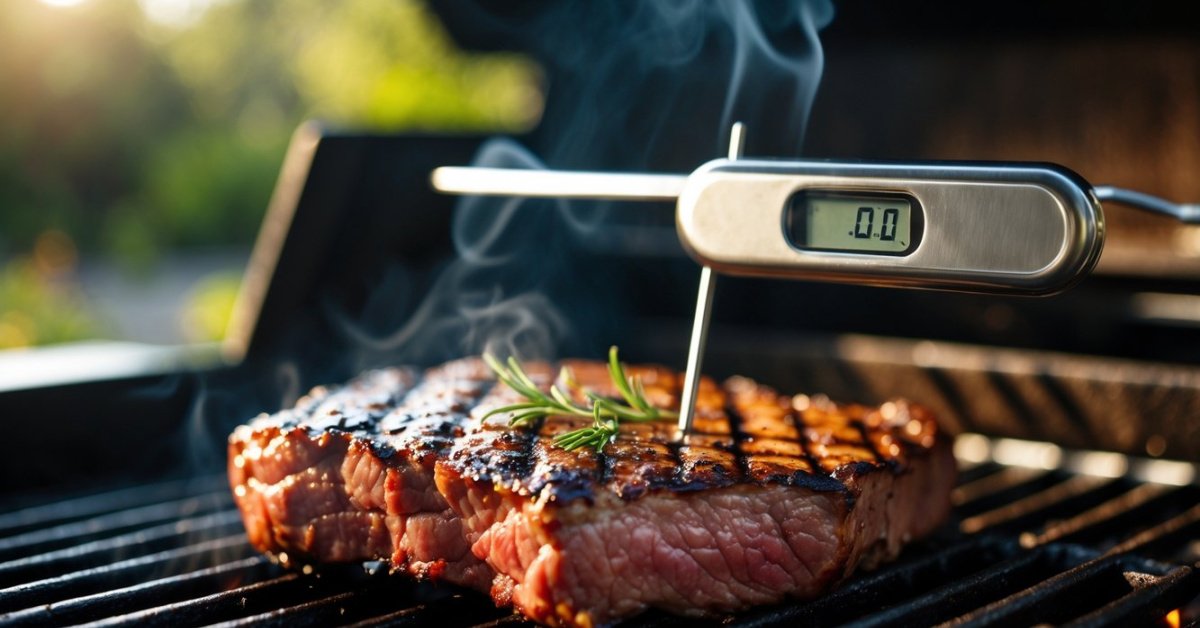
When I’m grilling thin cuts of meat like chicken breasts or pork chops I know just how tricky it can be to get them perfectly cooked. There’s a fine line between juicy and overdone and I don’t want to leave that up to guesswork. That’s where a reliable thermometer makes all the difference.
Finding the right thermometer for thin meats isn’t always easy though. Some probes are just too bulky or slow to give an accurate reading before the meat dries out. I’ve tried a bunch of options and learned what really works when every second counts. If you’re tired of dry steaks or undercooked burgers you’re in the right place.
Why Accurate Thermometers Matter for Grilling Thin Meats
Accurate thermometers give exact internal temperature readings for thin meats like chicken breasts, pork chops, and skirt steaks. Fluctuating temperatures cook thin cuts unevenly, with even small errors resulting in dry, tough, or unsafe food.
Thin meats reach target temperatures—such as 145°F for pork or 165°F for chicken—within seconds. I often see color or feel deceiving meat doneness, especially on high heat. Quick and precise thermometers, like instant-read digital models, provide correct information before the meat overcooks.
Inconsistent thermometers rarely read thin cuts effectively. I’ve tested slow or thick probes and lost juices with every extra second in the meat, making grilling dry and chewy. Thin, sensitive probes keep meat moist and deliver results in under three seconds.
Restaurant kitchens and BBQ competitions rely on accurate data to hit specific temperatures. When I ran my Texas food cart, fast readings improved serving consistency and quality in every order. Reliable thermometers give grillers the same precision at home, reducing the learning curve and increasing meal success.
Accurate temperature checks remove guesswork, prevent repeated poking, and let me grill thin cuts quickly for maximum juiciness and safety.
Key Features to Consider in Thermometers for Thin Meats
Choosing thermometers for thin meats means prioritizing speed, precision, and reliable accuracy. I test every device on everything from chicken cutlets to skirt steak, so I focus on these features to get the best results.
Fast Response Time
Quick response time ensures thin cuts don’t overcook while waiting on a reading. I look for thermometers that read temperatures in under three seconds. Instant-read models, like the ThermoWorks Thermapen ONE and the Lavatools Javelin PRO, usually fit this need. Reliable speed helps me pull meat at just the right moment to lock in juice and flavor.
Probe Size and Precision
Thin meats demand thermometers with slim probes and precise tips. Probes with a diameter of 1.5 mm or less, such as those on the ThermoPro TP03, slide easily into fillets or chops without leaving big punctures that cause moisture loss. Fine-tipped probes let me target the very center of the meat, getting an exact read every time, even on thin fish or pork strips.
Temperature Range and Accuracy
High temperature accuracy avoids both undercooking and drying out thin meats. I rely on models rated with ±0.9°F (±0.5°C) accuracy and a temperature range from 32°F to 572°F, covering everything I throw on the grill. Accurate sensors—found in models like the Inkbird IHT-1P—mean my grilling stays safe and consistent, whether I’m making tacos al pastor or grilled chicken souvlaki.
| Feature | Preferred Metric | Example Model |
|---|---|---|
| Fast Response Time | Under 3 seconds | Thermapen ONE, Javelin PRO |
| Probe Tip Size | 1.5 mm or less | ThermoPro TP03 |
| Accuracy | ±0.9°F (±0.5°C) | Inkbird IHT-1P |
| Temperature Range | 32°F – 572°F | Inkbird IHT-1P |
Top Picks: The Best Thermometers for Grilling Thin Meats
Thermometers built for thin meats make grilling pork chops or chicken breasts much easier. I’ve personally handled dozens on my grills, smokers, and even at the old food cart. Here’s what stands out for accuracy, speed, and price.
Instant-Read Thermometers
Instant-read thermometers help me see temps in seconds before thin cuts turn tough. ThermoWorks Thermapen ONE consistently delivers readings in 1 second or less, every time I poke a chicken cutlet. Lavatools Javelin PRO Duo gives nearly the same speed with an extra-long probe, which stays cool even after a round of steaks. Both models use slim 1.5 mm tips, so juices stay inside and surfaces stay clean. I get reliable accuracy within ±0.9°F—great for when every second counts over hot coals.
Wireless and Smart Thermometers
Wireless and smart thermometers let me keep grilling thin meats while tracking temps from my phone. MEATER Plus combines Bluetooth and a slender, well-sealed probe, which slides effortlessly into a burger or fish fillet. ThermoPro TempSpike sends instant alerts if the temp’s rising too fast, which helps avoid dry spots with thin pork tenderloin. These models connect easily to companion apps, so I watch temps and set reminders without lifting the grill lid or hovering over the heat.
Budget-Friendly Options
Budget-friendly thermometers for grilling thin meats still get the job done on busy cookouts. ThermoPro TP03 comes with a thin probe and gives digital readings in 3–4 seconds, which I trust for mid-week grilling on a tighter budget. Kizen Instant Read is another option—accuracy within 1°F and a waterproof body, so I use it worry-free even on rainy days. Both brands offer reliable support and calibration certificates, keeping my grill nights consistent without stretching my wallet.
Tips for Using Thermometers on Thin Cuts
Use thin probes for thin cuts. I always reach for a thermometer with a probe that’s 1.5 mm or less in diameter when grilling pieces like chicken breast slices, skirt steak, or thin pork chops. Thinner probes slide in easily, minimize juice loss, and prevent tearing the meat.
Insert probes in the thickest part. I target the thickest section for the most accurate temperature because thin meats cook fast and unevenly. I angle the probe sideways if the cut’s too shallow for a straight-in approach.
Monitor temperature early and often. I check doneness once the outside browns since thin cuts can reach the safe internal range in under 2 minutes for ½-inch steaks or cutlets.
Avoid over-penetration. I insert the probe just to the center, stopping as soon as the tip hits the middle instead of letting the shaft poke through to the grill below, which delivers faulty readings.
Clean probes between uses. I wipe my probe clean after each check, especially when flipping or sampling different proteins, to avoid cross-contamination and tainted flavors.
Remove meat just before the final temperature. I pull thin meats from the grill when the thermometer reads about 2°F below the safe temperature, letting carryover heat finish cooking.
Practice quick readings. I keep my instant-read thermometer on-hand and never leave it in the grill, ensuring I get a reading in under three seconds to keep thin meats juicy and evenly cooked.
Conclusion
Grilling thin meats really is a balancing act but the right thermometer makes it so much easier. I’ve learned that a fast and accurate tool can take the guesswork out of the process and help me serve juicy flavorful results every time.
If you’re tired of dried-out chicken or overdone pork chops investing in a good thermometer is a game changer. With the right pick you’ll feel more confident at the grill and your friends and family will definitely notice the difference.


