
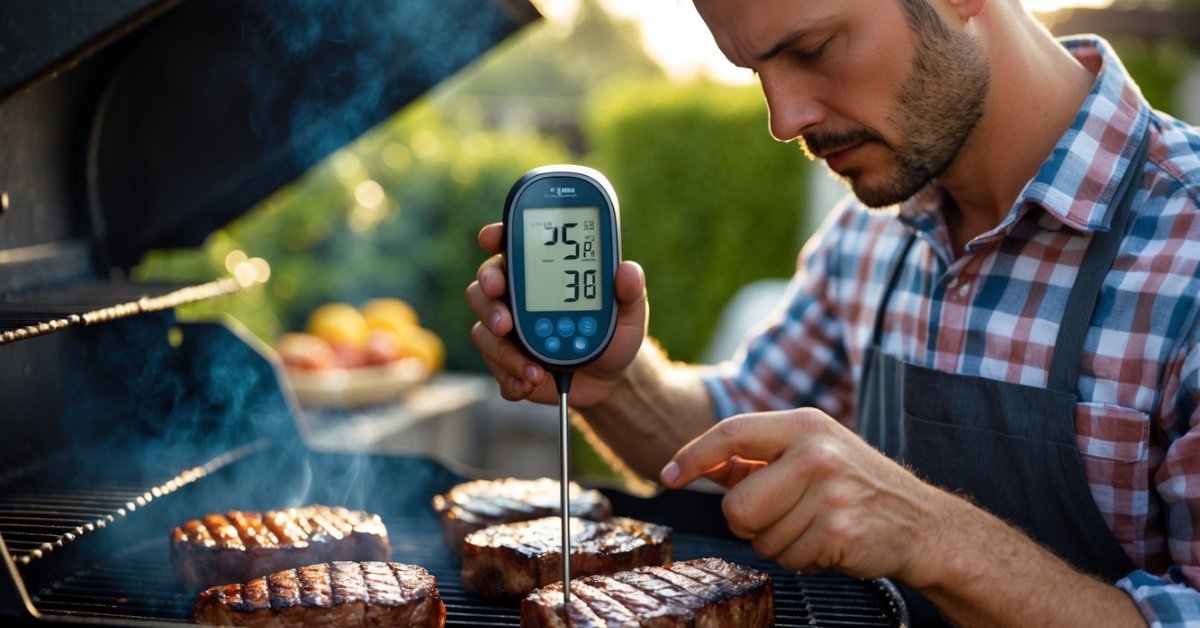
There’s nothing like the sizzle and aroma of food cooking on a pellet grill. I love the anticipation as smoky flavors build and the perfect sear forms on my favorite cuts. But even with all the right seasonings and techniques, one tool always makes the biggest difference—a reliable thermometer.
I’ve learned that guessing temperatures just doesn’t cut it when I want juicy brisket or perfectly cooked chicken. Thermometers take the guesswork out of grilling and let me focus on enjoying the process. With the right thermometer in hand, I can relax knowing my food will turn out just the way I like it every time.
Understanding Pellet Grill Cooking
Pellet grilling uses compressed wood pellets for heat and flavor, producing smoke that infuses meat and vegetables with distinctive barbecue notes. I load the hopper with pellets, set the digital controller, and the grill automatically feeds pellets into the firepot to maintain the target temperature. Unlike charcoal or gas grills, a pellet grill relies on electronic sensors and fan systems to deliver even heating—making temperature a central element.
Precise temperature management matters for pellet grill cooking. Each dish I prepare, from ribs and pork shoulder to salmon and vegetables, responds differently to heat. Low temperatures between 180°F and 225°F create tender, smoky brisket after hours of consistent smoke. Hotter settings above 400°F handle reverse seared steaks and crisp-skinned chicken thighs. Maintaining specific temperatures ensures consistent textures and doneness in every recipe.
Pellet grills allow me to focus on seasonings, smoke profiles, and timing rather than constantly adjusting vents or fuel. The digital control panel lets me adjust heat in fine increments. Still, I use thermometers to verify temperatures, since built-in grill readings sometimes stray from actual surface or internal food temperatures. For me, true control comes from monitoring both grill and meat temperatures with dependable thermometers, ensuring accurate results every time.
Importance of Accurate Temperature Control
Precise temperature control determines whether brisket turns out juicy or dry. I see the biggest flavor differences when internal temps are dialed in right, especially for long cooks on pork shoulder or ribs where a few degrees make the difference between tender and tough. Both the grill’s internal temperature and the meat’s core temp guide me through each stage—like the brutal Texas summers taught me, knowing the exact internal temperature stops overcooking chicken breasts or undercooking pork chops.
Consistent results depend on real-time temperature data, not guesses or built-in lid gauges. I always use external digital grilling thermometers since built-in probes often differ by 10–20°F (FoodSafety.gov, USDA). Double-checking pit temperature with a calibrated grill thermometer shows me any hot or cold spots inside the chamber, and helps me reposition briskets or racks of ribs as needed for even doneness.
Food safety also rides on accuracy. For chicken, turkey, and ground meats, the USDA sets specific safe minimum internal temperatures: 165°F for poultry, 160°F for ground beef. Instant-read thermometers help me confirm these targets, so I avoid dry, overcooked food but never serve undercooked meat.
Flavor and food safety both require accurate temp readings on a pellet grill. I trust quality leave-in probe thermometers and instant-read models so I focus on the cook, not the guesswork.
Types of Thermometers Used in Pellet Grills
Various thermometers help me keep control over every pellet grill cook. My experience with both built-in and external options, plus digital and analog models, shows that picking the right tool makes a noticeable difference in performance.
Built-In vs. External Thermometers
Built-in thermometers come pre-installed on pellet grill lids, while external thermometers cover a wide range of aftermarket probes and devices I add to the setup. Built-in lid gauges, like those on Traeger or Pit Boss grills, measure air temperature several inches above the grate. These often run 20–50°F higher or lower than grate-level temps, according to tests from AmazingRibs.com and my own side-by-side cooks.
External thermometers, like the ThermoWorks SmokeX or MEATER Plus, deliver much greater accuracy. I place these probes directly at grate level or into the thickest part of meat. This allows me to track both grill and food temps in real time. External units often include wireless monitoring and multiple probes, so I can roam my backyard or prep side dishes without losing control over the grill.
Digital vs. Analog Thermometers
Digital thermometers give near-instant readings and precise tracking, making them my primary choice for all pellet grilling. They feature LED or backlit displays, alarm functions, Bluetooth or Wi-Fi connectivity, and accuracy often within ±1–2°F, such as the Thermapen One or FireBoard 2. This tech works especially well for brisket or pulled pork, where every degree matters over hours of slow smoking.
Analog thermometers use bimetallic coils or dial faces, sometimes found as lid gauges or simple oven-safe probes. These take several seconds—sometimes up to a minute—to stabilize. Many analog models lag behind digital options by 10–30°F, a margin that risks missing a perfect doneness window. For quick checks or high-heat searing where slight variation won’t matter, I might use a sturdy analog, but for precision cooks, digital always wins in both speed and reliability.
How Thermometers Enhance Pellet Grill Performance
Thermometers take pellet grill cooking from guesswork to precision. I rely on these tools every session because every cut of meat and recipe demands specific, consistent heat.
Achieving Consistent Results
Consistent results in pellet grill cooking depend on stable temperatures. When I use a high-quality digital thermometer, I get real-time readings at the grate level, where the food actually cooks. For example, built-in lid thermometers often show air temperature up high, which can differ by 30–50°F from grate temperature during windy or cold days. External probe thermometers let me track temperature swings quickly, adjusting my grill’s setting or the pellet feed rate if the temp drifts from target. I get even brisket bark, juicy smoked chicken, and steady results for racks of ribs across repeated cooks—results that built-in thermometers never gave me.
Ensuring Food Safety
Food safety starts with verifying internal temps. I always use a fast, reliable instant-read thermometer like the Thermapen or a quality leave-in probe, especially for chicken quarters, pork shoulder, and burgers. The USDA recommends specific minimum safe internal temperatures: 165°F for poultry, 145°F for pork, and 160°F for ground beef. Only precision thermometers ensure I hit these targets without drying out meat or risking undercooking. I get to enjoy brisket that’s both tender and safe, thanks to direct temperature confirmation. In my years running a Texas bbq cart and now testing recipes at home, only accurate thermometers let me serve food with confidence every time.
Tips for Using Thermometers Effectively
- Place Probes Correctly
I always insert meat probes into the thickest section, away from fat, bone, or the grill surface. This spot gives an accurate reading of the core temperature.
- Avoid Lid Thermometer Reliance
I rarely trust built-in lid thermometers. These devices can show air temps far from where food cooks, so I use external digital probes at actual grate level.
- Calibrate Regularly
I check my thermometers by comparing them in ice or boiling water. If readings differ by more than 2°F from the standard—32°F for ice water, 212°F for boiling water at sea level—I reset or replace the device.
- Prevent Probe Damage
I keep wires and digital components away from direct flame or moisture. High heat or excess water shortens a probe’s lifespan fast.
- Use Instant-Read Models for Spot Checks
I always keep a handheld instant-read thermometer nearby. This tool’s perfect for confirming internal temps in multiple places, especially chicken thighs or steak ends.
- Monitor Ambient and Internal Temps
I use at least two probes—one for grate temperature and one for the meat center. Pellet grills create hot spots, so dual readings help adjust placement and doneness precisely.
- Clean Between Uses
I wipe down probes with hot, soapy water after each use, then dry thoroughly. Residue—grease or burnt bits—affects accuracy and food safety.
- Rely on USDA Guidelines
I check meat temperatures against the USDA chart. Beef brisket finishes around 200°F for tenderness, while chicken stays safe at 165°F internal.
| Tip | Example / Applicable Temperature |
|---|---|
| Place probes in thickest meat section | Center of brisket or chicken breast |
| Calibrate with ice or boiling water | 32°F (ice), 212°F (boil, sea level) |
| Use USDA safety minimums | Chicken 165°F, Pork 145°F, Beef 145°F |
Collecting precise temperature data with these methods made my Texas BBQ cart food safer and my home-cooked meals more consistent—brisket finished tender, ribs stayed juicy, and grilled chicken came out perfect every time.
Common Mistakes to Avoid
- Relying on Built-In Lid Gauges
I see many folks trusting the built-in thermometer on their pellet grill, but those lid gauges often show temps up to 40°F higher or lower than the actual grill grate temperature (Source: AmazingRibs.com). Always place an external probe at grate level for accurate readings.
- Placing Probes Incorrectly
I’ve watched people stick probes near bones or close to the edge of meat cuts. That gives false low or high readings. Insert the probe into the thickest part of the protein, away from bone and fat pockets, to get a true internal temperature.
- Skipping Calibration
Thermometer calibration gets overlooked, but factory errors or rough handling can cause a digital thermometer to drift by ±5°F. I dip my probes in boiling water (212°F at sea level) every month to check accuracy. Adjust or replace any that are off.
- Not Monitoring Ambient and Internal Temps
Pellet grills produce hot spots. I use a dual-probe thermometer to track both the grill’s ambient temperature and the meat’s core temperature. Relying only on one can lead to dry or underdone results, especially with larger briskets or pork shoulders.
- Forgetting to Clean Probes
Grease buildup or food particles can throw off readings by a few degrees and even contaminate food. I sanitize my probes after each use with hot, soapy water and a soft cloth before storing them.
- Removing the Probe Too Soon
Occasionally, the urge to check doneness leads people to remove the probe early. This can cause juices to escape or inaccurate readings. Leave the probe in place until the final check and only remove once the meat reaches its target temp.
- Using Damaged Probes
Bent or frayed wires, char buildup, or moisture inside the probe can cause erratic temperature spikes or error codes. Inspect each probe before use and replace damaged ones to keep readings trustworthy.
- Trusting One Reading
Hot and cold zones change throughout a cook, especially with long smokes. I check multiple spots with an instant-read thermometer before slicing, especially if I’m serving guests. This confirms doneness across the whole cut.
Avoiding these common thermometer mistakes saves time, prevents overcooked barbecues, and boosts food safety every time I fire up my pellet grill.
Conclusion
I’ve learned over the years that the right thermometer is one of the most valuable tools in my grilling arsenal. It’s not just about hitting the perfect doneness every time but also about enjoying peace of mind knowing my food is both delicious and safe.
With a little care and the right habits, using thermometers can become second nature. Every great cookout starts with good preparation and ends with happy faces around the table—and a reliable thermometer makes all the difference.


