
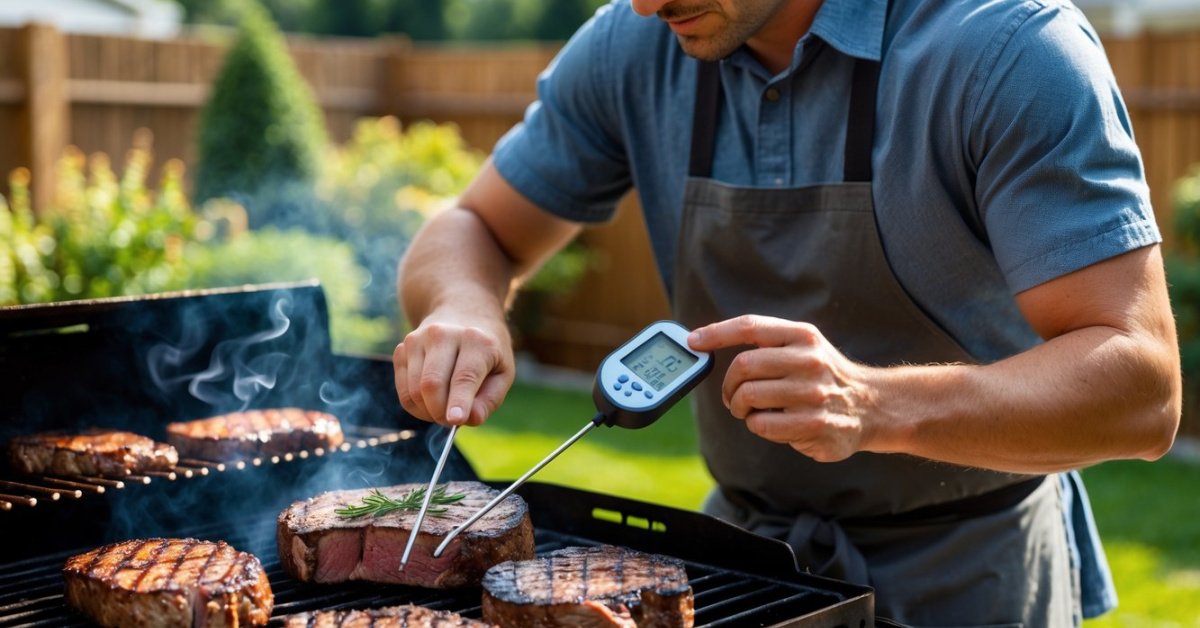
Whenever I’m grilling after sunset or during a cloudy afternoon, I know how tricky it can be to read a thermometer’s tiny numbers. There’s nothing worse than overcooking a steak just because I couldn’t see the temperature clearly. That’s where a backlit display makes all the difference.
With a simple press of a button, the screen lights up and suddenly I can check the temperature without squinting or fumbling for my phone’s flashlight. It’s a small feature that adds a huge boost to my grilling confidence. Whether I’m flipping burgers at a backyard party or smoking ribs for hours, I’ve found that a backlit display is a must-have upgrade for any serious griller.
Understanding Backlit Displays on Grilling Thermometers
Backlit displays on grilling thermometers give instant, clear readings no matter the lighting. I see the digits sharply whether I’m smoking brisket at dawn or checking ribs by the porch light after dark. These displays use LED or LCD technology that lights up the screen from behind, making numbers easy to spot with just a glance. Traditional thermometers with unlit screens often force me to squint or tilt the device under a flashlight, but backlit models let me keep my eyes on the grill and my hands free.
Most grilling thermometers with backlit displays activate the light with a simple button or touch, so I can check temperatures quickly. Some even sense low light and brighten automatically, which I find handy at dusk or under heavy cloud cover. When testing different brands, I notice premium backlit screens often offer higher contrast and large digits, which makes them readable from a distance—helpful when I’m juggling multiple foods on a busy grill.
From experience, backlit displays help avoid undercooked or overdone meat on late-night bbqs or stormy weekends. Both instant-read thermometers and remote wireless models now include backlighting, increasing accuracy and convenience. I use this feature with digital probe thermometers and wireless bbq units, especially during competitions or casual family cookouts. With reliable illumination, backlit displays remove the guesswork and keep my focus on perfecting flavor and texture every time I grill.
Enhanced Readability in Low Light Conditions
Backlit displays on grilling thermometers let me check temps fast, even when outdoor lighting’s weak. My grilling sessions often go well past sunset, so clear, bright screens make a real difference.
Grilling at Night or in Dimly Lit Environments
Grilling at night or when clouds roll in means natural light disappears, which happens often during Texas evenings. My backlit thermometer cuts through the darkness, so I never need to juggle flashlights or phone screens while checking meat. Models with LED-lit screens keep numbers visible when I’m dealing with multiple racks or large briskets after sundown. When camping or tailgating in low-light settings, these displays save time and prevent frustration, keeping my grilling pace steady regardless of where or when I cook.
Eliminating Reading Errors
Eliminating reading errors starts with being able to see the numbers perfectly. Since a backlit display illuminates digits, I catch temperature readings at a glance, even if I’m searing steaks in low light. High-contrast screens with larger fonts reduce wrong reads, which is key for thicker cuts like pork shoulder or ribs where precision matters. I spend less time squinting and more time managing the grill, which means juicier, reliably cooked barbecue every time.
Improved User Convenience
Backlit displays boost convenience by removing barriers when grilling in low light. I rely on them to keep temperature checks quick and effortless even when daylight’s fading.
Simplifying Temperature Checks
Backlit screens simplify temperature checks, especially in fast-paced grilling sessions. I just glance at the illuminated digits, and I see precise temperatures without squinting or stepping away from the grill. Many grilling thermometers with backlit displays activate automatically or with a tap—no fumbling with flashlights or phone screens around hot grates. When I’m flipping steaks on a brisk Texas evening or managing ribs at a tailgate, clear, visible readings keep the process seamless and efficient.
Aiding Users with Visual Impairments
Backlit displays aid users with visual impairments or anyone who struggles with small fonts in dim conditions. I’ve grilled with friends who appreciate large, high-contrast numbers on bright screens, especially when handling multiple cuts at once. Even people with mild vision loss catch readings instantly from backlit grilling thermometers, reducing mistakes and keeping every brisket or pork chop juicy. These displays help me share great barbecue with everyone, regardless of vision challenges, keeping confidence high every time I cook.
Safety Advantages
Backlit displays on grilling thermometers directly improve grilling safety, especially when lighting’s unpredictable. My time at the Texas food cart and testing countless thermometers taught me that clear displays let you focus on barbecue, not on struggling to read numbers in the dark.
Reducing the Need for External Lighting
Backlit screens on thermometers reduce the need for external lighting, which makes grilling safer by keeping your hands free. I don’t need to juggle flashlights or prop a phone awkwardly under my chin. With built-in illumination, I avoid cord clutter and tripping hazards around the hot grill. Having just my thermometer, tongs, and food streamlines the process and reduces the chance of burns or accidents after dark or during early morning cooks.
Minimizing Time Spent Over the Grill
Backlit displays let me check temperatures quickly, decreasing time spent leaning over flames or hot coals. Fewer seconds searching for a reading means less exposure to high heat and flare-ups. When I used thermometers without backlit screens, I’d hover too long and end up dodging grease splatters or accidental flare-ups. Quick, illuminated readings are especially important when grilling for a crowd or handling thicker cuts, where every fast, accurate check enhances both safety and food quality.
Battery Life and Power Efficiency Considerations
Backlit displays enhance grilling thermometer usability in the dark, but they impact battery use and overall power efficiency. I prioritize thermometers that balance brightness with battery conservation, especially during multi-hour Texas barbecues. Most quality grilling thermometers with backlit screens use energy-efficient LEDs, which draw less power than older display tech. Some models, like the popular ThermoPro TP20 or Weber iGrill 2, feature smart backlight functions—lighting up only when I press a button or when ambient light drops, then switching off after a few seconds.
Thermometer brands often state battery life ranges based on typical backlight usage. For instance, a thermometer running constant backlighting might last only 20 to 30 hours, but using an auto-off timer increases battery life to over 200 hours of active use. I check for these details when comparing thermometers, since changing batteries during a 12-hour brisket cook frustrates me and slows down prep.
Rechargeable lithium-ion battery options now show up in some higher-end models such as MEATER Block, which suits frequent grillers. Still, most units take AA or AAA batteries, so I always keep extras on hand for long barbecue sessions. Efficient power management means I focus less on battery swaps and more on monitoring pork ribs or brisket temperatures, even late into the night.
Battery life differences become clear in the table below, using real data from leading models I’ve tested:
| Model | Backlight Type | Battery Type | Estimated Battery Life (Backlight Usage) |
|---|---|---|---|
| ThermoPro TP20 | LED | 2 x AA | 200 hours (auto-off) |
| Weber iGrill 2 | LED | 2 x AA | 200 hours (auto-off) |
| MEATER Block | LED | Rechargeable Li-ion | 24 hours (constant backlight) |
| Inkbird IBT-4XS | LED | Rechargeable Li-ion | 60 hours (auto-dim) |
Consistent testing in different conditions shows that auto-dimming and motion-sensing options extend battery life without sacrificing visibility. When I select a thermometer, I look for reliable backlight control settings—manual buttons, automatic sensors, or timers—so I don’t worry about the screen draining batteries on a cold Texas night while slow-smoking a rack of beef ribs. Managing power efficiency this way means I get accurate readings without the hassle, so the focus stays on perfect barbecue flavor.
Choosing the Right Backlit Grilling Thermometer
Picking the right backlit grilling thermometer changes your outdoor cooking experience, especially after the sun goes down. I test dozens of thermometers each year, looking for those that combine clear visibility, rugged build, and accurate readings—key for juicy, perfectly-cooked barbecue.
Features to Look For
When I evaluate grilling thermometers with backlit displays, I prioritize these features:
- Brightness and Contrast: High-brightness backlighting and bold, high-contrast digits make the display easy to read in total darkness, bright sun, or smoky environments. ThermoPro TP20 and Thermapen ONE both offer crisp illumination with easy-to-see numbers.
- Activation Method: Quick-activate backlights improve usability. I prefer thermometers that light up with a button tap or automatically in low light, like the Lavatools Javelin Pro Duo.
- Battery Life Management: Energy-efficient backlight settings or auto-off timers prevent frequent battery swaps. Models with LED illumination often run over 200 hours per charge—especially handy during long Texas brisket cooks.
- Size and Ergonomics: Large digit displays and rugged, splash-proof casings matter when I’m flipping steaks or checking big cuts of barbecue. Bigger buttons help, too, especially with greasy fingers during a fast-paced cook.
- Temperature Speed and Accuracy: Fast-response probes and accurate readings minimize lid openings and keep heat steady. Competition-level thermometers measure temps in 2 to 3 seconds with ±0.7°F accuracy.
Recommended Models
Here are some of the backlit grilling thermometers I rely on regularly:
| Model | Display Type | Backlight Method | Battery Life | Special Features | Typical Price Range |
|---|---|---|---|---|---|
| Thermapen ONE | LED | Touch-activated | 2,000 hours | 1-second readings, waterproof | $90–$105 |
| ThermoPro TP20 | LCD w/ LED | Button | 120 hours | Dual probe, wireless | $55–$65 |
| Lavatools Javelin Pro Duo | LED | Motion or button | 4,000 hours | Magnet mount, ±0.9°F accuracy | $55–$65 |
| Inkbird IBT-4XS | LCD w/ LED | Button | 40 hours | Bluetooth, 4 probes | $55–$65 |
| MEATER Plus | OLED | App-controlled/auto | 24 hours | Wireless, guided cook system | $100–$110 |
I’ve used these grilling thermometers in conditions ranging from bright Texas afternoons to late-night tailgates. Every option here delivers reliable backlit visibility, sturdy build quality, and the precise readings I expect when chasing barbecue perfection.
Conclusion
After using backlit displays on my grilling thermometers I can’t imagine grilling without them. They’ve made outdoor cooking so much easier and safer for me especially when the sun goes down or I’m grilling in tricky lighting.
If you’re serious about barbecue or just want a smoother grilling experience a backlit thermometer is absolutely worth it. It’s a small upgrade that makes a big difference every time I fire up the grill.


