
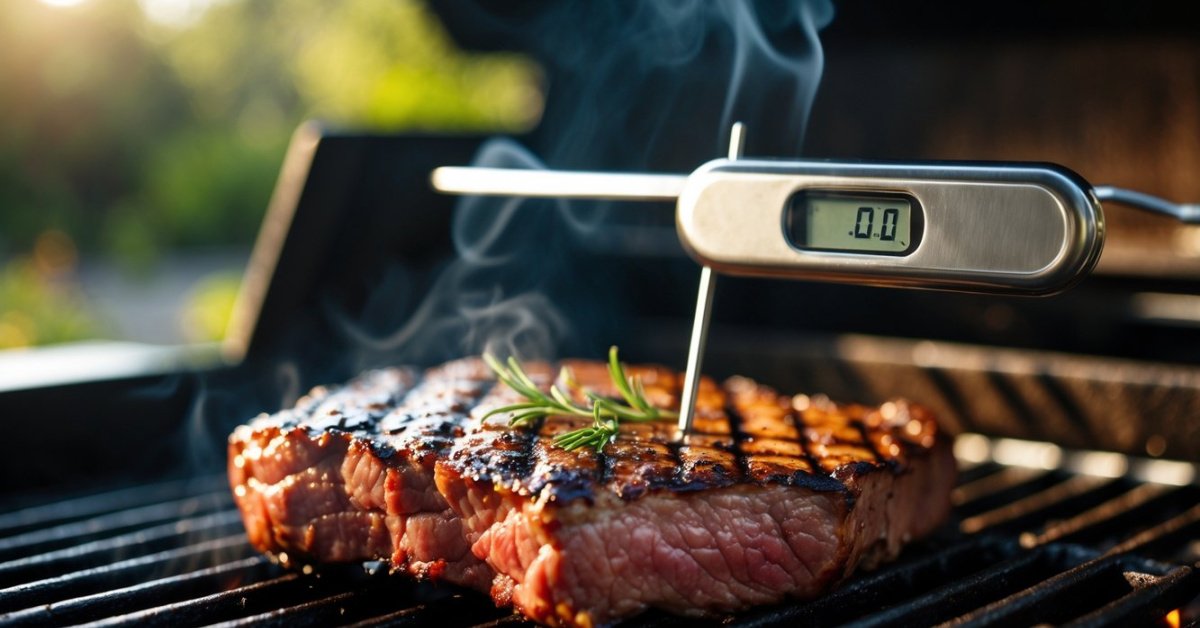
When I fire up the grill on a scorching summer day, I know getting the temperature just right can make or break my meal. Grilling in extreme heat isn’t just about flipping burgers—it’s about precision, safety, and making sure every bite is as delicious as I imagined.
I’ve learned that not all thermometers can handle the intense conditions of a blazing hot grill. The right tool makes all the difference, especially when the temperature soars. If you love grilling as much as I do, finding a thermometer that stands up to extreme heat is key to nailing that perfect cook every time.
Why Accurate Temperature Matters When Grilling in Extreme Heat
Accurate temperature readings play a central role in grilling in extreme heat. Precise thermometers help me hit target doneness for brisket, steak, or chicken every time. Undercooked poultry, for example, raises food safety risks according to USDA guidelines. Overcooked meat turns tough fast when surface temps soar past 500°F, which happens often during peak summer heat.
Consistency across cooks depends on reliable thermometers. When I ran my Texas bbq cart, I noticed temp swings from direct sunlight on my grill could reach over 60°F in minutes. Quick, accurate readings kept my ribs juicy and pork safe for dozens of orders daily.
High heat poses extra challenges for thermometer sensors. If a thermometer lags or fails to calibrate, internal temps drift, leaving the food dry, burnt, or unsafe. Digital instant-read models with high heat resistance—like my go-tos, the Thermapen ONE or ThermoWorks Signals—give immediate, clear results even above 600°F.
Reliable readings let me time rest periods and grill zones precisely. Meat products—steaks, sausages, or thick brisket—require hitting specific temps to maximize flavor and texture. When my tools match my cooking environment, I serve the tenderness and bite I chase with every recipe.
Key Features to Look for in Grilling Thermometers
Choosing grilling thermometers for extreme heat means focusing on precision hardware built to handle high temperatures. Over years of grilling brisket, ribs, and chops in Texas sun, I’ve found a few features that set great thermometers apart when ambient temps surge past 100°F and grill grates glow red.
Heat Resistance and Durability
Heat resistance ensures thermometers survive the hottest grill days. Models rated for 500°F or higher keep working while cheap ones warp or fail. Durable casings, like polycarbonate or silicone-wrapped bodies, protect electronics from flareups and accidental drops. I look for IP66 or IP67 waterproof ratings in thermometers, as splashes and steam are common at the grill.
Response Time and Accuracy
Fast, precise readings save food and prevent overcooking. I test new thermometers with boiling water and ice baths—elite ones deliver readings under 3 seconds and accuracy within ±0.7°F. Brands like ThermoWorks and Lavatools list certified accuracy specs, which is crucial when searing tomahawks or cooking delicate chicken thighs. Digital instant-read units outperform dial thermometers in both speed and reliability during fast-paced cookouts.
Probe Length and Material
Probe length makes checking temperature in thick briskets or pork shoulders safe and convenient. Probes of at least 4.5″ reach the center of most cuts without burning my hands. High-grade stainless steel, such as 304 or 316, resists corrosion even after repeated grill sessions and cleaning. I avoid plastic coatings near the probe tip, as they degrade at high temps and can impact readings.
Here’s a quick comparison of features I consider most critical for grilling in extreme heat:
| Feature | Optimal Specification | Example Brands |
|---|---|---|
| Heat Resistance | ≥500°F, waterproof (IP66/IP67) | ThermoWorks, MEATER |
| Response Time | ≤3 seconds | Thermapen ONE |
| Accuracy | ±0.7°F or better | Lavatools, ThermoWorks |
| Probe Length | ≥4.5 inches | ThermoPro, Thermapen |
| Probe Material | 304/316 stainless steel | Inkbird, ThermoWorks |
Every thermometer I recommend here stays reliable even when I’m sweating as much as my ribs on a hot pit.
Types of Thermometers Suitable for Extreme Heat
Grilling in extreme heat puts standard thermometers to the test. I focus on two main types that always hold up—each designed for accuracy, speed, and durability in the hottest conditions.
Instant-Read Thermometers
Instant-read thermometers handle quick spot checks on high-heat grills with ease. I rely on digital models with thin probes like the Thermapen ONE, which provide readings in under 3 seconds—even over hot grates reaching 600°F. Stainless steel construction prevents probe warping, and backlit displays make readings easy under intense sunlight. Magnetic backs stick to my grill for quick access during fast-paced cooks. When checking thick briskets or delicate fish, I always trust these for both precision and speed.
Leave-In (Wireless/Remote) Thermometers
Leave-in thermometers monitor internal temperatures through long cooks without opening the lid. Wireless options such as the ThermoWorks Signals and MEATER Plus track both ambient and food temps, tolerating direct heat exposure up to 572°F and spikes even higher in probe-only models. Probes longer than 4 inches ensure readings from deep inside large cuts like pork shoulder or brisket. Bluetooth or Wi-Fi connectivity sends real-time alerts to my smartphone, letting me stay on top of temp swings from anywhere on my patio. In extended, low-and-slow or extreme direct-heat sessions, these deliver consistent results and hands-off convenience.
Top Recommendations for Grilling Thermometers in Extreme Heat
ThermoWorks Thermapen ONE
I’ve depended on the Thermapen ONE for over a decade of grilling. It gives spot-on readings in 1–2 seconds, even in Texas summers when grill grates top 700°F. The 4.3-inch stainless steel probe holds up against searing heat, and the IP67 waterproof rating stands up to sudden summer storms. I always get ±0.5°F accuracy, no matter how intense the fire.
ThermoWorks Signals
I like using the Signals for bigger cooks, especially briskets and pork shoulders. It manages up to four temperature probes at once, hitting a max probe temperature of 572°F. Wi-Fi and Bluetooth connectivity make it simple to track my cook from inside, and the rugged body shrugs off grease splatters or high grill temps. I always trust it for low-and-slow or high-heat searing sessions.
MEATER Plus
When I want a completely wireless setup, I grab the MEATER Plus. Its internal sensor reads up to 212°F and the ambient sensor handles up to 527°F, which works for everything from quickly seared steaks to overnight ribs. With the companion app, I get mobile alerts when my meat hits the perfect temperature—no more guessing and no cords across the grill.
Lavatools Javelin PRO Duo
I keep the Javelin PRO Duo handy for smaller cuts and quick yard grilling. This instant-read delivers results in under 3 seconds and handles ambient temp up to 482°F. The 4.5-inch probe means I never burn my knuckles over open flames, and the large digital display stays readable even with smoke rising.
Maverick XR-50
For times when I’m juggling multiple grills or smokers, I count on the XR-50. It supports four probes, reaches a probe max of 716°F, and transmits up to 500 feet. I can move around my yard and still get loud, clear alerts as soon as temps stray out of range. The silicone-coated wires and industrial-grade probes don’t crack, even on my hottest cooks.
| Brand & Model | Max Probe Temp (°F) | Read Time (s) | # Probes | Connectivity | Key Features |
|---|---|---|---|---|---|
| Thermapen ONE | 572 | 1–2 | 1 | None | IP67 waterproof, ±0.5°F accuracy |
| ThermoWorks Signals | 572 | 2–3 | 4 | Wi-Fi/Bluetooth | Rugged body, multi-grill support |
| MEATER Plus | 527 ambient/212 int | 2–3 | 1 | Bluetooth/Wi-Fi | Wireless, in-app alerts |
| Lavatools Javelin PRO Duo | 482 | <3 | 1 | None | Large display, long probe |
| Maverick XR-50 | 716 | 2–3 | 4 | RF (500 ft) | Multiple probes, high heat silicone wires |
Each of these grilling thermometers has gotten a workout in the Texas heat and on everything from chicken thighs to beef ribs. For those chasing grilling precision and reliability in extreme heat, these models always rise to the occasion.
Tips for Maintaining Your Thermometer in Harsh Conditions
- Clean probes immediately after each use using a soft cloth and lukewarm water with a bit of mild dish soap, since heat-cooked proteins like brisket or chicken can leave residues that compromise accuracy or corrode metal.
- Dry your thermometer’s probe thoroughly to prevent rust, especially with stainless steel models such as the Thermapen ONE or Lavatools Javelin PRO Duo, as trapped moisture inside seams can impact long-term durability.
- Store thermometers in a cool, dry spot between grilling sessions, with extreme heat and direct sunlight off-limits, since even heat-resistant electronics degrade when routinely exposed beyond their rated safe ranges.
- Check battery compartments for leaks every month, because high heat can drain or even burst batteries in wireless thermometers like MEATER Plus and ThermoWorks Signals.
- Calibrate your thermometer with an ice water test or boiling water test every grilling season, with digital models flashing error codes or drifting by more than ±1°F when calibration slips from rough handling or harsh environments.
- Shield thermometer screens from direct flame exposure and splatter, using grill-side hooks, magnetic mounts, or silicone sleeves, since persistent grease and soot build-up degrades display legibility and touch functions.
- Replace probes when rubber or plastic gaskets melt, probe tips bend, or you notice persistent readout errors, since probe wear accelerates fast at temps above 500°F, especially for longer leave-in cooks with models like ThermoWorks Signals.
All of these steps keep my favorite grilling thermometers working right, even when I’m running back-to-back briskets in triple-digit Texas summers.
Conclusion
Grilling in extreme heat can be tricky but with the right thermometer it doesn’t have to be stressful. I’ve found that a quality thermometer is my best ally for nailing perfect doneness and keeping everyone safe at the table.
Investing in a reliable model gives me peace of mind no matter how high the temperature climbs. With a little care and the right gear I’m always ready to take on the hottest grilling days.


