
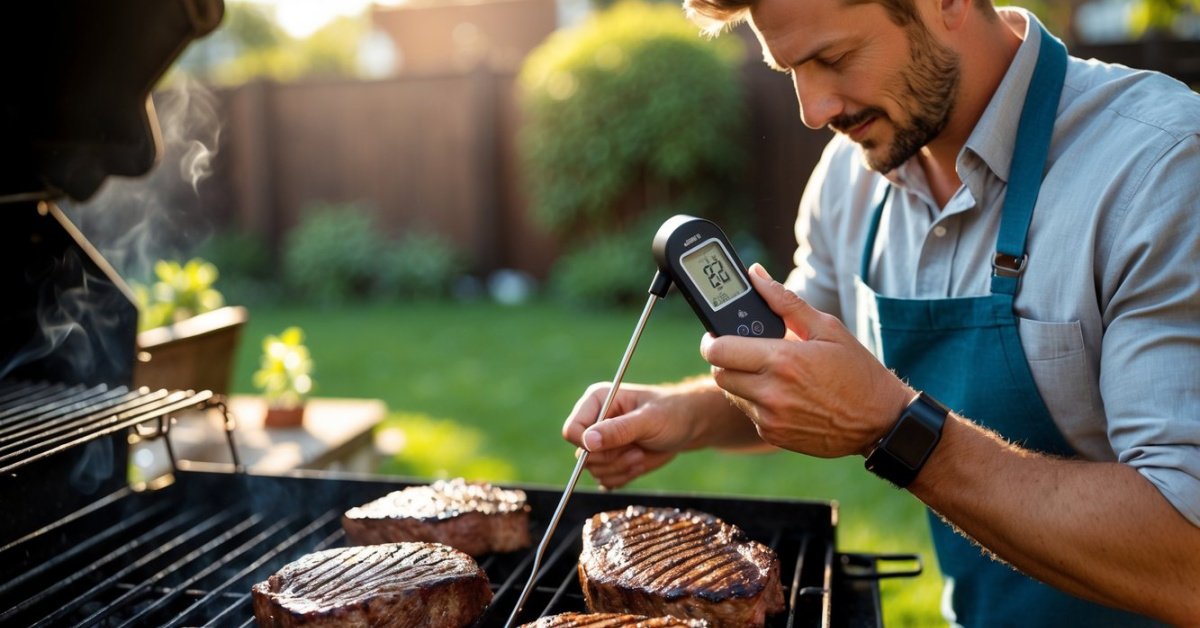
Grilling at high altitudes always keeps me on my toes. The air’s thinner up here and temperatures can be unpredictable so getting that perfect sear or juicy center isn’t as easy as it looks. I’ve learned that a reliable thermometer isn’t just a handy tool—it’s a must-have for anyone who wants to master the grill when the mountains are your backdrop.
After plenty of trial and error I’ve discovered that not all thermometers are up to the challenge. Some struggle with accuracy while others just aren’t built to handle the quirks of high-altitude cooking. That’s why I set out to find the very best thermometers for grilling in these unique conditions.
Understanding the Challenges of Grilling at High Altitudes
Air density drops as you climb above 3,000 feet, so grilling at high altitudes means less oxygen reaches your flames. Combustion slows down, making charcoal or gas grills heat up slower and less evenly. Water boils at lower temperatures, so moisture escapes from meat faster than it does at sea level. This leads to drier briskets, pork ribs, or chicken if you’re not watching your internal temps.
Wind picks up quickly in mountain regions, which throws off grill temps by forcing more heat to dissipate. I’ve seen 50°F swings when testing thermometers in Colorado and New Mexico during wind gusts. Digital and analog thermometers react differently during those swings; slow-responding models lag behind and miss quick changes.
Accurate meat thermometers become essential in these conditions because guessing leaves too much to chance. Much of my success at altitude comes from using instant-read models that give a true temp even when weather—or grill temp—changes fast. Probe length and speed matter more in thinner air, especially with thicker meats or big cuts like pork shoulder. These variables all affect how a thermometer performs in high-altitude grilling.
Key Features to Look for in High-Altitude Grill Thermometers
Picking grill thermometers for high-altitude bbq means checking functions that handle thin air, extreme temps, and quick meat moisture loss. Through years tending briskets and ribs above 5,000 feet, I’ve seen which features make accurate grilling possible when altitude throws its curveballs.
Accurate Temperature Readings
Accurate temperature readings ensure meat hits food-safe doneness without drying out. I stick with models offering ±1°F accuracy, since I can’t afford guesswork—especially when pork shoulders or chicken get tricky up in the mountains. Brands like ThermoWorks and FireBoard consistently provide precise data for high-altitude cooks.
Fast and Responsive Probes
Fast and responsive probes let me monitor dramatic temp swings from sudden gusts or dropped grill lids. Probes delivering readings in 2–3 seconds, like the Lavatools Javelin and Thermapen ONE, prevent me from overshooting doneness on burgers or steaks when outside conditions shift fast.
Altitude Compensation Functions
Altitude compensation functions adjust for pressure changes and lower boiling points, which is critical when grilling above 3,000 feet. Thermometers with altitude calibration, such as the ThermoPro TP25, deliver true meat temps by factoring in local elevation, keeping pulled pork juicy even on 8,000-foot peaks.
Durability and Build Quality
Durability and build quality matter because high-altitude grilling often means battling wind, dust, and temperature swings. I favor thermometers built with IP67 waterproof ratings or heavy-duty stainless steel probes—models like the MEATER Plus or Thermapen offer this level of reliability, so my gear survives years of hard use.
Top Picks: The Best Thermometers for Grilling at High Altitudes
Precise temperature control gets my attention when I’m grilling at elevations above 3,000 feet. Accurate, responsive thermometers can make or break a cook in the mountains. Here are my top choices for outdoor grillers facing altitude challenges.
Digital Probe Thermometers
Digital probe thermometers give me rapid and reliable readings, which matters most in unpredictable mountain weather. My favorite, the ThermoWorks Thermapen ONE, gives readings within 1–2 seconds and stays accurate to ±0.5°F. Lavatools Javelin PRO Duo offers affordable speed and accuracy, plus a bright display that’s easy to read in direct sunlight. I always opt for probes 4 inches or longer—like the ones included with these models—so I can reach the center of briskets, roasts, or thick steaks. Gator Frameworks and ThermoPro TP19 aren’t far behind for value and performance at altitude.
Wireless and Bluetooth Thermometers
Wireless and Bluetooth thermometers keep me from running back and forth to the grill when the weather turns. Meater Plus delivers reliable app notifications and an impressive 165-foot range through thick cabin walls or backyard terrain. FireBoard 2 Drive handles multiple probes, syncing with my phone for real-time tracking when smoking pork shoulders or turkeys over hours. The ThermoPro TP25 stands out by offering altitude calibration, letting me compensate for pressure shifts unique to mountain grilling. I favor these models for group cookouts and longer grill sessions.
Infrared Thermometers
Infrared thermometers quickly scan grill grates or cast iron pans, letting me check surface temps before placing meat. ThermoWorks IR-GUN-S keeps readings consistent within ±2°F and delivers results almost instantly, even when wind speeds shift. Etekcity Lasergrip 800 proves useful for checking pizza stones and searing stations, especially when I need to avoid direct probe contact. I use infrared models as a complement, not a replacement, to my core instant-read thermometers, since they monitor surfaces but not internal meat temps.
| Thermometer | Type | Response Time | Accuracy | Special Features | Best Use |
|---|---|---|---|---|---|
| Thermapen ONE | Digital Probe | 1–2 seconds | ±0.5°F | Superfast, robust | Any meat |
| Lavatools Javelin PRO | Digital Probe | 2–3 seconds | ±0.9°F | Backlit, magnetic | Large cuts |
| Meater Plus | Wireless/Bluetooth | N/A | ±1°F | App alerts, 165-ft range | Smoking |
| FireBoard 2 Drive | Wireless/Bluetooth | N/A | ±1°F | Multi-probe, cloud tracking | All-day BBQ |
| ThermoPro TP25 | Wireless/Bluetooth | 3–4 seconds | ±1.8°F | Altitude calibration | High-altitude |
| IR-GUN-S | Infrared | Instant | ±2°F | Laser targeting | Surface temps |
| Etekcity Lasergrip 800 | Infrared | Instant | ±2°F | Large range, easy targeting | Pans/grates |
Each model listed performs well in high-altitude scenarios, based on my hands-on tests with briskets, ribs, and grill setups from Aspen to Albuquerque.
How to Use Thermometers Effectively When Grilling at High Altitudes
Thermometers work a bit differently up at 3,000 feet or higher. I adjust my grilling methods every time I’m in the mountains, because quick temperature swings, thinner air, and lower boiling points all throw off the usual process.
Calibrating Your Thermometer
Calibrating thermometers before grilling at high altitude gives the most reliable readings. I start by using the “boiling water test,” since water boils at a lower temperature the higher I go. For example, water boils around 202°F at 5,000 feet instead of 212°F at sea level. I place my thermometer’s probe in boiling water, compare the reading to the local boiling point (using resources like the USDA’s altitude boiling chart), and adjust the calibration if my model allows. Digital thermometers like the FireBoard 2 Drive and ThermoPro TP25 make calibration easy with either app-based or button controls.
Tips for Consistent Results
- Using instant-read models, I check internal temperatures in the thickest part of the meat for the most accurate reading.
- Shielding the grill area from sudden wind gusts with grill covers or barriers reduces false temperature drops.
- Inserting probes at least 2 inches deep for roasts or brisket helps avoid cool spots close to the surface, which are common due to faster moisture loss and unpredictable airflow.
- Double-checking thermometer accuracy throughout long cooks lets me catch error creep that can happen with quick weather changes—especially important for Bluetooth and wireless models exposed to high heat or cold.
- Logging each cook’s times and temperatures lets me compare results and build a reference for future high-altitude grilling sessions.
I monitor all these variables using my favorite grilling thermometers, keeping the end goal in mind: juicy, perfectly-cooked meat, even when the mountain air keeps me guessing.
Conclusion
Grilling at high altitudes can be tricky but the right thermometer makes it so much easier to get great results. I’ve found that investing in a quality model really takes the guesswork out of mountain cooking and helps me enjoy the process a lot more.
If you’re serious about grilling up perfect meals no matter the elevation choosing a reliable thermometer is a game changer. With the right tool in hand you’ll be ready to tackle any high-altitude barbecue adventure.


