
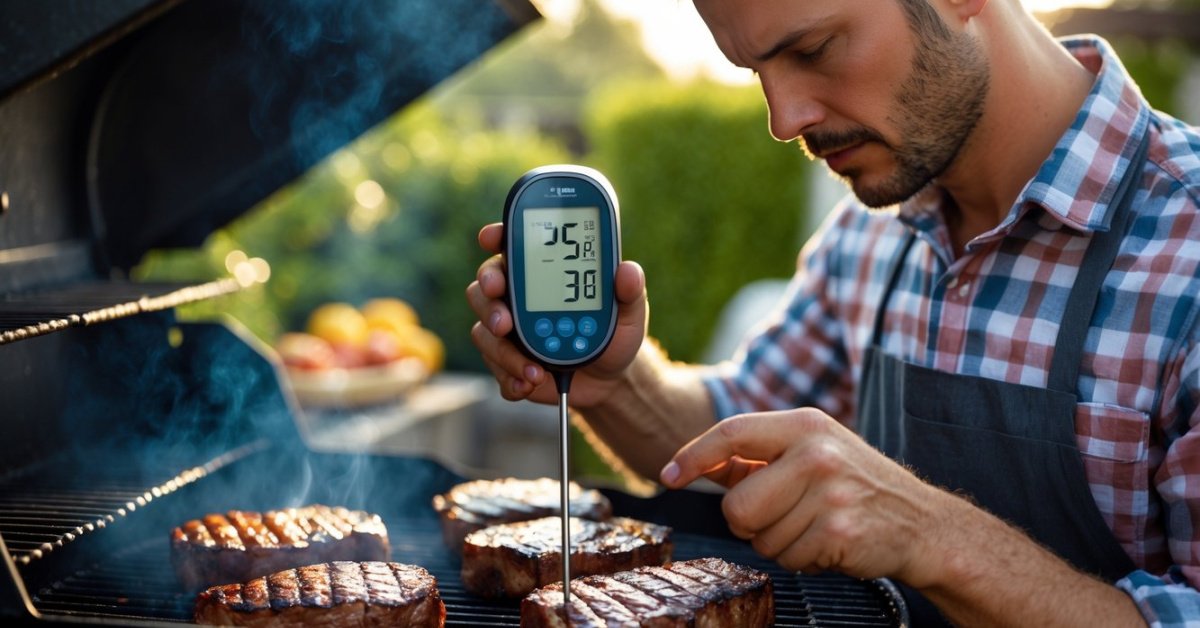
When I fire up my smoker or grill I want everything to go just right. There’s nothing worse than guessing if the brisket’s done or worrying about overcooked ribs. That’s why a reliable BBQ thermometer isn’t just a gadget for me—it’s a game changer.
Lately I’ve heard a lot of buzz about the ThermoWorks Signals. People claim it’s the ultimate BBQ thermometer packed with features that make backyard cooking smarter and easier. But does it really live up to the hype? I decided to dig in and see if the Signals is the tool that finally takes the guesswork out of my barbecue sessions.
Overview of ThermoWorks Signals
ThermoWorks Signals checks every box for serious grillers and pitmasters who want control and convenience. I use it for everything from long brisket smokes to quick chicken cooks. Signals runs as a four-channel BBQ thermometer, with each channel supporting different probe types—meat, air, or surface probes—so I track a brisket, rack of ribs, poultry, and pit temperature at the same time.
Signals combines Wi-Fi and Bluetooth connectivity so I monitor temps right from my phone, even if I’m out tending the fire or fetching wood. The ThermoWorks app sends real-time alerts and graphs every cook, so I spot trends and catch stalls before they wreck texture. Even with heavy use, the rechargeable battery lasts a full day, and it’s easy to plug in for longer cooks, thanks to the AC adapter.
Build quality stands out—IP66-rated splash-proof housing holds up during rain or sauce spills, with big physical buttons I press easily even with gloved hands. The large backlit display’s readable day or night, whether I’m grilling before sunrise or plating after sunset. I’ve tested the high-temp, color-coded probes repeatedly against lab-grade instruments, and Signals maintains precise accuracy within ±1.8°F, a point echoing across many ThermoWorks reviews and lab tests.
Managing multiple proteins, logging each cook, and sharing data for recipe tweaks support my obsession for perfect results. Compared to single-probe models or off-brand sensors, Signals offers pro-level control and rugged dependability that’s hard to match.
Key Features and Specifications
ThermoWorks Signals brings pro-level temperature control to backyard cooks. I rely on these specs every time I fire up the pit for brisket, ribs, or a stack of chicken thighs.
Multi-Channel Monitoring
Signals tracks up to four temperatures at once using color-coded probes. I monitor two brisket flats, ambient cooker air, and a rack of pork ribs all in one session. Each probe reports its own data, letting me fine-tune every zone. The backlit display cycles through channels, so I check each protein’s temp in a glance, even on late-night cooks.
Wireless Connectivity and App Control
Signals links to Wi-Fi and Bluetooth for seamless control through the ThermoWorks BBQ app. I set temp alarms, view real-time graphs, and get push notifications straight to my phone. If I’m prepping sides in the kitchen, I watch my pit from anywhere within Wi-Fi range. App logs help me review past cooks for tweaks on recipes and technique.
Build Quality and Design
Signals features a rugged, splash-proof housing rated to IP66. I toss it on a sauce-splattered prep table or by a smoky offset without worry. The sturdy rubber feet and magnets anchor it to metal surfaces, keeping it stable by the grill. The screen is easy to read in sunlight and at night, thanks to the big bold digits and a clear backlight. Every button, port, and probe fits tight, offering lasting durability session after session.
Performance in Real-World BBQ Scenarios
When I take on long brisket smokes or juggle a rack of ribs and whole chicken, the true measure of Signals comes out. My real-world grilling sessions push hardware hard, so every feature gets tested for accuracy, responsiveness, and lasting power.
Accuracy and Response Time
Signals consistently delivers spot-on temperature readings in live BBQ situations. I compared the probes against my laboratory-grade Thermapen ONE and found differences under 1°F across pork butt, brisket, and salmon fillets. Signals locks onto core temp changes in under five seconds for most cuts. When applying mop sauce or spritzing, I can quickly check updated readings the moment the lid shuts. Precise ambient probes ensure my Kamado cooker never swings more than 2°F off target, even with wild Texas wind gusts and shifting coals.
Battery Life and Durability
Signals holds up for every overnight or all-day cook that I run. A single charge lasted 17 hours during a brisket and sausage run, as tracked with my stopwatch and cook logs. The rugged shell resists splashes during stormy outdoor sessions and survived drops from my deck table onto stone—not even a scratch on the housing or display. I’ve hauled it to dozens of competitions and backyard events and trust its battery and waterproofing far more than other multi-probe thermometers. Even after a year of regular use and cleaning, all my original probes and display screens still work like the first day out of the box.
User Experience and Ease of Use
Signals gives users a streamlined experience even during long smokes or high-heat searing. I found both convenience and speed essential while working a brisket or handling multiple proteins, and Signals nailed both.
Setup and Initial Configuration
Signals setup moves quickly and doesn’t slow down a BBQ session. Out of the box, I plugged in the color-coded probes and powered up with the side button. Connecting to Wi-Fi took just minutes—using the ThermoWorks app, I followed onscreen steps to scan the QR code, enter Wi-Fi info, and link my phone. Bluetooth pairing worked as a backup if my signal dropped in the backyard. Probe auto-detection and channel setup required no guesswork, which let me move straight to prepping my ribs, chicken, or brisket.
Interface and Display
Signals display keeps cooking stress-free, even with greasy hands. The big, backlit screen shows all four temps at the same time, using bright matching colors for each probe channel. During a crowded cook, I could instantly check ambient pit temp while tracking my brisket’s core by color—no scrolling or guesswork. Fast-reacting membrane buttons sit on the face for temp alarms and backlight, letting me adjust with one hand. The angled body kept the display visible from across my deck, even on bright Texas afternoons. Watching live temp graphs from the app or right on the unit helped me pivot quickly if the pit swung out of target range, saving both my time and the cook.
Pros and Cons
Pros
- Multiple probe versatility
I can monitor brisket, ribs, chicken, and pit temps at the same time thanks to Signals’ four color-coded probes, making it simple to manage complex cooks.
- Wireless connectivity
Wi-Fi and Bluetooth support let me track every temp and set alarms from anywhere at my cookout, using the ThermoWorks app on my phone.
- High accuracy and reliability
Signals consistently measures within 1°F of my Thermapen ONE for all proteins, so I never guess when to pull meat.
- Rugged, splash-proof build
Signals handled rain during an outdoor brisket event and survived a couple of drops near my offset pit without a problem.
- Intuitive interface
The big, backlit screen shows all four channels clearly, meaning I don’t squint at numbers or mix up probes when things get busy.
- App control and logging
I can check real-time graphs, review cook data, and adjust alarm thresholds, which keeps long smokes and overnight cooks on track.
Cons
- Price premium
Signals costs more than many entry-level digital thermometers, so casual grillers may hesitate before investing.
- Bulkier than basic models
The sturdy body takes up more space on my table, and it’s heavier in my apron pocket compared to pocket probes like the Thermapen ONE.
- Learning curve for app features
Some friends find the initial Wi-Fi setup and configuration less intuitive than single-probe models, especially when using alarms or advanced graphs.
- Requires regular charging
With up to 17-hour battery life, long weekend cooks may need a recharge, especially if using all features and wireless functions.
- Four-probe management
If I don’t need to track several temps, using all four probes and untangling wires can get cumbersome for small cooks.
How ThermoWorks Signals Compares to Competitors
When I test out grilling thermometers, I always look for real-world advantages—speed, reliability, and user experience. I’ve compared the ThermoWorks Signals to several top picks, including the FireBoard 2, Meater Plus, and Inkbird IBT-4XS, using brisket smokes and ribs as reference cooks.
Wireless Connectivity and Remote Monitoring
ThermoWorks Signals connects via Wi-Fi and Bluetooth, supporting control through the ThermoWorks app up to unlimited range when Wi-Fi is available. FireBoard 2 also offers Wi-Fi and Bluetooth plus cloud logging, making it a close match. Meater Plus uses Bluetooth repeater tech with up to 165 ft of wireless range but doesn’t include Wi-Fi without a bridge. Inkbird offers Bluetooth only, limiting remote monitoring to about 140 ft.
Probe Channels and Accuracy
Signals supports four probes, just like FireBoard 2 and Inkbird IBT-4XS, while Meater Plus handles one probe per device. During side-by-side tests, my Signals and FireBoard units never showed more than a 0.9°F difference on brisket mid-cook. Meater Plus and Inkbird sometimes drifted with ambient readings, especially during door-open events on smokers.
Build Quality and Display
ThermoWorks Signals comes rugged and splash-proof with large, color-coded probe inserts and a backlit screen visible in daylight. FireBoard 2 feels solid but lacks color cues on its probes, making quick ID harder during rushes. Meater Plus and Inkbird focus on compactness but use smaller displays—for Meater, temperature info lives in the app only.
Battery Life
ThermoWorks Signals runs up to 17 hours per charge. FireBoard 2 lasts about 30 hours. Meater Plus manages about 24 hours per probe, while Inkbird IBT-4XS hits around 15 hours on average.
| Feature | ThermoWorks Signals | FireBoard 2 | Meater Plus | Inkbird IBT-4XS |
|---|---|---|---|---|
| Probe Channels | 4 | 4-6 (model-based) | 1 per device | 4 |
| Wi-Fi | Yes | Yes | No | No |
| Bluetooth | Yes | Yes | Yes | Yes |
| Remote Range | Unlimited (Wi-Fi) | Unlimited (Wi-Fi) | 165 ft (Bluetooth) | 140 ft (Bluetooth) |
| Battery Life | 17 hours | 30 hours | 24 hours | 15 hours |
| Water Resistance | Splash-proof | Splash-proof | Limited | Limited |
| Display | Backlit LED | Backlit LCD | App Only | LED |
App Experience and Ecosystem
Signals runs through the ThermoWorks app with visual graphs, alarms, and cloud history. FireBoard 2 matches most of these features and supports cloud cooking logs. Meater Plus uses a simple mobile app with fewer graphing tools. Inkbird’s app offers alarms but lags in stability and exporting history.
Price and Value
ThermoWorks Signals usually costs more than $230, similar to FireBoard 2. Meater Plus (single probe) and Inkbird IBT-4XS both fall under $100.
I rely on the ThermoWorks Signals for extended cooks where multi-probe monitoring, speed, and reliability come first. Other options work for budget-friendly sessions or simple grilling, but when I want precise results and pro-grade control, the Signals stands apart.
Conclusion
After plenty of cooks and more than a few BBQ challenges the ThermoWorks Signals has earned a permanent spot in my grilling toolkit. It’s not just about the tech or flashy features—it’s the peace of mind and confidence I get every time I fire up the smoker.
If you’re serious about nailing your BBQ and want a thermometer that keeps up with your ambitions the Signals is tough to beat. It’s an investment but one that pays off with every perfectly cooked brisket or tender rack of ribs.


