
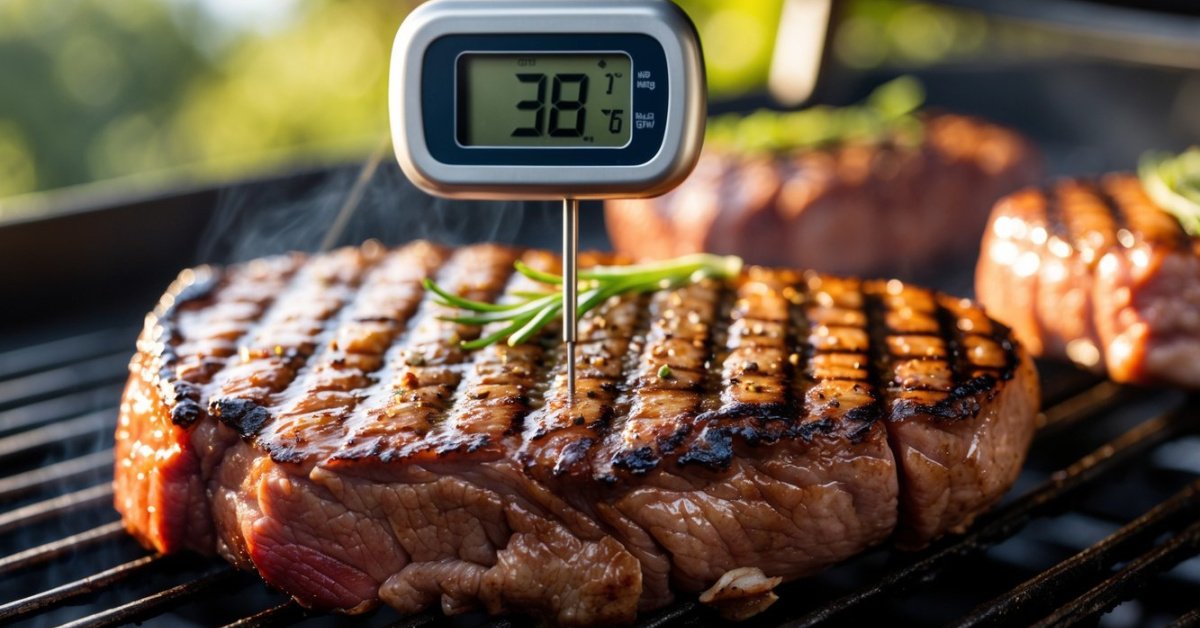
When I fire up the grill I want everything to turn out just right—juicy steaks tender chicken and perfectly cooked burgers. But guessing when the food’s done can be tricky and nobody wants to bite into undercooked meat. That’s where a foldable probe thermometer comes in handy.
I love how these handy tools make grilling so much easier. They’re compact quick to use and take the guesswork out of outdoor cooking. With a foldable probe thermometer I can focus on enjoying the moment instead of stressing over temperatures.
Understanding Foldable Probe Thermometers
Foldable probe thermometers consistently prove their worth at the grill. I’ve used them to check everything from brisket to grilled shrimp, saving time and stress during busy BBQs.
What Is a Foldable Probe Thermometer?
A foldable probe thermometer combines a pivoting metal probe with a digital or analog display. I unfold the probe, insert it into the thickest part of any meat, and get an instant temperature reading. These thermometers suit outdoor grilling since the foldable design keeps the probe protected in my apron pocket or grill kit.
Key Features for Grilling
- Instant-Read Displays: I see the meat’s temperature in 3-5 seconds, which lets me keep grill lids closed and temperatures steady.
- Wide Temperature Range: Foldable probe thermometers often measure from −58°F to 572°F, covering every grilling protein, including chicken, burgers, and sausage links.
- Water-Resistant Housing: Many options, such as two-piece thermometers, include splash-proof or waterproof ratings for durability near smoky grills or messy sauces.
- Backlit Screens: I check temps during late-night BBQs thanks to easy-to-read illuminated displays.
- Auto Power-Off: Thermometers with built-in shutoff save battery life, so I don’t grab a dead thermometer mid-cook.
These features streamline grilling workflows for anyone, especially when timing, temp accuracy, and reliable results matter most.
The Advantages of Foldable Probe Thermometers for Grilling
Foldable probe thermometers give me reliable heat control right at the grill. I trust them for every cookout because they’ve improved my results and saved me time on recipes from ribeyes to smoked sausage.
Enhanced Accuracy and Fast Readings
Accurate temperature and quick feedback set foldable probe thermometers apart. I watch most models give readings in under 3 seconds, usually within ±1.0°F, which means steak, chicken, or pork gets pulled at just the right moment. Fast measurements matter—overcooked brisket wastes hours of prep, while underdone chicken creates safety concerns, so this accuracy and speed help me guarantee both flavor and safety every time.
Space-Saving and Portability
Compact size and foldable design let me tuck the thermometer into my apron pocket or toolbox, even if I’m moving between grills or events. When I ran my Texas food cart, space mattered; these tools fit anywhere I needed, and now, they don’t crowd my kitchen drawer or camping gear. Several models, like the ThermoWorks Thermapen or Lavatools Javelin, measure less than 6 inches folded—a key for any griller with limited space.
Safety and Ease of Use
Foldable probe thermometers keep hands safe and simplify the grilling process. The long, lockable probe allows me to test thick brisket or stuffed pork loin without getting too close to the flame. The folding mechanism helps avoid accidental pokes or scratches, which mattered a lot at busy cookouts. Features like auto-off, waterproof housing, and large backlit displays let me focus more on food and less on fussing with gear, especially at nighttime grill sessions.
Versatility for Various Grilling Needs
Versatile designs make these thermometers fit for every recipe I try, from direct-heat burgers to delicate fish or low-and-slow smoked ribs. They handle wide temperature ranges—usually from -58°F to 572°F—so I can use a single tool for meat, seafood, baked potatoes, even candy or frying oil. I use one probe to check the internal temp of a tri-tip roast, then swing it over to temp-check some grilled veggies, all in a single session without losing a step.
Choosing the Right Foldable Probe Thermometer
I’ve tested dozens of foldable probe thermometers since my food cart days. Some stand out, some fall short, and a few feel tailor-made for serious grilling fans. Picking the best one comes down to understanding what matters when you’re out by the grill.
Important Considerations for Buyers
- Probe Length and Locking Mechanism
Long probes let me check thick brisket or whole chickens safely, for example, 4-inch to 5-inch models. A locking feature keeps the probe steady when I’m reaching into a hot cooker.
- Readout Speed and Accuracy
Faster thermometers save time at BBQ events where I might flip a dozen steaks at once. I look for digital displays that give readings in under 3 seconds and offer precision within ±1.0°F, as found on models like the ThermoWorks Thermapen ONE and Lavatools Javelin PRO Duo.
- Durability and Water Resistance
Water-resistant or waterproof thermometers handle rain, splatter, and dunking—essential when I’m grilling outside or cleaning up fast. IP67-rated bodies, like on the ThermoPro TP19, last longer in rugged setups.
- Temperature Range
Wider ranges let me switch from low-slow smoking (like 160°F ribs) to searing (up to 572°F). Models with at least a 32°F to 572°F range handle any grilling challenge.
- Display Features
Backlit, rotating screens make it easy for me to read temps during late cookouts or in direct sun. Some models, such as the Lavatools Javelin PRO Duo, offer these upgrades.
- Portability and Battery Life
Compact, foldable designs fit in my apron or pocket easily. I look for automatic shut-off features so batteries last longer during festival weekends or long backyard BBQ sessions.
| Feature | Typical Range / Example | Why It Matters for Grilling |
|---|---|---|
| Probe Length | 4–5 inches | Reaches deep into large cuts safely |
| Readout Speed | <3 seconds | Quick temp checks on busy cookouts |
| Accuracy | ±1.0°F | Ensures meat safety and precise doneness |
| Water Resistance | IP66–IP67 | Resists splashes and easy cleaning |
| Temp. Range | 32°F–572°F | Covers low-slow and high-heat grilling |
| Display | Backlit, rotating | Improves readability in any lighting |
| Portability | Compact, folding, auto shut-off | Fits pockets, saves battery life |
I choose models with these features, tested on everything from Texas brisket to shrimp skewers. Reliable thermometers make grilling smoother and food consistently great.
Care and Maintenance Tips
Regular cleaning extends the life of a foldable probe thermometer. I wipe the probe with a damp cloth and mild dish soap after every use, keeping meat drippings and marinade from building up. I always avoid submerging the handle or digital display, since even water-resistant covers don’t fully protect the circuitry from deep water exposure.
Thorough drying keeps the probe from corroding. I let the thermometer air dry with the probe extended and never store it away wet. This practice prevents rust on both the tip and the hinge, especially after grilling juicy Texas brisket or sticky ribs.
Proper storage maintains function and accuracy. I fold the probe fully and use the locking feature, ensuring it doesn’t snap open accidentally, whether it’s in my BBQ tool roll or kitchen drawer. This protects both the sharp tip and anyone reaching for it.
Battery checks prevent surprise shutdowns during cooks. I test the thermometer before long grilling sessions and replace batteries as soon as the screen dims or freezes. Most models use coin cells or AAA batteries, and I’ve found that regular swaps keep readings fast and reliable.
Occasional calibration ensures the probe stays accurate. I test mine in ice water (32°F) or boiling water (212°F, at sea level) every few months, especially after lots of use on the food cart or backyard grill. Some thermometers have a calibration setting, but for manual types, comparing results to a known accurate reference does the trick.
Avoiding extreme temperatures and rough handling preserves sensitive electronics. I never leave mine in a closed grill or let it fall onto concrete, which could damage the probe’s alignment or internal chipset.
These routines keep my foldable probe thermometers performing at their best, whether I’m cooking up a batch of Texas links, grilling fresh vegetables, or tackling brisket on the weekend.
Conclusion
Using a foldable probe thermometer has completely changed the way I approach grilling. I love how it takes the guesswork out of cooking and lets me focus on enjoying the food and company.
With the right tool and a little care, I can grill with confidence and know every bite will be just right. For anyone who loves outdoor cooking as much as I do, adding a foldable probe thermometer to your toolkit is a decision you won’t regret.


