
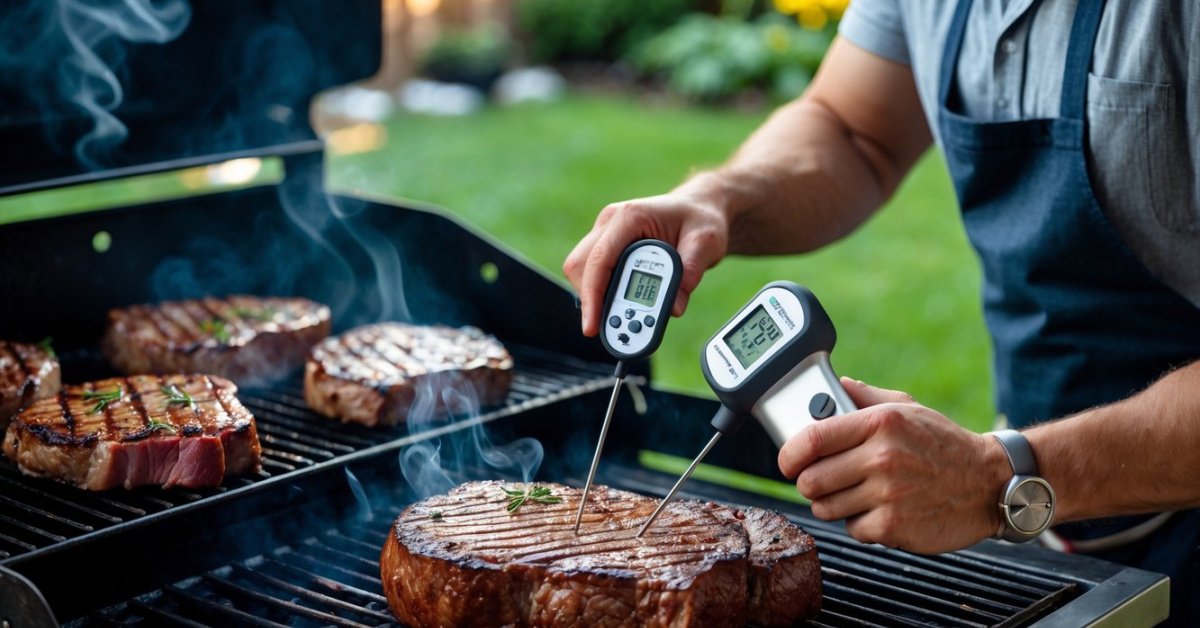
When I’m out camping with friends or family nothing beats the smell of food sizzling on the grill. But getting that perfect sear or juicy center can be tricky when I’m away from my usual kitchen gadgets. That’s where a compact thermometer comes in handy.
I love how these little tools slip right into my pocket or backpack without taking up precious space. They’re quick to use and make sure my burgers or steaks are cooked just right every time. For anyone who enjoys grilling under the open sky a compact thermometer is a game changer.
Understanding the Importance of Temperature Control While Camping
Managing temperature keeps grilled food safe and locks in the right flavor. When I’m at the campsite, guessing the doneness of steak or burgers almost always ends in overcooking or serving underdone chicken. The USDA states that beef, pork, and fish need an internal temperature of 145°F, while poultry needs 165°F for safety. These numbers aren’t just guidelines—they’re standards that protect everyone’s health.
Hitting the right temperature preserves texture and juiciness. I’ve found briskets, ribs, and sausages need precise temps to deliver that authentic Texas BBQ taste. Even slight fluctuations can make meat stringy or dry. With changing outdoor elements like wind or rain affecting grill heat, monitoring the temperature directly at the food guarantees consistency, whether it’s 30°F or 95°F outside.
Relying on grill lid thermometers doesn’t give an exact read—a grill surface can run as much as 50°F hotter or cooler than the lid gauge shows. That’s why I keep a compact thermometer within arm’s reach. Cooking with accurate, real-time readings gives me the confidence to serve perfectly done chicken thighs, pork chops, or even grilled veggies at every campsite cookout.
What Makes a Compact Thermometer Ideal for Camping Grills
Compact thermometers make grilling at the campsite smoother by fitting in pockets or grill bags and delivering quick results. I always keep one handy to improve my outdoor cooking, no matter the grill setup.
Portability and Ease of Packing
Portability sets compact thermometers apart for camping grills. I can slip models like the ThermoWorks ThermoPop or Lavatools Javelin into my jeans, tackle box, or even my apron pocket. Lightweight builds, often 1–3 oz, allow them to nestle into side pouches without weighing down my gear. Foldable probes and protective sleeves eliminate bulky shapes, freeing up space for rubs or spatulas in my kit.
Fast and Accurate Readings
Fast and accurate readings keep my camp grilling consistent. Most compact thermometers display temperatures in 2–3 seconds, with error margins often ±1°F (ThermoWorks, Lavatools, and OXO all cite these benchmarks). Real-time measurement guarantees safe minimums for chicken, pork, or steak—even on a smoky, inconsistent fire. I avoid overcooking, keeping my brisket juicy and my chicken cooked through.
Durability in Outdoor Conditions
Durability matters in unpredictable outdoor conditions. Many compact thermometers, like models from ThermoPro and OXO, use splash-proof or waterproof designs (rated IP65 or higher), so rain or sauce splatter never ruins my readings. Tough polycarbonate or ABS plastic casings resist falls onto dirt or rocks. Heat-resistant probes handle flare-ups without warping, letting me focus on grilling instead of babying my tools.
Key Features to Look for in a Compact Grill Thermometer
Grilling at the campsite means relying on gear that’s tough and user-friendly. When I test compact grill thermometers, I always weigh certain features above all others.
Battery Life and Maintenance
Long battery life means more time grilling and less time swapping batteries. I look for thermometers that stretch a single battery across dozens of sessions. Models like the ThermoWorks ThermoPop often last 3000+ hours on a basic AAA or coin cell. Minimal power drain keeps things easy, especially when packing light. Sealed battery doors keep water and dust out, which really preserves the internal electronics between trips. If a thermometer uses standard batteries, it’s simple to carry a backup in my gear bag.
Display Readability
Clear, visible displays matter when outdoor light changes fast. I pick thermometers with large digital screens and backlighting or glow features. Numbers need to be bold and easy to read, whether I’m grilling at sunset or after dark. Rotating or auto-orienting screens let me check temps from any angle, which is handy when I’m working with a crowded grill. Anti-glare finishes help in direct sun and cut down on eye strain during long cookouts.
Comparing Compact Thermometers to Traditional Grill Thermometers
Compact thermometers outperform traditional grill thermometers in several areas essential for camping and portable grilling.
- Portability and Convenience
Compact thermometers fit easily into my jeans pocket or grill tool roll, while traditional dial thermometers usually stay fixed on the grill lid or take up more space in my gear bag. On campsite trips, I grab my digital stick thermometer and leave the bulky dial setup behind.
- Speed and Accuracy
Compact thermometers like the Lavatools Javelin or ThermoWorks ThermoPop display an accurate temperature in 2–3 seconds. Traditional bimetallic dial models typically take 20–30 seconds to stabilize, which wastes valuable grill time and lets out more heat with the lid open. Fast readings let me check steaks or chicken fast, then close the lid before heat escapes.
- Targeted Temperature Monitoring
Compact probes go right to the food’s core, letting me test burgers, sausages, or thick brisket slices exactly where it matters. Traditional lid or grill surface thermometers only report ambient grill temperature, not what’s really happening inside the food. I’ve seen lid thermometers show 350°F when a pork chop’s center sits 30°F lower.
- Durability and Outdoor Usability
Many compact thermometers feature IP-rated splash-proof bodies and tough shells that handle Texas humidity, dust, or an accidental drop. Fixed grill thermometers rust or cloud up, especially after a few downpours or long road trips. My compact models keep working whether I’m set up by a lake or tailgating in the rain.
- Display Visibility
Compact thermometers often come with backlit or anti-glare screens that make readings easy at dusk or under direct sun. Traditional dials can be hard to read unless I’m staring straight at them, and fog up quickly. I rely on digital clarity when night grilling or cooking during a bright summer cookout.
| Feature | Compact Thermometers | Traditional Grill Thermometers |
|---|---|---|
| Portability | Fit in pocket, tool bag | Fixed on grill, bulkier |
| Reading Speed | 2–3 seconds | 20–30 seconds |
| Temperature Accuracy | Core food temperature | Grill air or lid temperature |
| Outdoor Durability | Splash-proof, rugged builds | Rust-prone, sensitive to weather |
| Display | Backlit, anti-glare, digital | Analog dials, fog-prone |
Because precision, speed, and reliability count at the grill, I stick with compact thermometers for all my campsite cookouts and BBQ experiments.
Tips for Using Compact Thermometers Efficiently on Camping Trips
- Test Battery Before Leaving
I check the battery level on my compact thermometer at home, so I avoid dead batteries at the campsite.
- Store for Quick Access
I stash my thermometer in a top pocket of my grilling bag or apron, because having it handy at the grill makes me faster and safer.
- Insert at Thickest Point
I insert the probe into the thickest part of steaks, pork chops, or chicken breasts, since that’s where undercooking usually hides.
- Avoid Bone and Gristle
I keep the probe tip clear of bones and fat, because those spots can throw the reading off by several degrees.
- Take Multiple Readings
I get a temp reading from more than one area of large cuts—like brisket or bone-in chicken—because outdoor grills cook unevenly, especially if there’s wind or cold.
- Wipe Probe After Each Use
I use an alcohol wipe or damp cloth on the probe after every check, since that keeps flavors pure and avoids any cross-contamination.
- Give It Time to Stabilize
I leave the probe in for at least 2 seconds, because instant thermometers like my Lavatools Javelin or ThermoPop need a moment to lock in the most accurate number.
- Shield Display From Glare
I angle the screen away from direct sunlight or use my body for shade, since even anti-glare displays can be hard to read under bright Texas skies.
- Practice With New Meats
I take a few practice readings from different proteins on a trial run at home, so I understand how fast the thermometer responds in different foods and how to spot the coldest spots.
- Keep It Clean and Dry
I dry my thermometer before packing it away, since moisture from coolers or dew can shorten its life, even if it’s waterproof.
These habits help me grill with confidence, even with new recipes or strange campsite grills.
Conclusion
Whenever I head out for a camping trip with my grill, I never forget to pack my compact thermometer. It’s become my go-to tool for making sure every meal is cooked just right and safe to eat. There’s a certain peace of mind that comes from knowing I can rely on quick and accurate readings no matter where I set up camp.
If you love grilling outdoors as much as I do, a compact thermometer will quickly become your favorite camping companion. It’s a simple addition that makes a world of difference for every cookout.


