
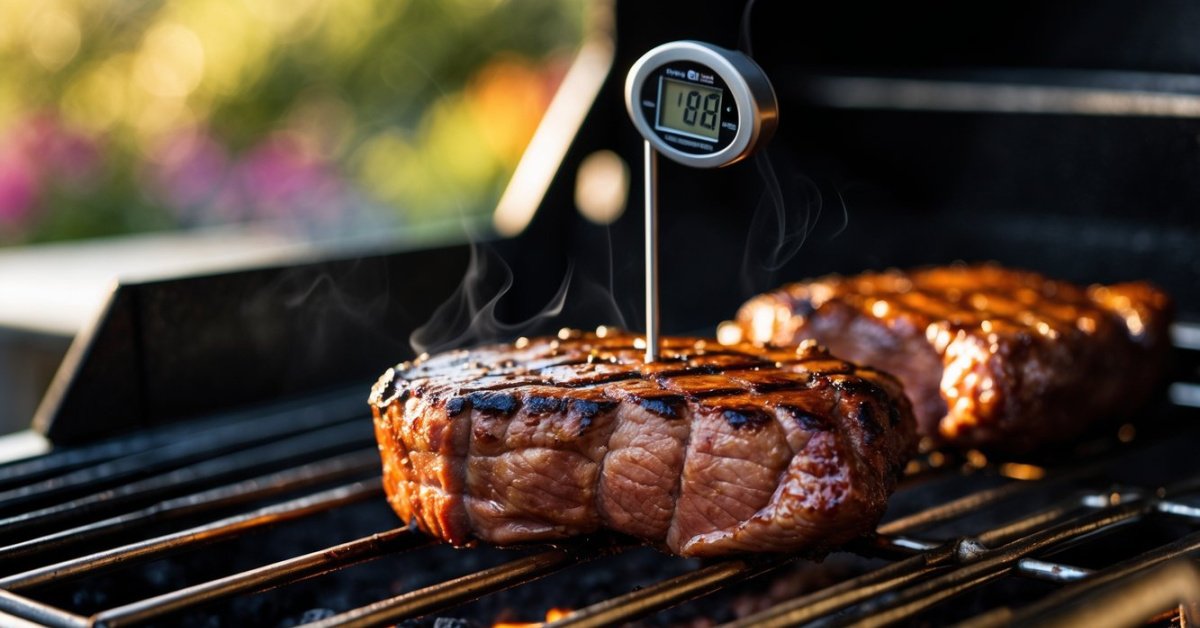
There’s nothing quite like the sizzle of a steak hitting a hot grill or the aroma of smoky barbecue wafting through the backyard. I love grilling because it brings people together and lets me get creative with flavors. But I’ve learned that even the best marinades and rubs can’t save a meal if the meat isn’t cooked just right.
That’s why I never grill without a fast-response thermometer. It takes the guesswork out of grilling and helps me nail the perfect doneness every time. Whether I’m cooking thick burgers or delicate fish fillets I want to be sure my food is safe and delicious—without overcooking a single bite.
The Importance of Grilling Precision
Perfecting grilling precision directly impacts meat quality. I get juicy brisket slices and tender chicken thighs only when I hit their exact internal temperatures. My years on a Texas bbq cart taught me that guessing leads to dry pork chops or undercooked burgers.
Consistent temperature accuracy makes grilling results predictable. I serve a dozen racks of ribs, and each turns out just as flavorful and safe as the last. Using a reliable fast-response thermometer, I confidently pull steaks at medium-rare or check sausages for doneness before they ever split.
Safety plays a major role in grilling. I make sure poultry, like turkey breasts or wings, surpasses 165°F since that kills harmful bacteria according to the USDA. With accurate readings, I protect my family and friends from foodborne illness, especially when grilling for a crowd.
Precision boosts creativity in BBQ recipes. I experiment with different thicknesses or new cuts, checking internal temps to dial in perfect texture every time. Whether reverse-searing tomahawks or smoking wild game, that precise read ensures every bite reflects the recipe I envisioned.
Grilling precision transforms good bbq into exceptional bbq. A fast thermometer unlocks that level of control, turning every cookout into a chance to impress and enjoy true pitmaster flavor.
Understanding Fast-Response Thermometers
Grilling success starts with reading temperatures accurately and instantly. During countless cookouts on my Texas BBQ cart, I found that knowing the exact doneness moment changes everything—especially when working with premium cuts or delicate meats.
What Defines a Fast-Response Thermometer?
Fast-response thermometers give internal temperature readings in just 2 to 3 seconds, compared to standard probes which take 10 seconds or more. Devices with a thin, sharp probe tip and advanced sensing technologies reduce heat loss and minimize piercing damage to steak, chicken, or fish. Brands like ThermoWorks ThermapenONE or Lavatools Javelin PRO Duo consistently measure within ±0.7°F accuracy—numbers that make a real difference for brisket, pork, sausage, and more. When juggling a busy grill, I reach for these instant thermometers because I can move from a thick tomahawk to a tray of wings without losing their juices to excess probing.
How Fast-Response Technology Works
Fast-response thermometers use thermocouple or thermistor sensors calibrated for rapid heat transfer. The sensor sits at the very tip of the probe, detecting temperature changes before they reach the rest of the metal shaft. Strong electronics inside the device translate milliseconds of data into a digital readout that locks in the exact number almost immediately. This technology allows me to keep the grill lid closed longer, retain heat, and maintain steady ambient cooking conditions. Models with food-safe waterproofing and backlit screens make the process easy for evening BBQ sessions or cook-offs in unpredictable weather. With each test, I notice how speed and precision go hand-in-hand for food safety and flavor.
Key Benefits of Fast-Response Thermometers for Grilling
Fast-response thermometers transform my grilling by delivering instant feedback. With every recipe and cut of meat, I rely on speed and accuracy for everything from ribs to salmon.
Achieving Perfect Doneness Every Time
Achieving perfect doneness every time gets much simpler with a fast-response thermometer. These devices read the true internal temperature within 2–3 seconds, not the slower 10–15 seconds of standard probes. When I’m working with a premium brisket or pork chop, this speed eliminates second-guessing and ensures juicy, tender results, not overcooked or underdone meat. I can confidently grill for a crowd knowing each steak lands at its ideal doneness—rare, medium, or well—by monitoring exact results, not guesswork. Precision gives consistent results no matter the grill or recipe.
Enhancing Food Safety
Enhancing food safety depends on knowing meat temps are safe, especially with poultry, ground meat, and sausages. Fast-response thermometers reveal when chicken breasts or burgers reach 165°F or 160°F, matching USDA-recommended safe temperatures. I reduce the risk of foodborne illness, even on busy nights when multiple items hit the grill at once. By confirming safety instantly, I avoid both undercooking and unnecessary, flavor-killing overcooking.
Minimizing Grill Heat Loss
Minimizing grill heat loss becomes easier using a fast-response thermometer. The quick readings mean the grill lid stays open for just seconds, not minutes while probing for doneness. Every time heat escapes, it can affect cooking times and consistency, especially with slow-smoked meats and thick cuts like tri-tip or prime rib. With fast response, I keep the heat in, smoke levels stable, and grill temperatures accurate for every session, regardless of wind or outside temperature. That control helps deliver true Texas BBQ flavor without unnecessary fluctuations.
Comparing Fast-Response Thermometers to Traditional Options
Fast-response thermometers changed how I cook over the fire, offering a faster and more reliable way to check meat doneness than any dial or slow digital unit. When accuracy and timing matter, the differences between modern and older models become obvious.
Pros and Cons of Fast-Response Thermometers
- Speed: I read internal temps in 2–3 seconds with a fast-response thermometer. Traditional dial thermometers sometimes take 20–30 seconds, often missing the ideal window for delicate cuts like lamb chops or duck breast.
- Accuracy: Fast-response thermometers from brands like ThermoWorks or Lavatools hit target accuracy within 0.7°F. Older bimetallic dials drift over time, sometimes missing the mark by 4°F or more.
- Meat Damage: Thin probes on new models make minimal holes, locking in juices. Thicker, slow probes can cause loss of precious moisture, which I’ve seen ruin ribeye juiciness.
- Cleaning: I wipe down a fast-response probe in seconds. Traditional gauged models might have tricky nooks and crannies that take extra scrubbing.
- Battery Use: Most fast-probe thermometers use compact AAA batteries or recharge quickly. Older analog thermometers don’t use batteries, which eliminates replacement, but they can rust or fog over.
- Durability: Traditional mechanical thermometers withstand drops but can lose calibration after one bad tumble. Fast-response units, while advanced, need careful handling of their electronics, especially around high heat.
User Experience and Ease of Use
I grew up guestimating temps, but using fast-response thermometers feels effortless. The digital read-out’s clear, large numbers make it easy to check temps, even at night over a smoky pit. One-hand operation lets me flip ribs and check doneness simultaneously, saving time during busy cookouts.
Holding the thermometer in thick gloves or with greasy fingers, I appreciate features like an auto-rotating screen and backlight. Some models beep or vibrate when a stable reading’s reached. I never second-guess a blink-and-you’ll-miss-it change in temperature as I used to with those slow-moving dial needles. For recipes that call for precision, like reverse-seared brisket or smoked chicken thighs, that user-friendly performance makes all the difference.
Top Features to Look For in Fast-Response Grilling Thermometers
- Speed of Response
I always check the response time, since accurate readings in 2–3 seconds make a huge difference for grilling precision. Top models like the ThermoWorks ThermapenONE and Lavatools Javelin PRO Duo give near-instant temperature results, helping me avoid overcooked brisket or undercooked chicken.
- Accuracy and Consistency
I rely on thermometers that guarantee accuracy within ±0.7°F (±0.4°C), since small temperature shifts can mean the difference between juicy steak and dry meat. Trusted brands publish independent lab testing, giving me confidence in their products when trying new recipes.
- Probe Design and Size
I always look for ultra-thin, sharp probe tips around 1.2–1.6mm diameter. Narrow probes minimize juice loss and don’t leave big holes in delicate cuts, like fish or tenderloin, preserving texture and presentation.
- Sensor Technology
I test models with thermocouple sensors, since these outperform thermistor versions for both speed and durability in high-heat environments like charcoal grills and gas smokers. Fast sensor response is critical for multi-meat cookouts or when reverse-searing.
- Display Visibility
I prefer thermometers with large, backlit digital displays. Bright screens and rotating digits make quick readings easy, even during dusk cookouts or late-night BBQ sessions. Some models have auto-rotating screens for left-handed or one-handed use.
- Build Quality and Water Resistance
I choose units with robust, waterproof housings and commercial-grade materials. Sealed thermometers, like those rated IP67, stand up to rain, spills, and frequent cleaning. Durable construction pays off during busy backyard parties and travel events.
- Battery Life and Power Options
I gravitate toward models with long battery life—often 2,000+ hours—and auto-sleep functions that conserve power while grilling multiple batches. Rechargeable Li-ion batteries save money and keep my gear ready for impromptu BBQs.
- Convenience Features
I appreciate magnets for easy storage on my grill, folding probes for pocket carry, and calibration settings to guarantee lasting accuracy. These extras speed things up when I’m juggling tools, meat trays, and flavor injections.
| Feature | Optimal Specification | Example Model |
|---|---|---|
| Response Time | 2–3 seconds | ThermapenONE, Javelin PRO Duo |
| Accuracy | ±0.7°F (±0.4°C) | ThermoWorks ThermapenONE |
| Probe Diameter | 1.2–1.6mm | Lavatools Javelin PRO Duo |
| Sensor Type | Thermocouple | ThermapenONE |
| Water Resistance | IP66–IP67 | ThermapenONE |
| Battery Life | 2,000+ hours | Javelin PRO Duo |
| Display | Backlit, rotating | Both models |
These features help me focus on flavor and technique for each BBQ recipe, letting fast-response thermometers deliver the grilling precision that sets every cookout apart.
Conclusion
When I fire up the grill these days I never go without my fast-response thermometer. It’s become my secret weapon for nailing perfect doneness and keeping every cookout stress-free. There’s a real confidence that comes from knowing you can trust your tools and focus on making every bite memorable.
If you’re serious about grilling or just want to avoid overcooked burgers and dry chicken I can’t recommend a fast-response thermometer enough. It’s a small upgrade that makes a huge difference in both flavor and peace of mind.


