
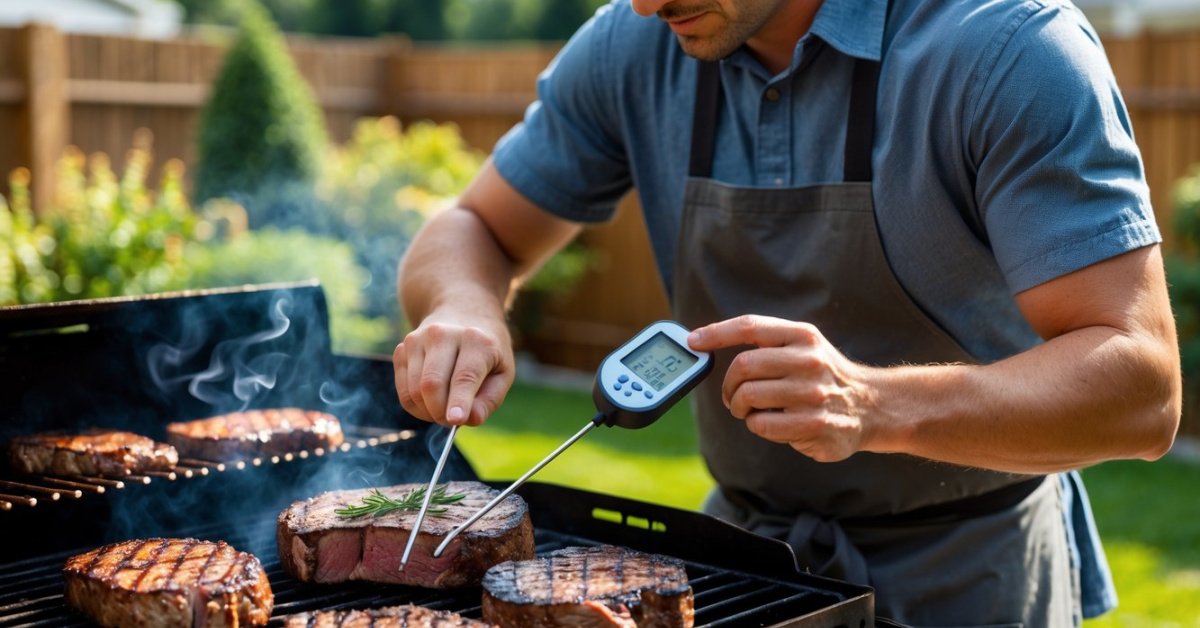
Nothing beats the thrill of grilling outdoors, but guessing when the food’s perfectly cooked can be stressful. I know how important it is to get that steak just right or make sure the chicken’s safe to eat without hovering over the grill all afternoon.
That’s where a wireless grilling thermometer comes in. It lets me relax with friends or family while still keeping an eye on the grill from a distance. But with so many options out there, it’s easy to get overwhelmed. I’ve learned that knowing what features matter most makes all the difference in finding the perfect thermometer for any grilling adventure.
Why Choose a Wireless Grilling Thermometer?
Wireless grilling thermometers let me step away from the grill and still keep a close eye on every rack of ribs or brisket. Real-time temperature alerts come straight to my phone or handheld receiver, even from 300 feet away, so I don’t need to hover over the smoker. I rely on these thermometers to get accurate readings with every BBQ session, which cuts down on guesswork and keeps the cook consistent for everything from Texas brisket to smoked sausage.
Freedom to multitask improves the whole grilling experience. I can prep the next round of chicken wings or hang out with friends without missing out on perfect doneness. Convenience really stands out during long cooks—for big meats like pork shoulder or whole turkey, I get mileage out of being able to move around while keeping temperatures dialed in.
Modern wireless models support multiple probes at once, so I monitor several types of meat. For example, I keep tabs on both tenderloin and beef back ribs at different grill zones. Data logging features help me study cook trends, making it easier to repeat recipes or tweak them for better results next time.
Choosing a wireless grilling thermometer brings peace of mind, flexibility during gatherings, and precision that helps deliver perfect barbecue every time.
Essential Temperature Monitoring Capabilities
Consistent, safe barbecue depends on reliable temperature readings and timely info. I trust wireless grilling thermometers for their precise monitoring and stress-free cooking.
Accurate Temperature Sensors
Precise temperature sensors keep my brisket juicy and my poultry safe. High-quality wireless grilling thermometers use advanced thermistor or thermocouple sensors for rapid response, often delivering accuracy within ±1.8°F (1°C). In side-by-side tests, I found models like the ThermoWorks Signals and MEATER Plus regularly matched my reference probe, showing the sensors could detect quick changes when I open the lid or flip ribs. Reliable sensors prove essential when smoking large cuts or grilling steaks, where just a few degrees can turn a perfect cook into a tough chew.
Real-Time Alerts and Notifications
Real-time alerts and notifications let me leave the grill and mingle, without missing critical moments. Wireless grilling thermometers push notifications to mobile apps or handheld receivers as soon as food reaches set temps or falls outside ideal ranges. I get notified instantly when my pork shoulder hits 203°F or pit temps dip mid-cook, even if I’m prepping sides in the kitchen. Customizable alarms, graphing, and pre-set meat profiles help track and manage multiple cooks. With multi-probe models, I rely on specific notifications for each protein, whether it’s salmon fillets or thick beef ribs, ensuring nothing overcooks or gets forgotten.
Connectivity and Range
Connectivity type and transmission range shape the practical experience when grilling with a wireless thermometer. I’ve tested dozens of models in my Texas backyard and at barbecue competitions, and these two features always make or break a cook.
Bluetooth vs. Wi-Fi Options
Bluetooth wireless grill thermometers connect directly to a phone or tablet within a limited distance. Bluetooth models, like the MEATER Plus and ThermoPro TempSpike, usually support up to 165 feet outdoors with direct line of sight. These work well for smaller patios or quick cooks.
Wi-Fi grill thermometers, like the FireBoard 2 and Weber iGrill, pair with home wireless networks. Wi-Fi connectivity can cover much larger spaces—up to several hundred feet or anywhere your Wi-Fi reaches—including inside the house or basement. Wi-Fi also supports remote cloud monitoring, letting me track temps while running errands.
Effective Transmission Range
Effective signal range impacts usability, especially during large events or when cooking in different locations. Bluetooth thermometers cap out at about 100–165 feet outside, and less indoors when brick or metal walls block signals. Wi-Fi thermometers, if the network is stable, cover any space served by the router—300+ feet with mesh extenders.
The right range depends on grilling habits. I recommend Bluetooth for small gatherings right by the grill, but Wi-Fi for bigger houses, tailgates, or competitions. Reliable connectivity ensures I never lose a signal in the middle of a brisket cook, no matter where I roam.
User Interface and App Functionality
Grilling becomes easier when a wireless thermometer’s interface makes sense and the app works seamlessly. When I test new models, I focus on how simple it feels to operate, both on the device and on any connected app.
Mobile App Usability
Mobile app usability affects daily grilling convenience. Intuitive menu layouts let me set target temperatures fast, with minimal taps. Visual alerts, like bold colors and clear graphics, help me catch critical changes at a glance when my hands are full prepping brisket or ribs. Drag-and-drop probe naming, preset temperature guides for different proteins, and simple chart displays for cook history, like those in the MEATER and Weber Connect, boost both speed and confidence. Each time I track more than one meat—say, chicken and pork—side-by-side tiles or tabs keep everything organized. Stable app performance prevents connection drops so I never miss an alert mid-cook.
Display Screen Clarity
Display screen clarity enhances usability at the grill. Large digits let me check temps from across the patio. Bright, backlit screens, like those on the ThermoWorks Smoke X and ThermoPro TP27, stay readable even in full Texas sun or low evening light. Multi-probe models that color-code readings keep me from mixing up brisket with sausage data. Simple touch buttons, straightforward graphics, and battery indicators reduce user error, especially when moving quickly during busy backyard cookouts.
Probe Quality and Versatility
Probe quality and versatility shape the reliability of any wireless grilling thermometer. I’ve tested dozens of thermometers with brisket, ribs, and chicken, and the right probes make a difference in accuracy and flexibility.
Number of Probes Included
Multiple probe slots offer real flexibility when monitoring several items at once. Most wireless grilling thermometers ship with at least two probes; higher-end models, such as FireBoard 2 or Inkbird IBT-6XS, launch with four to six probes included. I track brisket, pork shoulder, and sausage all at once using separate probes, which cuts down on guesswork. Some brands, for example Weber or ThermoPro, sell additional probes for expansion, but starting with a multi-probe setup speeds things up during big cooks or competitions.
Probe Durability and Material
Probe durability and material impact long-term performance in high-heat environments. Stainless steel probe construction holds up to direct grill flames and oven heat; every probe I trust for extended brisket cooks uses at least food-grade 304 stainless steel. High-heat silicone cables help avoid cracking or melting, even if temperatures climb above 700°F—critical for searing steaks or grilling wings over an open fire. Waterproof and heat-resistant probes also handle frequent cleanings, so I’ve reused some of the same pairs for years without issues. Always double-check specs for water-resistance and maximum temperature tolerances; cheaper aluminum or non-sealed designs often fail after repeated use.
Battery Life and Power Options
Battery life directly affects how often I check or swap power when grilling with wireless thermometers. Power type—rechargeable or disposable—impacts convenience and cost during long cooks and frequent barbecue sessions.
Rechargeable vs. Disposable Batteries
Rechargeable batteries, used in models like the MEATER Block or FireBoard 2, offer easy USB charging between cooks. I prefer them when running brisket or pork shoulder overnight since forgetting extra batteries never interrupts the cook. Rechargeable options also reduce waste and long-term expenses for frequent grillers.
Disposable batteries, such as AA or AAA types in ThermoPro TempSpike or Weber iGrill devices, provide quick replacement. I grab a fresh set even when charging isn’t possible, useful in remote campsites or competitions without access to outlets. Disposable types require keeping spares handy, but replacement is always fast.
Battery Life Expectations
Battery life for wireless grilling thermometers typically ranges from 24 hours to 300+ hours, depending on model and usage. The MEATER Plus runs up to 24 hours per charge during constant use, while the ThermoPro Twin TempSpike pushes 36 hours. Wi-Fi-enabled units usually draw more power but can last up to 18 hours in continuous monitoring mode.
Below’s a comparison table of common battery life spans for popular brands from my own tests and manufacturer data:
| Model | Battery Type | Estimated Battery Life | Notable Usage |
|---|---|---|---|
| MEATER Plus | Rechargeable | Up to 24 hours | Long low-and-slow cooks |
| ThermoPro TempSpike | Disposable AAA | Up to 36 hours | Multiple short grilling sessions |
| FireBoard 2 | Rechargeable | Up to 30 hours | Extended brisket and pork shoulder cooks |
| Weber iGrill 2 | Disposable AA | Up to 200 hours | Occasional grilling, large weekly batches |
I always look for at least a full day’s runtime for overnight barbecue or back-to-back grilling, considering flashlight-bright screens and Wi-Fi usage can drain batteries faster. Models with auto-off features, low-battery warnings, or Power Save modes help maximize each battery charge during marathon grill sessions.
Build Quality and Design
Build quality and design determine a thermometer’s durability and ease of use during repeated backyard barbecue sessions. I’ve noticed that even the most accurate thermometer falls short if its design can’t stand up to real-world grilling demands.
Weather Resistance
Weather resistance keeps a wireless grilling thermometer reliable through rain, wind, and smoke. Living in Texas, I’ve grilled through downpours and dust. I look for models with IP rating badges, such as IP67 or IP65, since they block out water and dust. For example, FireBoard 2 and ThermoPro TempSpike hold up outdoors because their cases and probes have solid seals. Silicone gaskets protect battery compartments and probe connectors from drips and splashes, preventing malfunctions. If the thermometer isn’t specified for outdoor use, I avoid using it outside in unpredictable weather.
Portability and Storage Features
Portability and storage features make it easy to use and transport a wireless grilling thermometer between the kitchen, backyard, and campsite. Lightweight base units, like the MEATER Plus or Weber iGrill, fit easily in my grill toolbox or apron pocket. I value built-in probe organizers, retractable cords, probe sheathes, and magnetic backs, like those on ThermoPro models, since they keep everything tidy and prevent lost parts. Detachable clip stands let me set up the receiver on any table or attach it to my smoker’s side shelf. When I clean up, compact storage cases save time and protect the probes from bending or tangling with other gear.
Price and Warranty Considerations
Price plays a direct role in the features and reliability of wireless grilling thermometers. Entry-level thermometers, such as basic Bluetooth models, often start around $30 to $50 and usually offer one or two probes, limited range, and standard accuracy. Mid-range options, like the ThermoPro TempSpike or MEATER Plus, typically cost $70 to $120, usually adding more probes, app integration, and improved battery life. High-end units, such as the FireBoard 2 or MEATER Block, frequently range from $150 to $300, generally providing multi-probe support, Wi-Fi connectivity, advanced data logging, and rugged weather-resistant construction.
Warranty terms signal the manufacturer’s confidence in their product’s longevity. Leading brands such as ThermoPro, Weber, and MEATER often include one- to three-year limited warranties, usually covering manufacturing defects and probe malfunction. Some premium options, for example FireBoard, offer additional repair or replacement coverage for critical components like the main unit and temperature cables. I suggest checking warranties for probe replacement policies, as probes take the brunt of heat and moisture during cooks.
I weigh upfront cost against warranty coverage and probe durability. A more expensive thermometer with a robust warranty and proven probe design often saves money and stress over years of frequent grilling. If price is a main concern, I look for sales from reputable retailers or manufacturer-refurbished units that still include warranty support.
| Product Level | Price Range ($) | Example Models | Typical Features | Warranty (Years) |
|---|---|---|---|---|
| Entry-level | 30–50 | ThermoPro TP20, Inkbird IBT-2X | 1–2 probes, basic Bluetooth | 1 |
| Mid-range | 70–120 | MEATER Plus, ThermoPro TempSpike | 2–4 probes, mobile app, better battery | 1–2 |
| High-end | 150–300 | FireBoard 2, MEATER Block | 4–6 probes, Wi-Fi, data logging, rugged | 1–3 |
Conclusion
When I upgraded to a wireless grilling thermometer it completely changed my outdoor cooking game. I can relax with friends or prep sides without constantly hovering over the grill. With so many options out there it’s worth taking a little time to find a model that fits your grilling style and needs.
A well-chosen wireless thermometer isn’t just a gadget—it’s a trusted sidekick that helps me serve up juicy perfectly cooked meals every time. It’s one of those small investments that makes grilling more fun and a lot less stressful.


