
Grilling corn on the cob always feels like a celebration of summer. I love that smoky sweetness and the way those golden kernels pop with every bite. But I used to wonder—how do I know when the corn’s perfectly cooked and not underdone or dried out?
That’s when I started using a thermometer. It might sound a little extra for something as simple as corn but trust me it takes the guesswork out of grilling. With just a quick check I can get juicy flavorful corn every time and never worry about overcooking.
Why Grill Corn on the Cob?
Grilling corn on the cob locks in moisture and caramelizes the natural sugars on each ear, giving every bite a smoky, sweet pop you just don’t get from boiling or steaming. Flames toast the kernels, creating deep color and extra texture that helps every cob stand out at a cookout. When I worked my Texas bbq cart, grilled corn almost always sold out faster than the boiled versions.
Serving corn straight from the grill lets me control seasoning and flavor, because I can brush on spiced butters, sprinkle on cotija, or add fresh herbs right as it comes off the heat. Every batch turns out a little different, and I can cater to guests who like everything from classic buttered corn to complex chipotle-lime seasoning.
Using a thermometer while grilling corn guarantees a more consistent and juicy result, eliminating burnt tips or crunchy centers. The science behind corn’s transformation over open fire lines up perfectly with my thermostat obsession—measuring internal temperature takes the guesswork out completely, making grilled corn an easy addition for beginners and a favorite challenge for experienced grillers.
The Importance of Temperature in Perfectly Grilled Corn
Grilled corn on the cob reaches peak sweetness and juiciness when it hits the right temperature inside the kernels. I target 200°F to 205°F in the thickest part, using a probe or instant-read thermometer for accuracy. Measuring this way, rather than relying on husk color or feel, gives me consistent results with minimal risk of overcooking.
Overcooked corn dries out quickly, losing its snap and turning tough instead of tender. Undercooked ears stay starchy, missing that caramelized sweetness on the grill’s high heat. By tracking internal temperature, I keep every batch juicy whether I’m grilling three ears for myself or 30 at a backyard party.
Temperature precision matters most when the grill is crowded or busy. Different grill spots vary by 25°F or more—I’ve measured this on my own pit—so a thermometer tells me exactly when to pull each cob, regardless of grill hot spots or wind.
I recommend thermometers with a thin, sharp probe to avoid crushing kernels when checking. Fast-response models, like the ThermoWorks Thermapen or Lavatools Javelin, display temps in under three seconds, helping keep the process quick during cookouts.
Every grill master gets different results based on variables from grill type (charcoal, gas, pellet) to the age of the corn. Checking temperature lets me account for all those factors, taking the guesswork out of unlocking that grilled corn flavor I loved serving at my Texas cart and now bring to my own backyard.
Choosing the Right Thermometer for Grilling
Picking the right thermometer makes a big difference when grilling corn on the cob. I’ve tested dozens over the years to get reliable, fast results at backyard cookouts and commercial events.
Types of Thermometers for Grilling Corn
- Instant-read Thermometers: I grab these for quick checks. Brands like ThermoWorks Thermapen and Lavatools Javelin deliver precise readings in 2 to 5 seconds, ideal when juggling a busy grill.
- Probe Thermometers: I use these for hands-free monitoring. Models like the ThermoPro TP20 let me track internal corn temp from a distance, especially helpful when managing crowded hot spots on the grate.
- Infrared Thermometers: I bring these out to check grill surface temp, not internal ear temp. They work well for ensuring even heat before placing my corn ears down.
Features to Look For
- Thin Probe Tip: A sharp, slender probe slides into corn kernels cleanly. It keeps the cob intact while giving a more accurate center reading.
- Fast Response Time: Thermometers with 2–3 second display speeds help keep the grill lid closed longer, preserving heat and smoky flavor.
- Backlit Display: A clear, illuminated screen lets me read temps fast during twilight cookouts or evening BBQs.
- Water Resistance: I pick thermometers with some splash protection, like an IP65 rating, to withstand grill-side messes, rain, or wet hands.
- Temperature Range: Devices covering 32°F to 572°F work for everything I grill—from seafood to brisket—but all reliably cover the 200°F to 205°F ideal for corn’s juiciness.
- Durable Construction: I lean toward thermometers with stainless steel probes and sturdy casings, especially for frequent outdoor use.
Combining these features keeps my grilled corn consistently juicy and sweet every time.
Step-by-Step Guide: Using a Thermometer to Grill Corn on the Cob
Grilling corn on the cob with a thermometer delivers consistently perfect results. I rely on a few simple steps, shaped by years at my Texas BBQ cart and plenty of home experiments.
Preparing the Corn and Grill
Shuck corn and remove silk to prep ears for grilling. I brush each ear lightly with oil to prevent sticking and help even browning. Preheat the grill to medium-high, around 400°F—an infrared thermometer checks the grate temp accurately. Place corn across the grates, spacing them to ensure steady heat circulation.
Monitoring Temperature for Best Results
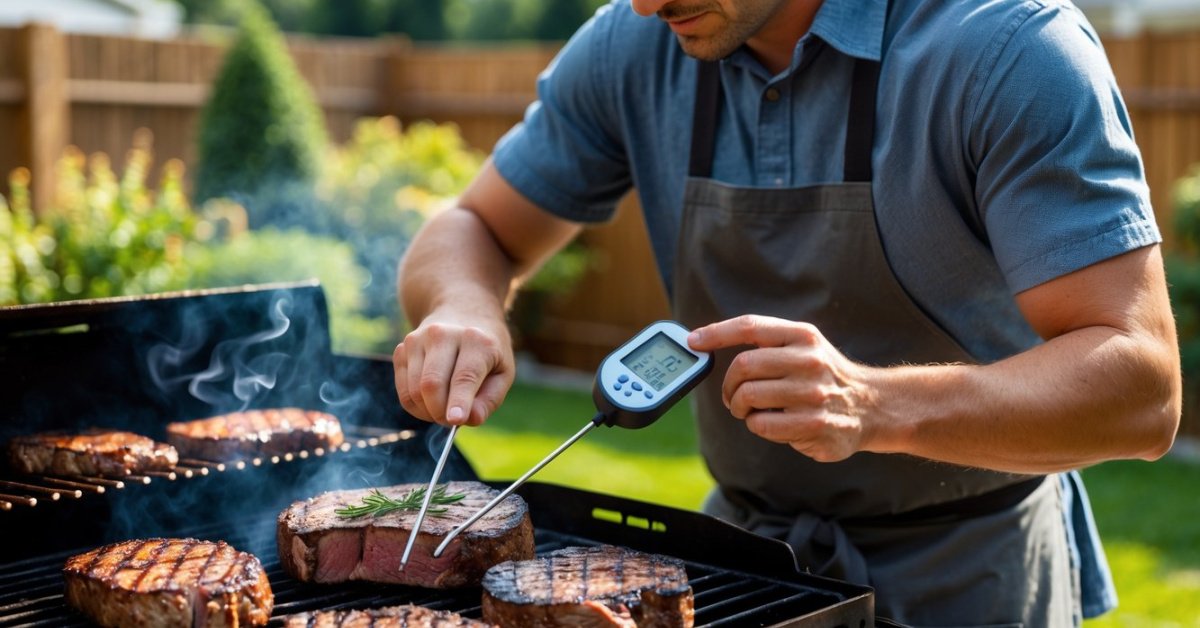
Insert a fast-response, thin-probe thermometer into the thickest part of a corn kernel once the color deepens and grill marks appear. A reading of 200°F to 205°F means perfect doneness—kernels hit peak sweetness and juiciness at this range. Check multiple ears if grilling a full rack since temperature zones can fluctuate. Avoid pressing too deep with the probe, piercing only a kernel or two to get a true reading without drying the ear.
Tips for Juicy and Flavorful Corn
Turn ears every 2-3 minutes for even grill marks and uniform cooking. I add a second oil or melted butter brush halfway through grilling for extra flavor and moisture lock. Pull corn promptly once the thermometer reads the target temp; lingering longer risks dried-out kernels. Rest cooked corn on a tray under foil for 2-3 minutes for juices to settle, then serve with your favorite toppings—smoked paprika, cotija cheese, or classic butter are crowd-pleasers at my table.
Common Mistakes to Avoid
- Inserting the thermometer improperly
Placing the thermometer into the cob instead of the center kernel leads to inaccurate readings. I always insert the thin probe directly into the thickest part of a kernel, avoiding the core or gaps, for a true temperature.
- Using thick or blunt probe thermometers
Thick probes crack kernels and release juices, causing dry corn. I stick to narrow, sharp probes for a clean entry that keeps kernels juicy and intact.
- Relying on visual cues alone
Charring on the husk or kernels doesn’t guarantee doneness. I trust a thermometer for an internal temperature of 200°F to 205°F, ignoring grill marks as the final indicator.
- Neglecting to rotate the corn
Leaving one side facing the heat for too long creates uneven cooking. I turn ears every 2 to 3 minutes for even heat, then check different spots with the thermometer when grilling a big batch.
- Checking temperature too late
Waiting until corn looks “done” sometimes means it’s already overcooked. I start temperature checks after 10 minutes over medium-high heat and monitor closely to prevent dry, rubbery results.
- Not calibrating the thermometer
A miscalibrated tool ruins accuracy. Before cookouts, I check mine in ice water (32°F) and boiling water (212°F) to verify precise readings every time.
- Forgetting to rest the corn after grilling
Cutting into corn right off the grill lets steam escape and dries it out. I rest the corn, tented loosely with foil, for 2 or 3 minutes so juices settle and the internal temperature evens out.
- Ignoring thermometer cleaning after use
Grill residue and butter buildup on the probe cross-contaminate flavors at the next cookout. I always clean the probe thoroughly after each use.
Pros and Cons of Using a Thermometer When Grilling Corn
Listing pros and cons of using a thermometer for grilling corn on the cob helps new grillers understand the value of precision tools.
Pros
- Accurate doneness checks: I get consistent, juicy corn using a thermometer, since each ear reaches the ideal 200°F to 205°F window—no guessing.
- Reduced risk of overcooking: I avoid drying out kernels and keep that classic BBQ sweetness locked in by confirming internal temperature.
- Quick feedback: Fast-response thermometers, like ThermoWorks ThermoPop or Lavatools Javelin, let me check several cobs in seconds during busy backyard cookouts.
- Better results with multiple ears: If I’ve got a loaded grill at a family event, temperature checks help me serve all ears at peak flavor, even when heat zones differ.
- Reassurance for beginners: Friends who haven’t spent years behind a Texas cart get confidence knowing their corn’s right on target.
- Slight learning curve: First-time users sometimes poke too deep or hit the cob, which skews readings until they get the hang of probe placement.
- Minor kernel damage: Using a thick or blunt-tipped thermometer makes noticeable punctures in the corn—thin probes reduce, but don’t remove, this risk.
- Added cleanup: After a BBQ marathon, I need to clean probes and sanitize thermometers, a step that’s easy to forget when the focus is on the grill.
- Slower workflow for small batches: If I’m only cooking two or three ears for myself, a thermometer adds extra steps compared to simply grilling by sight and touch.
- Initial equipment cost: High-quality thermometers range from $15 to $100. For some, that’s more than they want to spend just for corn.
Conclusion
Grilling corn on the cob has become much more enjoyable for me now that I use a thermometer. It takes the stress out of guessing and lets me focus on having fun at the grill. Every ear ends up sweet juicy and perfectly cooked—just the way I loved to serve them at my Texas BBQ cart.
If you’re looking to impress at your next cookout or just want to enjoy better corn at home give a thermometer a try. It’s a simple tool that makes a big difference and your taste buds will thank you.


