
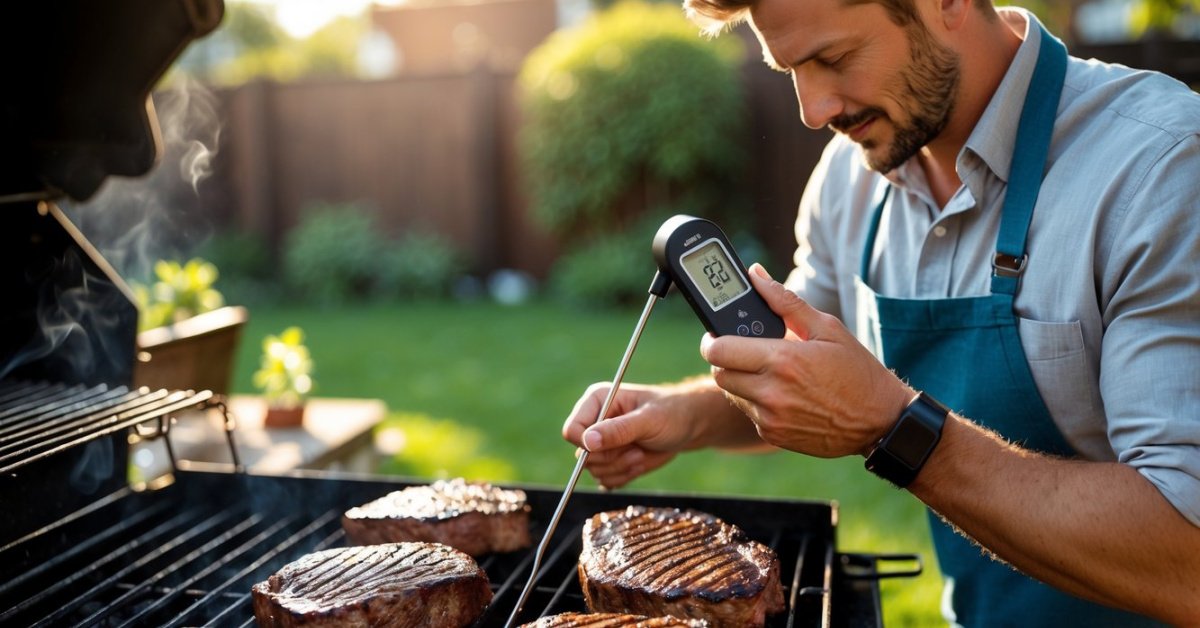
When I fire up the grill, I want every steak juicy and every burger perfectly cooked. That’s why I never rely on guesswork. A multi-function thermometer has become my secret weapon for stress-free grilling.
With just one tool, I can check the temperature of different meats, monitor ambient heat, and even set alerts so nothing ever gets overdone. It’s like having an extra set of hands while I’m busy flipping and basting. Grilling feels easier and more fun when I know I can trust my thermometer to keep things on track.
The Rise of Multi-Function Thermometers in Grilling
Grilling thermometers with multiple features have transformed the way I cook, especially since my days running a Texas BBQ cart. Brands added functions like wireless monitoring, dual-probe support, and preset meat settings. These multi-function thermometers meet real-world grilling demands across everything from brisket and steaks to chicken and fish.
I use models combining instant-read accuracy with leave-in grilling probes. For example, I track both grill air temperature and internal meat temperature—essential for slow-cooked ribs or pork shoulder. Devices with remote or Bluetooth capabilities let me step away from the grill without sacrificing control. Companies like ThermoWorks, Weber, and Inkbird design products that combine timers, alarms, and multiple sensor inputs. That helps me prevent overcooking and nail perfect doneness for each recipe.
Today’s models support presets for different meats and levels of doneness, which simplifies the process for beginners and experts. In my testing, dual-probe thermometers allow me to check several cuts or compare surface heat zones. That versatility keeps me experimenting with new recipes and adjusting cook techniques. As more pitmasters and backyard enthusiasts see the precision and convenience these tools provide, multi-function thermometers secure their place as vital grilling gear.
Key Features of Multi-Function Thermometers
Multi-function thermometers give me unmatched flexibility when I’m grilling anything from brisket to salmon. I rely on these devices to check accuracy across cuts and adapt to changing grill conditions.
Multiple Temperature Probes
Multiple temperature probes in a thermometer let me monitor several zones at once. I use one probe for thick cuts like pork shoulder and another for delicate items like chicken. Many models, including the ThermoWorks Signals and Weber iGrill 2, support at least two probes. This feature means I track both grill air temp and internal meat temp at the same time, which saves me time and helps me avoid overcooking.
Pre-Set Cooking Modes
Pre-set cooking modes simplify grilling by providing default temperature targets for different meats. I take advantage of these built-in USDA-recommended doneness levels for beef, poultry, fish, and pork. These settings in models like the Inkbird IBT-4XS reduce my guesswork and support safe cooking by alerting me when my brisket or ribs hit the ideal temperature.
Wireless and App Connectivity
Wireless and app connectivity let me step away from the grill without losing oversight. I depend on Bluetooth or WiFi connections, available in most premium thermometers, to receive temperature alerts directly on my phone. The ThermoWorks Signals and Inkbird IBT-4XS connect to apps that log temps, track cooking history, and let me set custom alarms. This feature enables me to socialize, prep sides, or relax while keeping complete remote control over my cook.
Benefits of Using Multi-Function Thermometers for Grilling
Multi-function thermometers make grilling easier by providing more control and precision. I’ve found these tools essential for both backyard sessions and serious BBQ events.
Improved Accuracy and Consistency
Accurate, consistent results define every great cookout. Multi-function thermometers offer real-time tracking for both grill air and internal meat temperatures, often within ±1.8°F. Models like those from ThermoWorks and Weber use dual or even four probes, which lets me check different parts of the grill at once—no more guessing with brisket on one side and chicken on the other. Preset temperature alerts for pork, beef, or fish keep me aligned with USDA safety guidelines. Over years and hundreds of cooks, using precise thermometers means my briskets end up tender, my pork juicy, and my chicken safe every time.
Enhanced Safety and Convenience
Enhanced safety and convenience come built into each multi-function thermometer I test. Remote monitoring via Bluetooth or WiFi lets me prep sides or host friends without hovering over the grill. Instant-read features give fast confirmation, which matters during tailgates or events with a lot of food moving at once. High-temp alarms protect against flare-ups and burned meats—I’ve saved dozens of racks thanks to these smart alerts. Features like backlit screens, waterproof probes, and magnetic mounting also keep my hands free and my workspace flexible, whether I’m at home or at a cook-off.
Comparing Multi-Function Thermometers to Traditional Options
Multi-function thermometers bring a level of control to grilling that older, single-purpose models can’t match. I’ve used both types on briskets, ribs, and steaks, and the differences stand out in every session.
Versatility and Usability
Multi-function thermometers let me monitor more than one meat at a time thanks to dual- or quad-probe support, something dial or single-probe digital thermometers lack. For example, with my Inkbird IBT-4XS, I can track a pork shoulder’s internal temp, the grill’s heat, and even a chicken thigh—all on one display. Wireless and app connectivity helps me step away to prep sides or chat with guests while still getting real-time alerts for each probe. Preset modes for beef, pork, poultry, and seafood simplify sessions compared to classic dial thermometers, which force me to rely on guesswork or constant lid-lifting. With extra features like timers and alarms, multi-function models eliminate the risk of overcooking or undercooking that happens often with basic analog thermometers.
Cost vs. Value
Multi-function thermometers often cost $40-$120. In contrast, standard analog or basic instant-read thermometers start near $10 and rarely exceed $35. When I consider replacement cost, wasted meat, and convenience, the higher price makes sense in busy grilling scenarios. Multi-function models reduce food waste by ensuring doneness accuracy, especially on expensive cuts like brisket or lamb racks. I spend less time guessing and more time enjoying the results. Brands like ThermoWorks and Weber offer warranties and app support, increasing value over years of use. For any griller who values versatility and peace of mind, the investment delivers returns not found in single-use tools.
Tips for Choosing the Right Multi-Function Thermometer
Select multi-function thermometers for grilling based on their most practical features and long-term value.
- Check Probe Configurations
Choose thermometers with at least two probes, like the ThermoWorks Smoke, for tracking air and food temperatures together. Four-probe models help if I’m monitoring brisket, ribs, and chicken at once.
- Prioritize Wireless Range
Pick devices offering reliable connections over 150 feet, as with Inkbird IBT-4XS, letting me manage the smoker while handling sides outside or inside the house.
- Analyze App Functionality
Test mobile apps for real-time alerts, graphs, and easy temperature customization. I find Weber Connect and ThermoPro apps clear and responsive across both Android and iOS.
- Review Preset Modes
Use built-in USDA-based presets for beef, pork, and fish when I want to avoid manual guesswork. Confirm the presets are adjustable if rare or well-done is your preference.
- Evaluate Build Quality
Select models with waterproof probes and heat-resistant cables, for grilling over direct heat or in rainy weather. Stainless steel and silicone-wrapped probes usually last longer during frequent use.
- Test Display Legibility
Check for backlit, high-contrast screens so I can monitor temps at dusk or in sunlight. I prefer large, easy-to-read digits, especially for quick checks.
- Compare Battery Life and Charging
Pick devices with rechargeable batteries or at least 40-hour run times between swaps. I usually keep a battery bank handy for longer cooks or remote barbecue events.
- Read Warranty and Support Details
Consider companies offering at least a one-year warranty, such as ThermoWorks, with approachable support for replacements or troubleshooting.
By focusing on these aspects, I can always find a thermometer that handles daily grilling, big gatherings, and new recipes with confidence.
Conclusion
Choosing the right tools can really change the way you grill and I’ve found that a multi-function thermometer is one of the best upgrades you can make. It’s helped me grill with more confidence and enjoy the process without the stress of second-guessing doneness.
Whether I’m cooking for a crowd or just experimenting with new recipes these thermometers give me the flexibility and control I need. If you love grilling as much as I do investing in a quality multi-function thermometer is a decision you won’t regret.


