
Grilling in cold weather always feels like a bit of an adventure. I love the challenge of firing up the grill when the air is crisp and my breath turns to clouds. But I’ve learned the hard way that chilly temps can mess with cooking times and make it tough to get that perfect doneness.
That’s where a good thermometer comes in handy. It takes the guesswork out of grilling and helps me serve up juicy burgers and steaks no matter how frosty it is outside. If you’re ready to master winter grilling and avoid undercooked or overdone food grab your thermometer and let’s get started.
Why Accurate Temperature Matters When Grilling in Cold Weather
I rely on accurate temperature readings every time I grill in cold weather, because external factors like wind, snow, and below-freezing temps change how heat works at the grate. These conditions lower the grill’s internal temp faster, so food takes longer to cook and can end up uneven or unsafe if I trust my old instincts.
I see this most clearly with proteins like brisket, chicken, or pork chops—meats that demand precise temperature control. For example, brisket dries out easily at low temps, and chicken risks being undercooked without a reliable reading. I use my digital probes or instant-reads to keep everything in the sweet spot, even when it’s icy and I’m bundled up by the grill.
I’ve also noticed grill recovery time increases dramatically in winter. Each time I lift the lid, a rush of cold air drops the temp more sharply than in summer. Only a quality thermometer tells me exactly when my cook zone’s ready again, because guessing leaves results inconsistent.
These challenges make temperature control the most important part of my winter bbq routine. Accurate readings mean juicier burgers, safe chicken, and brisket that’s just right, regardless of how cold it gets outside.
Choosing the Right Thermometer for Cold Weather Grilling
Picking a thermometer built for winter grilling makes temp checks easier and results more reliable. I’ve tested dozens out in freezing conditions across Texas winters.
Digital vs. Analog Thermometers
Digital thermometers deliver precise readings faster than analog models. On icy mornings or windy evenings, I grab my digital probe for instant, clear displays even with gloves on. Analog thermometers—such as dial-face models built into grill lids—sometimes lag or stick in the cold, adding minutes to every check. Brands like ThermoWorks and ThermoPro make digital thermometers I’ve found accurate and rugged during winter grilling.
Features to Look For
Cold weather performance relies on certain features. I look for backlit displays for clear viewing after sunset. Waterproof or water-resistant designs prevent snow, sleet, or splashes from wrecking the sensor. Long probes (4+ inches) keep my knuckles away from hot grates and let me check roasts and thick cuts like brisket. Quick response time—under 5 seconds—matters most for staying efficient and not losing grill heat. Models with remote probes and wireless connectivity mean I can monitor temps while staying inside, which helps when grilling multiple racks of ribs or big cuts through freezing wind.
Step-by-Step Guide: How to Use a Thermometer for Grilling in Cold Weather
Cold weather brings unique grilling challenges, but I’ve found that even in freezing temperatures, a reliable thermometer takes out the guesswork. With the right prep and accurate readings, I get juicy results no matter how chilly it gets outside.
Preparing Your Grill and Thermometer
Getting my grill and thermometer ready before I cook always pays off, especially when the temperature drops. I preheat my grill longer than in summer, usually 10-15 extra minutes, since metal and grates stay colder in winter air. I check my thermometer’s batteries and bring it up to room temperature before use; cold sensors tend to read slower and less accurately. I use models like the ThermoWorks Thermapen ONE for instant reads, or a remote-probe style from ThermoPro for longer cooks, since I can monitor from indoors. On windy or snowy days, I shield my grill with a windbreak and keep the lid down to retain heat between checks.
Inserting the Thermometer Correctly
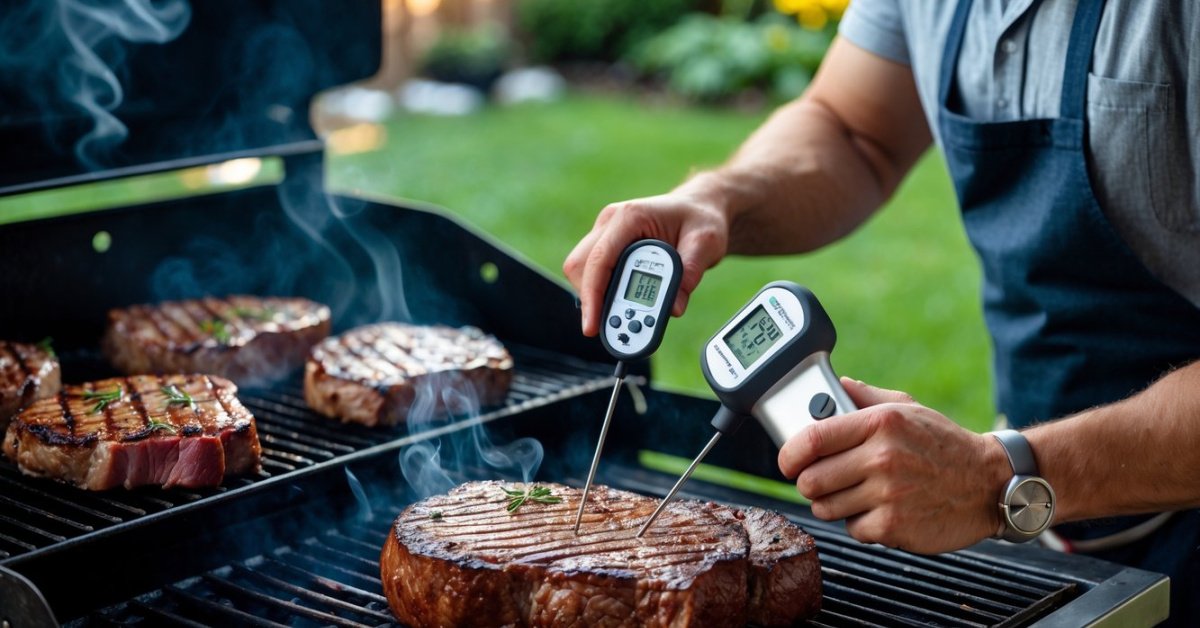
Placing the thermometer right gets me reliable results every time. For most meats, I insert the probe into the thickest section, avoiding bone or fat pockets since those spots give false readings. When I grill something thin like chicken breasts or pork chops, I insert the probe from the side horizontally, so the sensor sits in the center. For larger cuts, like brisket or pork shoulder, I check temperature in a couple of spots to ensure even doneness. With remote probes, I make sure the cable doesn’t touch the flames or grill grates, as extreme heat damages sensors quickly in cold weather.
Monitoring Temperature Fluctuations
Grilling in cold weather means I see more temperature swings, both in the grill and in the meat itself. I watch the digital display constantly for quick jumps or drops, since opening the lid can cause a sharp heat loss. If I notice my grill temp dipping—more than 25°F below the target—I boost the fuel or adjust vents fast to recover. Using thermometers with alarms lets me know instantly if temps move out of the safe cooking zone, especially important for chicken and pork. For longer cooks, I log readings so I can track spikes or stalls and adjust my fire as needed, always aiming for precise, consistent doneness in every bite.
Common Challenges and How to Overcome Them
Cold weather changes the game when it comes to grilling with a thermometer. I’ve found a few specific challenges that can throw off even experienced grillers, but each one has a reliable solution.
Dealing With Rapid Heat Loss
Rapid heat loss hits hard in winter grilling, especially when checking temps. Every time I open the grill lid, I let in a blast of cold air that drops the internal temperature fast. Meat like chicken thighs or pork chops will take longer to cook if the grill temp keeps dropping from frequent checks.
- Use leave-in probe thermometers like ThermoWorks Smoke or ThermoPro TP20 so I can monitor food temps without opening the lid.
- Position the probe cable so it doesn’t pinch in the lid, which can cause wear and inaccurate readings.
- Limit lid openings to once every 30–45 minutes for large cuts like brisket or pork shoulder to keep grill temps steady.
Preventing Thermometer Malfunctions
Thermometer malfunctions become common when temps dip below freezing. Battery-powered digital models may slow down or shut off in extreme cold, and moisture from snow or sleet can seep inside and cause screen glitches or total failure.
- Store digital thermometers and extra batteries indoors until I’m ready for use, to keep them at room temperature for optimal performance.
- Choose waterproof, cold-rated models such as the Thermapen ONE or ThermoPro TempSpike for reliable readings in wet or freezing weather.
- Test probes before each cook by inserting into ice water—readings should hit 32°F (0°C) in under 10 seconds. Slow or erratic readings mean it’s time to replace that probe.
Every time I take these precautions, both my thermometer and my grilling results stay consistent, no matter how cold it gets outside.
Tips for Getting the Best Results
- Choose quick-response thermometers
I use digital thermometers with response times under 3 seconds when grilling in cold weather, as slow-reading models can cause meat to cool more while you’re checking temperatures.
- Keep thermometers warm until use
I store digital thermometers indoors before grilling to avoid battery drain and condensation from temperature shock, which could impact accuracy.
- Use remote probe options for large cuts
For briskets or pork shoulders, I insert a leave-in probe before closing the lid, monitoring temperatures from inside the house or truck cab when it’s windy or snowing outside.
- Minimize grill lid openings
I open the lid only when necessary, since every peek can drop the grill’s internal temperature by up to 50°F, especially in windy or below-freezing weather.
- Calibrate and check thermometer accuracy
I routinely test thermometers with ice water (32°F) and boiling water (212°F at sea level) to confirm reliable readings, especially if the unit’s been stored in the cold or exposed to elements.
- Log temperatures and times
I keep a small notepad or use a smartphone app to track readings for each grill session, helping me adjust preheating times or lid management for future cold weather cooks.
- Prioritize models with backlights and waterproof features
I pick thermometers with backlit displays and waterproof ratings, testing their durability by spraying them down or using them in snow and light rain, to ensure visibility and reliability during extended winter cooks.
- Check battery levels before grilling
I pop fresh batteries into my digital thermometers or recharge them before cold weather BBQ sessions, since low temperatures can cut battery life in half.
Conclusion
Grilling in cold weather has its own set of challenges but with the right thermometer and a few smart habits it can be just as rewarding as cooking on a sunny day. I’ve found that a little extra preparation goes a long way toward turning out delicious perfectly cooked meals even when the temperature drops.
So don’t let the chill keep you from firing up the grill. With the tips and tools I’ve shared you’ll be ready to tackle winter grilling with confidence and enjoy every bite no matter the weather.


