
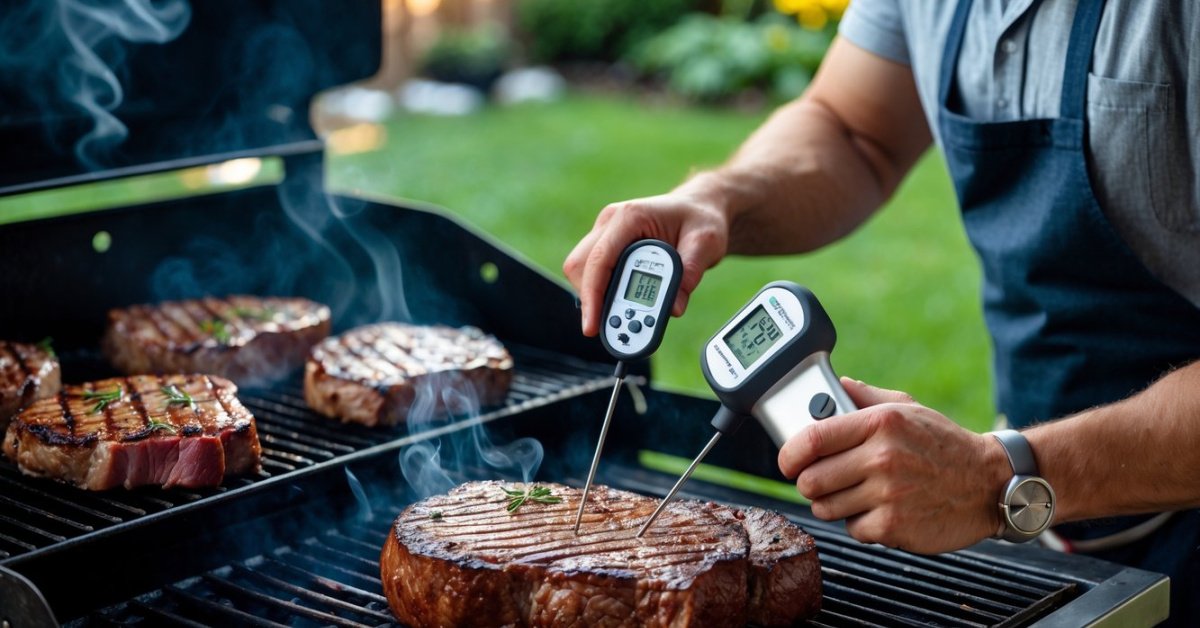
Grilling on an electric grill makes weeknight dinners and weekend cookouts a breeze but getting the temperature just right can be tricky. I’ve learned that even the best cuts of meat can turn out dry or undercooked if I don’t keep a close eye on the heat. That’s where a reliable thermometer steps in and saves the day.
With so many options out there it’s easy to feel overwhelmed when picking the right one. I’ve spent plenty of time testing different thermometers and I know how much a good one can boost your grilling confidence. Let’s explore what makes a thermometer perfect for electric grills and how the right choice can make every meal a success.
Why a Quality Thermometer Matters for Electric Grills
Consistent cooking relies on fast and accurate readings from a quality thermometer. Even slight temperature variances on electric grills often lead to overdone or unsafe meat if I don’t catch them in time. I’ve seen electric grill users cook pork chops or brisket that turned out dry, simply because their thermometer was off by 5°F or more.
Precise doneness checks set quality thermometers apart. Budget models I’ve tested can lag by up to 20 seconds or fluctuate wildly with every probe movement. Reliable thermometers like the ThermoWorks Thermapen ONE or the MEATER Plus lock in the perfect serving temps quickly—critical for foods like steak or chicken, where seconds make a difference.
Repeatable results require accurate monitoring. When I ran my Texas BBQ cart, I learned that even the best grill settings couldn’t promise a juicy pulled pork if I didn’t verify temps throughout the cook. In my home grilling sessions, I’ve found that a high-grade digital thermometer helps maintain browning, tenderness, and texture no matter the recipe.
Food safety compliance also demands dependable equipment. According to the USDA, poultry reaches safety at 165°F and pork at 145°F. Inferior thermometers sometimes miss those benchmarks, increasing the risk of foodborne illness. I always keep a calibrated, trustworthy grill thermometer close to avoid these issues and guarantee my guests rave about the flavor—not worry about undercooked bites.
Key Features to Look for in Grill Thermometers
The right grill thermometer gives consistent, reliable temperature checks every time. Over years of testing on my electric grill, here’s what I always check before recommending one.
Accuracy and Response Time
Fast accurate readings change everything for electric grill cooks. I look for probes that hit ±0.7°F accuracy, like ThermoWorks Thermapen ONE, so I get a true doneness reading every time. Response times under 3 seconds keep juices and texture right, especially with steak, brisket, and chicken. Slow-reacting thermometers often lead to inconsistent meat, so I skip options that have more than a 4-second delay.
Temperature Range and Versatility
Wide measurement ranges let me switch from delicate fish to high-heat searing without switching tools. Good models read from 32°F to at least 482°F. Dual-probe thermometers like Inkbird IBT-4XS even let me monitor grill grates and internal meat temp at the same time, which helps with multitasking different proteins or sides.
Connectivity and Smart Features
Bluetooth and Wi-Fi connections help me keep an eye on temps from across the yard or when hosting. I like app-controlled models—MEATER Plus, for example—that send alerts when my food hits target temperatures set by USDA safety guidelines. Graph views and timers in these smart devices work well for long cooks or if I’m experimenting with new recipes.
Durability and Build Quality
Heavy use shows weaknesses fast. I check for IP67 or higher water-resistance ratings and sturdy stainless steel probes. Thermometers with silicone or reinforced casings stand up better as I bounce between smoking, grilling, and high-heat sears. Brands like ThermoPro and ThermoWorks hold up after hundreds of sessions, which keeps me grilling year-round, rain or shine.
Top Picks: The Best Thermometers for Electric Grills
I’ve tested dozens of grill thermometers on everything from brisket to burgers. My top recommendations balance speed, accuracy, and reliability, especially when cooking on electric grills where temperature swings can ruin your meal.
Best Overall Thermometer
ThermoWorks Thermapen ONE stands out as my go-to for electric grill cooking. It delivers readings in under 1 second with ±0.5°F accuracy, making it easy to catch that perfect medium-rare. Its motion-sensing backlight and auto-wake feature keep it ready while I flip steaks or check chicken thighs. The waterproof rating (IP67) means splashes during clean-up never hurt it. I use the Thermapen ONE when consistency, speed, and streamlined design matter most.
Best Budget-Friendly Option
ThermoPro TP19 offers reliable performance at a lower price point. It reads temperatures in 2-3 seconds, with accuracy within ±1.0°F, outperforming other models under $25. The folding probe design stores easily, and a backlight comes in handy for late-evening grilling. I grab the TP19 for tailgate parties and casual cookouts when I want solid results without spending a lot.
Best Wireless Thermometer
MEATER Plus changes how I monitor meat, thanks to its totally wireless probe and Bluetooth connectivity. It tracks both internal temperature and ambient grill heat, alerting me through a mobile app when meat reaches my target. The 165-foot range lets me prep sides indoors without losing touch with what’s cooking. I use the MEATER Plus for thicker cuts like pork loin or when wind makes keeping the lid closed essential.
Best Instant-Read Thermometer
Lavatools Javelin PRO Duo combines speed, a big backlit display, and magnetized storage. It provides accurate readings in 2-3 seconds, with a ±0.9°F margin—reliable for chicken, fish, or burgers. The compact build and antimicrobial coating mean I’m comfortable tossing it in my grilling toolbox after a quick wipe-down. I reach for the Javelin PRO Duo anytime I need to verify doneness in a hurry.
| Model | Response Time | Accuracy | Connectivity | Durability | Price Range |
|---|---|---|---|---|---|
| ThermoWorks Thermapen ONE | <1 sec | ±0.5°F | None | Waterproof (IP67) | High |
| ThermoPro TP19 | 2-3 sec | ±1.0°F | None | Splash-resistant | Budget |
| MEATER Plus | 2-3 sec | ±1.0°F | Bluetooth | Water-resistant | Premium |
| Lavatools Javelin PRO Duo | 2-3 sec | ±0.9°F | None | Water-resistant | Moderate |
Tips for Using and Maintaining Your Grill Thermometer
Keep Grill Thermometer Clean
I clean my thermometer’s probe after every use with mild dish soap and a soft cloth. Grilling residue left on the probe causes inaccurate readings and can harbor bacteria, so I always wipe it before storing.
Calibrate for Accuracy
I check my thermometer’s calibration by testing it in ice water and boiling water, matching the readings to the expected 32°F and 212°F. Inconsistent readings signal it’s time to recalibrate or replace the unit.
Store Properly
I store my thermometer in a dry, cool place, avoiding exposure to moisture or extreme heat. Leaving it on the grill or outdoors shortens its lifespan and affects its accuracy.
Use Probe Correctly
I always insert the probe into the thickest part of the meat, steering clear of bones or grill surfaces. Direct bone contact skews the result, while keeping the tip in the center ensures I’m reading the true internal temperature.
Avoid Exposure to Flames
I keep my thermometer’s probe away from direct contact with flames or heating elements. Excessive exposure damages sensitive electronics and, for wireless models, reduces battery life.
Replace Batteries as Needed
I replace my thermometer’s batteries when the display dims or response time increases. Using fully charged batteries keeps readings fast and reliable during long cooks.
Check for Water Resistance
I always check my device’s water-resistance rating before cleaning or using it in smoky, damp grilling conditions. Models with IP66 or IP67 ratings withstand splashes and light rain, which I’ve found especially handy during outdoor BBQs.
Refer to Manufacturer’s Instructions
I read manufacturer instructions, especially for digital models. Following recommended care steps and use limitations prevents accidental damage and extends service life.
| Task | Reason | Frequency/Condition |
|---|---|---|
| Clean probe | Prevent inaccuracy, bacteria | After every use |
| Calibrate | Maintain precision | Monthly or after impacts |
| Store properly | Prevent damage | After every use |
| Use correctly | Ensure accurate readings | Each time inserted |
| Avoid direct flames | Protect electronics | While in use |
| Replace batteries | Keep fast readings | When needed |
| Check water resistance | Handle moisture safely | Before cleaning or rain |
| Read instructions | Proper operation | On first use, as needed |
Conclusion
Choosing the right thermometer for your electric grill can make a world of difference in your cooking experience. I’ve found that having a dependable tool not only helps me serve up perfectly cooked meals but also takes away the stress of guessing if my food is safe to eat.
With the right thermometer in hand you’ll enjoy more consistent results and feel more confident every time you fire up your grill. Happy grilling!


