
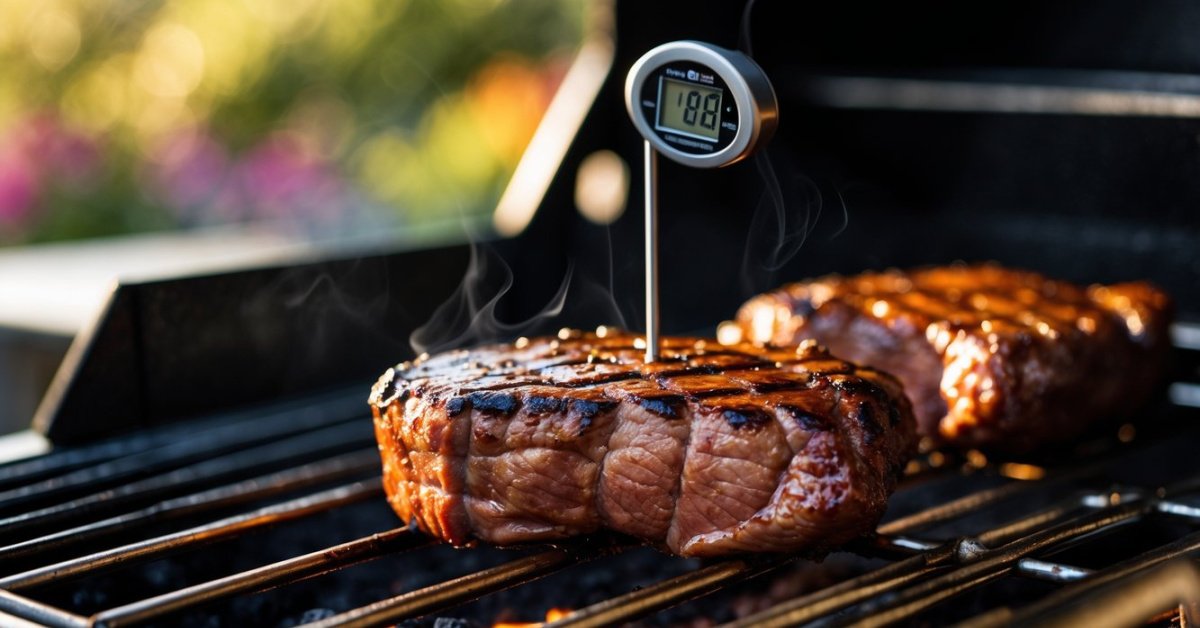
When I’m grilling, I want everything to be just right—juicy steaks, perfectly cooked chicken, and zero guesswork. There’s nothing worse than slicing into a burger only to find it’s still raw in the middle or, even worse, overcooked and dry. That’s where a reliable thermometer comes in handy.
I’ve found that thermocouple thermometers are total game-changers for anyone serious about grilling. They give me fast, accurate readings so I can spend less time hovering over the grill and more time enjoying the company. No more second-guessing or cutting into my food to check doneness—just quick results and delicious meals every time.
Understanding Thermocouple Thermometers
Thermocouple thermometers changed how I approach grilling and bbq, giving me near-instant readings even when I’m juggling several cuts on a hot grill. I lean on these tools because they cut out waiting time, helping me hit perfect doneness for any recipe.
What Is a Thermocouple Thermometer?
A thermocouple thermometer uses two fine metal wires joined at the tip to measure temperature changes quickly. Most grilling models I test—like the ThermoWorks Thermapen or ThermoPro TP19—give digital readings that update in one to three seconds. These thermometers handle everything from thick brisket to delicate fish without losing accuracy, making them a fixture at my grill station.
How Thermocouple Technology Works
Thermocouple technology measures temperature through the reaction between dissimilar metals at the probe’s tip. When the tip hits hot steak or cold chicken, the metals produce a small voltage that changes with temperature, which the thermometer’s electronics convert to a precise digital reading. Because the wires are so thin, heat transfer happens almost instantly, letting me check temps across several bones or steaks without waiting. This edge matters most during large cookouts where every second counts, especially with Texas-style cuts that demand spot-on doneness.
Benefits of Fast Readings for Grilling
Fast temperature readings transform the grilling process, especially when cooking for a crowd or tackling thick cuts. As someone always experimenting with new bbq recipes, I’ve seen first-hand how quick thermocouple thermometers keep pace with any grilling challenge.
Importance of Accurate Temperature Control
Accurate temperature readings make a noticeable difference in grilled meats like brisket, ribeye, or pork shoulder. I rely on instant feedback to catch the exact moment proteins reach their safe zone, avoiding undercooked centers or dried-out results. Fast thermocouple thermometers, such as the ThermoWorks Thermapen ONE and Lavatools Javelin PRO, report changes within 1 to 3 seconds, so I can monitor every steak, sausage, or chicken breast without opening the lid for long periods. My bbq now consistently hits the USDA-recommended internal temperatures—145°F for pork, 165°F for poultry—granting both safety and tenderness in every bite.
Enhancing Cooking Efficiency and Results
Speedy readings from thermocouple thermometers streamline my cook times, letting me check multiple cuts in quick succession. When grilling fifteen burgers for a backyard party, I save minutes compared to traditional bi-metal or dial thermometers, which can take 15 to 30 seconds per reading. Less time checking temps means less heat lost from the grill and fewer interruptions to the smoke. I get juicier results on everything from seafood skewers to Texas-style brisket because there’s no overexposure to direct heat while waiting for a thermometer to catch up. Whether firing up a pellet grill or tending a classic offset smoker, fast, accurate readings boost my efficiency and elevate every cookout.
How Thermocouple Thermometers Offer Fast Readings for Grilling
I rely on thermocouple thermometers every time I fire up the grill because they give me accurate temperatures in seconds, not minutes. Their speed and precision make a huge difference, especially when I’m juggling a variety of meats during busy BBQ sessions.
Speed Compared to Traditional Thermometers
Traditional dial and digital thermometers lag behind when time matters most. My older dial thermometers sometimes took 30 to 60 seconds to stabilize, while many standard digitals averaged 10 to 20 seconds. Thermocouple models like my Thermapen ONE and Javelin PRO show stable readings in 1 to 3 seconds. That lets me check multiple briskets, steaks, or sausages in rapid succession without propping the grill open and losing heat.
| Thermometer Type | Typical Read Time (sec) |
|---|---|
| Thermocouple (e.g., Thermapen ONE) | 1–3 |
| Standard Digital | 10–20 |
| Dial | 30–60 |
Real-Time Feedback and Safety
Thermocouple thermometers give real-time feedback every time I probe another cut, thanks to their responsive sensors. I get instant data so I can pull a ribeye at 130°F or check that chicken’s hit a safe 165°F. When I’m grilling for a crowd, fast feedback means I never wait to know if a rack is ready, and I avoid overcooking by taking meats off at the right moment. Real-time readings help protect everyone from undercooked poultry or pork, and they add peace of mind every time I serve up a plate.
Top Features to Look For in a Thermocouple Thermometer for Grilling
Finding the right thermocouple thermometer can transform your grilling, especially when you’re juggling everything from brisket to tender seafood. Over years of backyard cookouts and BBQ competitions, I’ve learned which features make the biggest difference.
Response Time and Accuracy
Response time and accuracy drive grilling success with thermocouple thermometers. Models like the Thermapen ONE deliver readings in 1–3 seconds, which keeps grill heat steady and speeds up checks on multiple cuts. I measure brisket, chicken thighs, and pork tenderloin back-to-back, never waiting for the display to stabilize. Most top models bring accuracy within ±0.7°F, which means I trust the results whether I’m aiming for rare ribeye or perfectly safe pulled pork.
Durability and User-Friendly Design
Durability and user-friendly design matter if you grill as much as I do. Sturdy, water-resistant casings withstand greasy hands and backyard mishaps—my favorite thermometers continue working after years of smoke and sauce splatters. Large, backlit displays help with late-night smoking, and I look for ambidextrous designs so friends can help out effortlessly. Folding probes make storage easy, and simple buttons mean anyone manning the grill finds it straightforward to use. For rugged outdoor grilling or marathon BBQs, reliable construction and easy handling keep the focus right where it belongs: on the flavor.
Conclusion
When I reach for my thermocouple thermometer at the grill I know I’m setting myself up for success. The speed and accuracy it offers have taken the stress out of cooking for a crowd and let me focus on the fun parts of grilling.
With just a quick check I can be sure every steak or brisket is cooked just right. It’s made a bigger difference in my grilling than I ever expected and I can’t imagine firing up the grill without it.


